JEE 2027 Dropper Roadmap: 1-Year Plan for Students Who Gave JEE 2026 But Didn’t Get Desired Rank
Complete 1-Year Strategy for JEE 2027 Droppers
JEE 2027 Dropper Roadmap: 1-Year Plan for Students Who Gave JEE 2026 But Did Not Get the Desired Rank
Let us start with something important before anything else.
If you just got your JEE 2026 result and it did not go the way you wanted, the first thing we want to say to you is this: you are not a failure. Not even close. The fact that you appeared for one of the toughest exams in the world, went through the entire preparation process, and are now sitting here thinking about how to do better — that itself says a lot about who you are.
Dropping a year is not an easy decision and it is not a light one either. But if you decide to take that path, the one thing that will determine everything is how smartly and consistently you use the next 12 months. This blog is going to give you a clear, honest, and practical plan for exactly that.
First, Be Honest About What Went Wrong
Before you make a plan for the next year, you need to spend some time honestly understanding what went wrong in JEE 2026. This is not about making yourself feel bad. This is about making sure you do not repeat the same mistakes in a year that matters even more.
Most dropper students fall into one of these patterns when they look back honestly. Read through this table and identify which ones apply to you.
| What Went Wrong | What It Means for Your Drop Year |
|---|---|
| Concepts were not clear enough | Foundation needs to be rebuilt from scratch, not just revised quickly |
| Ran out of time during the exam | Speed and accuracy need dedicated practice through regular mock tests |
| Studied hard but could not apply in exam | Too much theory, not enough problem solving and previous year paper practice |
| Got anxious or nervous during the exam | Mental preparation and a strong mock test habit need to be part of the plan |
| Started late or had inconsistent preparation | Consistency and a fixed daily routine need to be the core of this year |
| One subject pulled down the overall score | That specific subject needs extra structured attention every single day |
Write down which ones apply to you. Because the plan for your drop year needs to be built around fixing these specific issues and not just around studying harder in general.
The Drop Year Mindset: This Is Different From Class 11 and 12
Here is something that nobody tells dropper students clearly enough. Preparing as a dropper is psychologically very different from preparing in Class 11 or Class 12. Back then you had school, fixed timetables, and teachers guiding you every day. As a dropper, most of that structure is gone and the entire responsibility of your preparation is now on your shoulders.
This is actually an advantage when you use it correctly. You have more time, more flexibility, and more control over your schedule than any regular student does. But without the right structure and the right mindset, that same freedom can very easily turn into procrastination, anxiety, and wasted months.
Three Mindset Shifts Every Dropper Needs to Make
- Treat this year like a full-time job. Not like a holiday with some studying mixed in. Fixed study hours, fixed breaks, fixed revision slots, and a clear weekly target every single week. The structure you do not have from school, you need to create yourself.
- Measure progress by understanding and test scores, not hours studied. Many droppers feel productive because they studied for 10 hours but the real question is always whether the score went up in the next mock test. Hours mean nothing if the output is not improving.
- Protect your mental health actively. The drop year is genuinely stressful and students who manage that stress well almost always outperform those who try to power through it by ignoring how they feel. Rest, breaks, and talking to someone when things feel heavy are not luxuries. They are part of good preparation.
Your 12-Month JEE 2027 Dropper Roadmap at a Glance
Here is the full plan spread across five phases. Keep this table in mind as you read the detailed breakdown of each phase below.
| Phase | Months | Main Focus |
|---|---|---|
| Phase 1 — Reset and Rebuild | May to July | Identify weak areas honestly, restart concepts from scratch |
| Phase 2 — Full Syllabus Revision | August to October | Cover entire Class 11 and 12 systematically with notes |
| Phase 3 — Intensive Practice | November to January | Previous year papers and chapter-wise tests daily |
| Phase 4 — Mock Test Mode | February to March | Full mock tests every week with deep analysis after each one |
| Phase 5 — Final Revision | April | Only revision, no new topics, exam readiness |
Detailed Phase-Wise Plan: What to Do Each Month
Reset and Rebuild
The biggest mistake most droppers make right after results is rushing back into studying immediately without stopping to understand what actually went wrong. Spend the first two to three weeks after your result taking a genuine break and doing a proper honest analysis of your JEE 2026 performance. Look at your subject-wise scores, go through the questions you got wrong, and identify clearly whether the problem was conceptual, time-related, or accuracy-related. After that, start going back to the basics of your weakest subject completely from scratch. Not revision, but actual rebuilding. A shaky foundation is usually the single biggest reason why a student's score does not improve despite working hard during the drop year.
Full Syllabus Systematic Revision
By August your foundation should be rebuilt and now it is time to go through the entire syllabus of both Class 11 and Class 12 in a structured and organised way. This is probably the most important phase of your entire drop year. Create a weekly chapter schedule that covers all three subjects and make short notes as you go because those notes will be invaluable during final revision. Also start solving chapter-wise previous year JEE questions alongside your revision because this keeps you connected to the JEE level of difficulty throughout and prevents the trap of feeling confident from reading theory without actually being able to solve questions.
Intensive Practice Mode
This is where you shift from learning mode to problem-solving mode. By November your entire syllabus should be covered and this phase is entirely about practising as many quality questions as possible. Solve previous year JEE Main papers from the last 5 to 7 years systematically. Also start solving JEE Advanced previous year papers even if your primary target is JEE Main, because Advanced-level questions build your thinking and make JEE Main questions feel much more manageable. Track your accuracy and speed on every practice session and if you are consistently getting a certain type of question wrong, go back to the concept before moving forward.
Full Mock Test Mode
Everything in these two months should revolve around full-length mock tests. Take at least one full mock test every week under strict exam conditions with a proper timer, no phone, and sitting at a desk the way you will on exam day. The most important part of this phase is not taking the test but what you do after it. Go through every question you got wrong and identify the exact reason for each wrong answer. Was it a concept gap? A silly calculation mistake? A time management issue? Each of these has a different fix and finding it is what will actually move your score upward.
Final Revision and Exam Readiness
In the final month before JEE Main, do not study anything new at all. This phase is entirely about revision, consolidation, and getting your mind and body into the right state for exam day. Go through your short notes from the entire year, solve a few questions from each high-weightage chapter to keep your mind sharp, and make sure there are no unresolved doubts sitting anywhere. Sleep well, eat properly, and stay away from unnecessary comparisons with other students. You have put in a full year of serious work and this final month is about trusting that work completely.
Subject-Wise Focus Areas for JEE 2027 Droppers
Along with your monthly plan, here is a clear guide on where to focus within each subject for maximum score improvement during the drop year.
| Subject | Most Common Dropper Weakness | What to Fix This Year |
|---|---|---|
| Physics | Mechanics and Rotational Motion problems | Go back to basics, practice free body diagrams and energy methods daily without rushing |
| Chemistry | Organic reactions and Inorganic facts | Focus on reaction mechanisms not memorisation, revise Inorganic from NCERT every single week |
| Mathematics | Calculus and Coordinate Geometry under time pressure | Solve at least 5 to 10 problems from these areas every single day without skipping |
How to Stay Consistent Through the Entire Drop Year
Staying consistent for 12 full months is honestly the hardest part of the drop year and there is no magical trick that makes it easy. But there are a few habits that genuinely make a real difference over time.
- Set a weekly goal every Sunday for the week ahead and review whether you hit it at the end of that week. Small weekly goals make the 12-month journey feel manageable instead of overwhelming.
- Keep a simple daily log of what you studied and how many questions you solved. This takes less than 5 minutes and keeps you accountable to yourself without needing anyone else to check on you.
- Take one full day off every week without any guilt because rest is genuinely a part of good preparation. A rested brain learns and retains much better than an exhausted one.
- When motivation disappears, fall back on your daily routine. Motivation comes and goes for everyone. Routine is what carries you forward when motivation is not there and it will disappear at some point during the drop year for everyone.
- Stay connected with family and at least one or two friends. Isolation during the drop year can quietly build into anxiety. You do not need to socialise constantly but staying connected with the people who support you matters more than most students realise.
About Competishun: Your Drop Year Partner
At Competishun, we have worked with thousands of dropper students over the years and we genuinely understand that the drop year needs a different kind of support than regular Class 11 and 12 preparation. Our teachers bring more than 20 years of JEE teaching experience and know exactly where dropper students typically struggle and how to help them break through those specific barriers.
The Competishun app gives dropper students structured classes, practice sheets, regular tests, and a complete systematic study plan that keeps you on track every week without you having to figure everything out alone. More than 2.1 million students follow the Competishun YouTube channel where you can find detailed concept videos for every chapter completely free of cost.
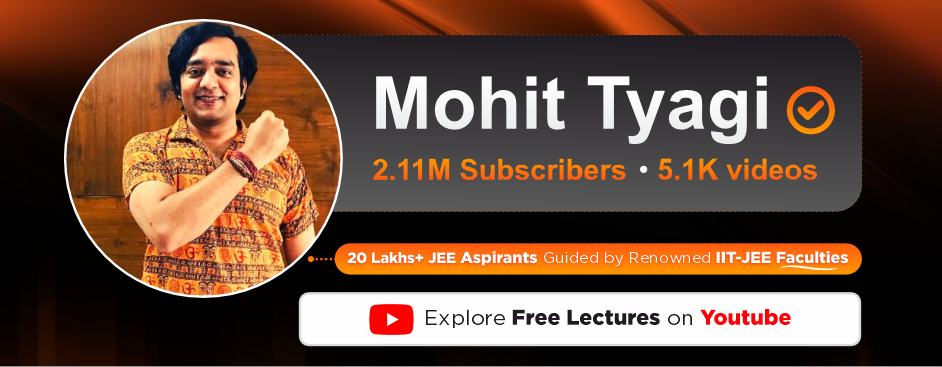
Whether you need a fully structured dropper batch or just free concept videos to strengthen your weak chapters, Competishun has both and everything in between.
Dropper and Repeater Courses at Competishun
Pragyaan Batch
JEE Main Focused · Designed specifically for Droppers and 12th Appearing Students
Enroll NowTest Series (Official)
AITS Prakhar, AITS Praveen, UTS, ATS — for JEE Mains and Advanced.
View Test SeriesJEE Main PYQ Combined
2021 to 2025 chapter-wise solved papers with complete trend analysis.
Get PYQ BookMust-Read Related Blogs
These blogs cover topics that every dropper student thinks about. Each one will help you make better decisions during your drop year.
A great read to revisit the fundamentals and understand what a solid JEE foundation should look like.
An honest guide to help you decide if dropping a year is the right choice for your situation.
Understand both exams clearly so you can build your drop year strategy around the right target.
Final Thoughts
The drop year is genuinely one of the most challenging things a student can go through. The uncertainty, the pressure, the comparisons, and the self-doubt can all feel very heavy at times. But it is also, when used well, one of the most powerful opportunities you will ever get to completely transform your score and walk into JEE 2027 as a better, more prepared, and more confident version of yourself.
You already know what the exam feels like. You already know where you struggled. You have already done something most people are too afraid to even attempt. Now you have the plan. The only question is whether you are ready to execute it one day at a time for the next 12 months.
We genuinely believe you are. The students who come back stronger after a difficult attempt are often the ones who end up with the best stories and the best results. This year is yours to own.
Quick Reference: Your Full Drop Year Plan
Save this or bookmark it. Come back to this whenever you need to check what phase you should be in and what your focus should be right now.
| Phase | Timeline | What to Do |
|---|---|---|
| Reset and Rebuild | May to July | Analyse JEE 2026 honestly, rebuild weak concepts from scratch using NCERT |
| Full Syllabus Revision | August to October | Cover Class 11 and 12 systematically, make short notes, solve chapter-wise PYQs |
| Intensive Practice | November to January | Previous year papers daily, track accuracy and speed every session |
| Mock Test Mode | February to March | Weekly full mock tests with deep post-test analysis every single time |
| Final Revision | April | Only revision from your notes, no new topics, sleep well and stay calm |