JEE 2026 Attempt Went Wrong? 7 Common Mistakes Droppers Make and How to Avoid Them in 2027
Drop Year Strategy — JEE 2027
JEE 2026 Attempt Went Wrong? 7 Common Mistakes Droppers Make and How to Avoid Them in 2027
First things first. If JEE 2026 did not go the way you planned, you are not alone and you are not behind in some permanent, unfixable way. Every year, thousands of students sit for JEE and come out feeling like the result did not reflect how hard they worked or how much they knew. That frustration is real and it is valid.
But here is the thing about a drop year. The students who use it well and come out the other side with a genuinely better rank are almost always the ones who did two things that most others skip.
We are going to walk through the seven most common mistakes that students make during their JEE preparation and attempt. For each one we are going to tell you exactly what it looks like, why it happens, and the specific fix that works for JEE 2027 preparation. Read through each one honestly. If you recognise yourself in a mistake, that is actually a good thing because recognition is the first step to fixing it.
Before We Start: The One Question That Changes Everything
Before we get into the seven mistakes, sit with this one question for a few honest minutes before reading further.
Not the surface reason. Not "I got nervous in the exam" or "the paper was hard." The real reason, the one underneath those.
Most students who sit with this question long enough eventually land on one of a handful of root causes: incomplete syllabus coverage, weak problem-solving practice, poor time management in the exam, concept gaps in critical chapters, or inconsistent preparation across the year.
Whatever your honest answer is, this blog is going to address it. But the honest answer has to come first because the fix only works if you know what you are actually fixing.
The 7 Mistakes — and the 2027 Fix for Each
Go through each one carefully. Be honest about which ones applied to your 2026 preparation. The ones you recognise in yourself are the ones to build your 2027 plan around.
Trying to Cover Everything Instead of Prioritising the Right Chapters
This is probably the most widespread mistake among JEE aspirants. The syllabus is large and when you look at it as a whole, everything feels equally important. So students end up trying to cover every chapter at equal depth and run out of time before truly mastering the chapters that actually show up the most in the exam.
Here is what the data actually says about JEE Main. A consistent set of chapters across Physics, Chemistry, and Mathematics accounts for roughly 60 to 70 percent of marks in every session. Electrostatics, Optics, and Laws of Motion in Physics. Organic Chemistry, Chemical Bonding, and Electrochemistry in Chemistry. Calculus, Coordinate Geometry, and Algebra in Mathematics. A student who masters these high-weightage chapters completely will almost always score better than a student who studied everything at the same shallow depth.
In your very first week of drop year preparation, create a priority list for each subject. Mark chapters as high, medium, or low based on their actual JEE Main weightage over the last five years. This list becomes your preparation map and your best time and energy go to high-priority chapters first, every single time.
Understanding Concepts But Not Practising Enough Problems
This is the mistake that surprises students the most when they realise it because it genuinely feels like studying well. You read the theory, you understood the concept, you followed the derivation step by step, and everything made sense. Then you sat in the exam hall and the question looked completely different from anything you had seen and you could not figure out where to start.
Understanding a concept and being able to solve a JEE-level problem using that concept are two completely different skills. Understanding comes from reading and listening. Problem-solving ability comes only from practising problems, getting some wrong, figuring out why, and trying again. Most students who struggle in JEE had a theory to practice ratio heavily skewed towards theory — 80 percent reading and only 20 percent actually solving. For JEE, those numbers need to be much closer to the other way around.
For every hour you spend reading theory, commit to at least one hour of problem practice from that same chapter. Do not move to the next chapter until you can solve a range of questions from the current one including some JEE previous year questions. If you cannot solve those, the chapter is not done yet regardless of how well the theory felt.
Skipping Revision and Relying on Memory to Hold Everything Together
The human brain is not a hard drive. Information does not stay in memory just because you studied it once, even if you understood it completely at the time. Without regular revision, the clarity you build while studying a chapter starts fading within days and within a few weeks it can feel genuinely unfamiliar again. This is not a weakness or a sign of being a bad student — it is just how human memory works for everyone.
The mistake most JEE aspirants make is studying a chapter once, moving on, and then coming back for revision only in the final weeks before the exam. By that point there is too much to revise in too little time and the revision becomes rushed and shallow, which means the exam happens without earlier chapters being properly recalled and ready.
Build a three-layer revision system into your routine from day one. Every day spend 30 minutes reviewing the previous two to three days from your short notes. Every week spend one session reviewing everything covered that week. Every month do a bigger revision of all chapters completed that month. This keeps previously studied chapters alive in memory so they are genuinely ready when the exam comes.
Solving Only Easy and Medium Problems and Avoiding the Hard Ones
This is a very natural human tendency and it makes complete sense as a habit. When you hit a question that is genuinely hard, there is an instinct to skip it and move to something you can solve more confidently. Over time, because easy and medium questions feel productive and hard ones feel frustrating, you end up spending almost all your practice time in the comfortable zone.
The problem is that JEE Main and especially JEE Advanced are not designed to reward comfort zone problem-solving. The questions that separate students in the top percentiles from everyone else are almost always the harder ones that require combining two or three concepts in ways you have not exactly seen before. If you have not practised being uncomfortable with hard problems, those questions will feel impossible in the exam even if you technically knew all the concepts involved.
Every week, deliberately pick two or three genuinely hard questions from each subject and sit with them without looking at the solution for at least 20 to 30 minutes. Even if you cannot solve them completely, that mental effort builds exactly the kind of thinking JEE rewards. When you do look at the solution, understand the approach rather than just copying the steps because the approach is what transfers to the next hard problem.
Poor Time Management During the Actual Exam
You can be well-prepared for JEE and still get a significantly lower score than your preparation deserves because of how you managed time inside the exam hall. This happens to more students than most people realise and it is one of the clearest examples of how exam performance is a skill that is completely separate from knowledge.
The most common version looks like this. A student gets stuck on a hard question early in the exam and keeps trying because leaving it feels like giving up. Ten to fifteen minutes pass and the question is still unsolved. Now the student is behind on time and starts rushing through easier questions they should have been able to solve correctly. Silly errors increase, confidence drops, and by the end of the paper too much time has been spent on questions that were not worth it and not enough on the ones they could have genuinely solved.
Practise exam strategy explicitly throughout your mock test sessions, not just in the final month. As a general rule, do not spend more than two to three minutes on any single question before marking it and moving forward. Come back to skipped questions after finishing the rest. Practise this strategy in every chapter-wise test and mock test across the year so it becomes automatic on exam day.
Treating All Three Subjects Equally When One is Significantly Weaker
JEE Main has equal marks for Physics, Chemistry, and Mathematics which means a low score in any one subject will bring down your overall percentile significantly regardless of how well you do in the other two. Many students instinctively spend more time on the subjects they enjoy and are naturally stronger in, and less time on the subject that feels hardest. The result is an unbalanced preparation that shows up very clearly in the final score.
The tricky part is that this does not feel like a mistake while you are doing it. Studying a subject you are good at feels productive. Studying a weak subject feels discouraging and slow. So it is very easy to keep choosing the comfortable path without realising how much the gap is growing across months.
Identify your weakest subject honestly at the start of the drop year and give it the first and best study session of your day every day because your concentration is highest then. Do not reduce time on stronger subjects but give your weakest subject a guaranteed daily slot that you never skip. Track chapter-wise test scores in all three subjects every month and adjust your time split immediately if the gap is growing.
Not Taking Mock Tests Seriously or Not Analysing Them After
This might be the most actionable mistake on the entire list because fixing it requires no extra study time, no new books, and no special resources. It just requires a change in how you approach mock tests.
The mistake has two parts. The first is not taking enough mock tests or avoiding them because the scores feel discouraging. The second part, which is just as damaging, is taking mock tests but then only looking at the score and moving on without doing a deep analysis of every question that went wrong and why. A mock test where you only check the score teaches you almost nothing. A mock test where you spend equal or more time understanding every wrong answer is one of the most valuable preparation activities available to you.
Start chapter-wise tests from the very beginning of preparation and full-length mock tests from February. After every single test without exception, go through every wrong answer and categorise the mistake — concept gap, silly error, or time management issue. Each category has a different fix. Keep an error notebook where you write the specific mistake and correct approach for every question you got wrong, and review it regularly.
Quick Reference: Your 2027 Preparation Checklist
Bookmark this. Go through each row, be honest about which ones applied to your 2026 attempt, and build your 2027 plan specifically around fixing those.
| # | The Mistake | The 2027 Fix |
|---|---|---|
| 1 | No chapter prioritisation — equal time on everything | Create high, medium, low priority chapter list by JEE weightage in week one |
| 2 | Too much theory reading, too little problem solving | One hour of practice for every one hour of theory, minimum — no exceptions |
| 3 | No regular revision, studying once and hoping it stays | Daily, weekly, and monthly three-layer revision system from day one |
| 4 | Only easy and medium problems, avoiding the hard ones | Two to three hard problems per subject every week, deliberately |
| 5 | Getting stuck on questions and losing time in the exam | Two to three minute rule per question, practise in every single mock test |
| 6 | Favourite subjects get more time, weak subject gets neglected | Weakest subject gets the best daily slot, track scores monthly in all three |
| 7 | Checking the mock test score and moving on without analysis | Equal time on analysis as on the test itself, maintain an error notebook |
About Competishun: Built for Students Coming Back Stronger
At Competishun, we work with a large number of dropper students every year and we see this pattern consistently — the students who improve their rank the most in their second attempt are almost always the ones who were honest about what went wrong the first time and who had a structured support system to help them do things differently.
Our teachers have more than 20 years of experience teaching JEE aspirants and they know exactly what separates a good preparation from a great one. More than 2.1 million students follow the Competishun YouTube channel for free concept videos, problem-solving techniques, and strategy sessions available completely free of cost.
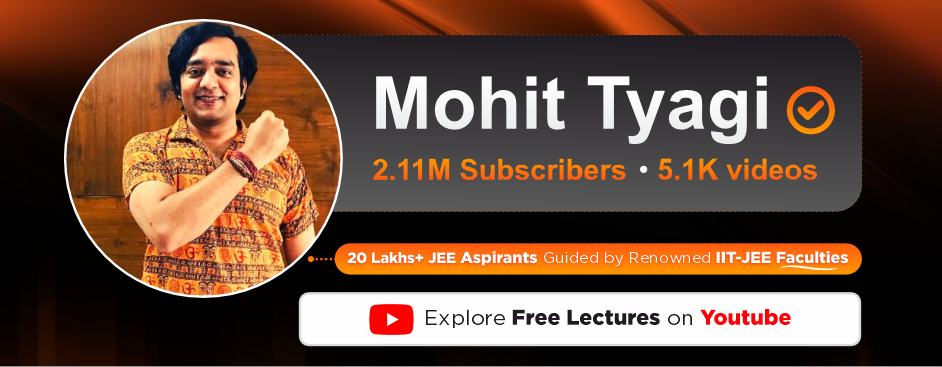
If you want a more structured approach with organised classes, regular chapter-wise tests, and a clear weekly plan that removes the guesswork from your preparation, the Competishun app and dropper batches are built exactly for that. Visit competishun.com to explore dropper courses for JEE 2027 and take the first step in making this year genuinely different from the last one.
Dropper Courses at Competishun
Test Series (Official)
AITS Prakhar, AITS Praveen, UTS, ATS — for JEE Mains and Advanced.
View Test SeriesJEE Main PYQ Combined
2021 to 2025 chapter-wise solved papers with complete trend analysis.
Get PYQ BookMust-Read Related Blogs
These three blogs work together with what you just read. Between them they cover your complete JEE 2027 drop year plan from the daily routine all the way to subject-wise chapter priorities.
The complete beginner guide for students starting JEE preparation from scratch after boards.
A full 12-month phase-wise plan for students who attempted JEE 2026 and want a better rank in 2027.
Chapter-wise priority list for Physics, Chemistry, and Mathematics — essential for every JEE aspirant.
Final Thoughts
Getting a result that was lower than what you worked for is genuinely painful. But the students who come back and crack JEE the second time are not usually the ones who were more talented. They were the ones who were more honest.
Honest about what actually went wrong. Honest about which habits were hurting them even when those habits felt like studying. Honest about the gap between their preparation and what JEE actually demands.
You have already done the hard part by deciding to try again. Now the work is about doing it smarter. Go through each of the seven mistakes one more time, be honest about the ones that applied to you in 2026, and build your 2027 plan specifically around fixing those.