How to Increase Speed in JEE Mains: Practical Drills, Question Attempting Order and Daily Speed Practice Techniques
JEE Mains 2027 Speed and Time Management Guide
How to Increase Speed in JEE Mains: Practical Drills, Question Attempting Order and Daily Speed Practice Techniques
Speed in JEE Mains is not a talent. It is a skill built through a specific type of practice that most students never do deliberately. Students who leave fifteen to twenty questions unattempted at the end of a three-hour paper almost always have adequate knowledge to have attempted most of those questions correctly — but they ran out of time because speed was never trained directly.
There is a common misconception that solving more problems automatically builds speed. It does not. Solving problems under arbitrary time conditions, without tracking pace, without targeting specific slow question types, and without systematically compressing the time allowed per session produces students who are practiced at solving problems at their natural speed — not at JEE Main speed. These are different speeds and only one of them produces a good score.
JEE Mains gives you 180 minutes for 90 questions — exactly two minutes per question on average. But some questions should take thirty seconds and some should take four minutes. Speed in JEE is not about being uniformly fast — it is about knowing which questions to solve instantly, which to solve carefully, and which to skip without hesitation. That judgment, built through deliberate daily practice, is what separates students who finish with time left from students who scramble through the last section.
This blog gives you the complete speed improvement system — what speed actually means in JEE Main context, a daily speed practice routine that builds genuine exam pace over weeks, the question attempting order strategy that recovers fifteen to twenty minutes of effective paper time, specific drills for Physics, Chemistry, and Mathematics, and the most common speed mistakes that trained students avoid.
What Speed Actually Means in JEE Mains — It Is Not What Most Students Think
Speed in JEE is almost never about calculating faster. Attempting to speed up calculation is how students make more errors. Genuine JEE speed is built from three completely different sources and understanding all three is the first step to building them.
Pattern Recognition Speed
Identifying the question type and correct approach in under 30 seconds. Built through high-volume chapter-wise practice over months.
Execution Automaticity
Applying standard procedures without conscious deliberation. Built through repetition drills on the most common question types per chapter.
Strategic Triage
Knowing instantly which questions to attempt, which to skip, and which to guess. Built through mock test practice with deliberate triage decisions.
| Speed Source | What It Looks Like When Present | What It Looks Like When Absent | How Long to Build |
|---|---|---|---|
| Pattern Recognition | You read a problem and immediately know whether it is an energy conservation, impulse-momentum, or rotational problem — before writing anything | You read the problem and spend 60–90 seconds trying to decide which approach to use while the timer runs | 6–8 weeks of chapter-wise PYQ practice with explicit approach identification before solving |
| Execution Automaticity | Standard procedures — applying Kirchhoff’s laws, setting up ICE tables, using integration by parts — happen without conscious step-by-step deliberation | Each familiar procedure still requires conscious effort at every step, making every question take longer than it should | 4–6 weeks of targeted repetition drills on the 3–5 most common question types per chapter |
| Strategic Triage | You scan a section in the first 3 minutes, identify the 20–22 easiest questions, and collect those marks first before returning to harder ones | You attempt questions in the order they appear, getting stuck on hard early questions and running out of time for easy late questions | 3–4 weeks of mock tests with deliberate triage practice and section-scan training |
| Most students only work on Execution Automaticity — practising procedures faster. The highest speed gains come from building Pattern Recognition and Strategic Triage, which most students never train explicitly. | |||
The Daily Speed Practice Routine — 30 Minutes That Build Exam Pace Over Weeks
This routine is separate from your regular DPP and PYQ practice. It is a dedicated daily speed training session of thirty minutes that specifically targets the two speed sources most students never train — Pattern Recognition and Execution Automaticity. It should happen at the same time every day and should not be skipped for regular practice.
| Block | Duration | Activity | What It Builds |
|---|---|---|---|
| Block 1 | 10 min | Pattern Flash Drill: Read 10 questions from a single chapter’s PYQ bank. For each question, spend 20 seconds only — identify the approach type in one word or phrase and write it. Do not solve. Timer running. | Pattern Recognition Speed. After 4–6 weeks, approach identification becomes almost instant for common question types. |
| Block 2 | 15 min | Timed Template Drill: Select 5 questions of a single common question type from the chapter. Solve all 5 under a 15-minute total timer (3 minutes per question maximum). Record how many were solved correctly within time. | Execution Automaticity. The 3-minute constraint forces procedural compression while maintaining accuracy. The template becomes faster with each repetition. |
| Block 3 | 5 min | Speed Formula Recall: Cover formula sheet for the day’s chapter. Write every formula, condition, and approach trigger you can recall in 5 minutes on a blank page. Compare and note misses. | Reduces the time spent during solving that is currently going to formula retrieval from memory. When formulas are automatically accessible, each problem loses 20–30 seconds of hesitation time. |
| Rotate through chapters daily — do not repeat the same chapter’s drill twice in the same week. Speed gains transfer across similar question types within a subject, so building speed in one Mechanics chapter accelerates speed in related Mechanics chapters. | |||
The measurable target: within 6 weeks of consistent daily speed practice, your Block 2 completion rate should reach 4 out of 5 questions correctly within the 15-minute timer. If you are completing fewer than 3 of 5 at week 6, either the question type selected is too difficult for the current chapter accuracy level (select an easier question type from the same chapter) or the approach identification in Block 1 has not yet become reliable (spend more time on Block 1 before advancing to Block 2).
Practical Speed Drills — Four Drills That Work Across All Subjects
These four drills are the core of the speed-building system. Each targets a specific speed bottleneck and can be applied to any chapter in any subject. Build one drill into your routine per week before adding the next.
D1DRILL
The Shrinking Clock Drill — Compress Time Until You Find the Minimum
Select ten questions of the same question type from a chapter where you have above sixty-five percent PYQ accuracy. Solve the first two with a four-minute timer per question. Solve the next two with a three-minute timer. Solve the following two with a two-and-a-half minute timer. Attempt the remaining four with a two-minute timer.
Record how many questions from each time tier were solved correctly. The tier where accuracy drops below seventy percent is your current natural minimum — the time below which speed is being traded for accuracy at an unacceptable rate. Your target is to shift this minimum down by thirty seconds every two weeks. A student who can solve standard Mechanics problems at four minutes in week one should be at two and a half minutes by week five for the same question type, without any accuracy loss.
Why This Drill Works
The shrinking clock forces your brain to find procedural shortcuts that it will not discover if time is never constrained. Some of these shortcuts are legitimate efficiency gains — recognising a calculation pattern that allows skipping an intermediate step. Some are recognition-based — identifying from the problem structure that one option is clearly impossible, reducing the full calculation. Both are built by repeatedly encountering the constraint at the point of discomfort.
D2DRILL
The Template Recognition Drill — Solve the Setup, Not the Calculation
Select fifteen questions from a single chapter. For each question, your only task is to correctly set up the solution — write the governing equation with all variables correctly identified, write the boundary conditions, and write the first step of the solution — without completing the calculation. You have sixty seconds per question. Record how many setups were correct.
This drill specifically targets the pattern recognition bottleneck. The most time-consuming part of many JEE problems is not the calculation but the setup — understanding what type of problem this is and what the starting equation should be. Students who can set up a problem correctly in fifteen seconds and then calculate it correctly in ninety seconds will outperform students who take sixty seconds to set up and then calculate in ninety seconds — producing a forty-five-second difference per problem that compounds to a significant time advantage across thirty questions in a subject.
The Completion Trap
Stopping at setup feels incomplete and unsatisfying, which is why most students never do this drill. They want to solve the problem fully. But the setup is where the speed bottleneck lives for most students, and the only way to specifically train setup speed is to stop there repeatedly without the reward of the complete solution. Trust the drill — the discomfort is the training happening.
D3DRILL
The Option Elimination Drill — Score Without Full Calculation
Select ten questions from any subject section. For each question, attempt to eliminate two options within forty-five seconds using any or all of these quick methods: dimensional analysis (wrong units eliminate the option), order of magnitude estimation (clearly unreasonable values eliminate the option), limiting case testing (if a variable goes to zero, does the expression behave correctly), sign analysis (answer must be positive — eliminate negative options), or known result matching (if the problem reduces to a familiar standard case, the answer should match that case).
After the forty-five second elimination attempt, make your best guess from the remaining options. Record your accuracy. Students who do this drill for three to four weeks develop a fast two-option elimination reflex that adds two to four correctly attempted questions per real exam — questions they would previously have either skipped or spent three to four minutes fully solving. In a paper where every question is worth four marks, two to four additional correct attempts is eight to sixteen additional marks from this drill alone.
D4DRILL
The Full Section Sprint — Simulate Complete Section Under Time Pressure
Twice per week, take a complete 30-question section from a JEE Main mock or PYQ paper under exactly 55 minutes — five minutes less than the one-hour typical allocation. The five-minute reduction is deliberate and forces triage decisions that a comfortable timeline does not require. Record not just the score but the specific questions attempted, skipped, and guessed in each tier.
After the drill, analyse which questions you skipped that you could have solved given more time. These are your triage error questions — questions where the skip decision was wrong because the question was within your capability but not recognised as such during triage. Identifying these question types and practising recognising them faster (through the Template Recognition Drill) closes the triage gap over weeks.
The 5-Minute Deliberate Constraint
When you consistently solve 55-minute sections at adequate accuracy under the 55-minute constraint, the real exam’s 60-minute allocation per section feels like a comfortable buffer rather than a tight deadline. This psychological shift — arriving at a section feeling like you have extra time rather than already behind — is one of the most underappreciated speed improvements available from this drill.
Question Attempting Order — The Strategy That Recovers 15 to 20 Minutes of Effective Paper Time
Most students attempt JEE questions in the order they appear on screen. This is the least efficient possible approach because question difficulty is distributed randomly, not sequentially. Encountering a difficult question early — before any easy questions have been collected — produces time loss, confidence drop, and cascading difficulty for all subsequent questions in that psychological state.
The Three-Pass System — Use This in Every Mock From This Week
| Pass | Time Budget | Target Questions | Decision Rule | Expected Marks |
|---|---|---|---|---|
| Pass 1 — Easy Sweep | 25–30 min per section | All questions where the approach is clear within 15 seconds of reading | If approach is not immediately visible — mark and skip. Zero hesitation. Move instantly. | 15–20 questions solved. 60–80 marks secured in first pass. |
| Pass 2 — Medium Grind | 20–25 min per section | All skipped questions where the approach becomes visible on a second read with fresh eyes | Spend up to 3 minutes per question. If not progressing after 2 minutes — mark as guess-eligible and move on. | 5–8 additional questions. 20–32 additional marks. |
| Pass 3 — Intelligent Guess | 5–8 min per section | Remaining unattempted questions where elimination can narrow to 2 options | Apply 45-second elimination. If 2 options eliminated → guess. If not → leave blank. | 2–4 additional correct guesses. 8–16 additional marks (minus ~2 wrong). |
| Total potential benefit of the three-pass system over sequential attempting: 15–20 marks per paper from the same knowledge level. Source: faster collection of easy marks in Pass 1, more focused attention on medium questions in Pass 2, and intelligent (not random) guessing in Pass 3. | ||||
The Section Scan — How to Do Pass 1 Without Wasting Time
The section scan is the technique that makes Pass 1 efficient. When a section loads, do not start answering Question 1 immediately. Spend sixty to ninety seconds scanning the question numbers — reading only the first sentence or the key quantity asked from each question, not the full problem. After the scan, you will have a rough sense of which five to seven questions will take less than ninety seconds each and which will require three to four minutes. Collect the sub-ninety-second questions first in Pass 1 and defer the three to four minute questions to Pass 2. This reordering is invisible in the final score but produces a dramatically different time distribution that protects your best concentration for the questions that need it most.
Subject Order — Personalise and Lock In Across Multiple Mocks
The order you attempt subjects in JEE Main has a significant impact on total score. Starting with your strongest subject banks easy marks when concentration is highest and generates momentum. Starting with your weakest subject under pressure when you are already somewhat fatigued in the second hour is a much harder task than attempting it with the fresh energy of the first forty-five minutes. Test three different subject orders across three consecutive mock tests and compare the combined subject scores. The order that consistently produces your highest combined score is your optimal order. Once identified, use it without deviation in every subsequent mock and in the actual exam.
Subject-Specific Speed Building — What Takes Longest and How to Fix It
Physics — Speed Bottleneck: Principle Identification
The time lost at the beginning of Physics problems, not in the calculation
Where Physics Time Is Lost
The biggest Physics speed loss for most JEE students happens in the first sixty to ninety seconds of each problem — the principle identification and setup phase. Calculation time for most Physics problems is relatively fixed and difficult to compress without losing accuracy. But the principle identification phase can be compressed dramatically through the Pattern Flash Drill. For Physics specifically, build a quick mental trigger for each of the seven main principles: see “variable force” → Energy method; see “before and after collision” → Momentum conservation; see “rotating body with angular velocity” → Rotational dynamics; see “charges and field lines” → Gauss’s law or Coulomb approach; see “changing flux” → Faraday’s law. Drilling these triggers through Block 1 of the daily speed routine for six to eight weeks makes principle identification nearly instantaneous for standard question types.
Physics Speed Drill: The FBD Instant Draw
For all Mechanics problems, the speed drill is to draw the Free Body Diagram — with all forces correctly labelled — in under twenty seconds before any calculation. Students who draw the FBD first save time overall because a correct FBD prevents setup errors that require restarting the solution. The FBD drill: take twenty Mechanics problems, set a twenty-second timer for each FBD, draw, check against the solution’s FBD, record accuracy. Target: eighteen of twenty correct FBDs within twenty seconds each. When this is achieved, setup errors from Mechanics problems essentially disappear and the time freed from re-doing wrong setups more than compensates for the twenty seconds spent on the FBD.
Chemistry — Speed Bottleneck: Different for Each Branch
Calculation setup for Physical; product identification for Organic; fact retrieval for Inorganic
Physical Chemistry — ICE Table Automaticity
The ICE table is the most commonly needed setup in Physical Chemistry Equilibrium questions and the students who can write the correct ICE table in under thirty seconds for any equilibrium problem save forty-five to sixty seconds per Equilibrium question compared to students who construct it slowly every time. The drill: fifteen Equilibrium questions, write only the ICE table for each one with a thirty-second timer per question. Do not solve. Just set up the ICE table correctly. At ninety percent accuracy within thirty seconds, the ICE table is automatic and you will never be slow on Equilibrium questions again.
Organic Chemistry — Product Prediction Flash Drill
Organic Chemistry speed comes from instant recognition of reaction type and product — not from working through the mechanism step by step for every question in the exam. The flash drill: twenty Organic questions from functional groups chapters, cover the options, predict the major product in writing within forty-five seconds per question, uncover options and select. Record accuracy. This drill builds the product-prediction reflex that reduces Organic Chemistry average time from three minutes per question to under two minutes for standard named reactions and functional group conversions.
Inorganic Chemistry — Fact Retrieval Speed
Inorganic Chemistry questions in JEE Main are almost always testing specific NCERT facts and the speed bottleneck is the time spent searching memory for those facts while the timer runs. The drill for Inorganic speed is simply the Block 3 speed formula recall from the daily routine, applied specifically to Inorganic Chemistry fact sheets — cover the facts, reproduce from memory on a blank page, check. But do this specifically in the thirty minutes before each Inorganic Chemistry DPP or PYQ session to keep the facts warm in working memory. Students who revise their Inorganic fact sheets immediately before practice sessions answer Inorganic questions measurably faster than students who rely on cold retrieval from long-term memory.
Mathematics — Speed Bottleneck: Calculation Length and Algebraic Complexity
The chapter with the longest calculations is Integration — target it first for the highest speed return
Integration — Speed Through Standard Results
Integration speed comes from two sources — knowing standard integrals from memory (so you do not re-derive them every time) and recognising which integration technique applies within the first thirty seconds of reading the problem. The standard results drill: cover your Integration formula sheet, write every standard integral form you can recall in five minutes, check and note misses. For technique recognition: twenty integration problems, identify the technique in one word (substitution, parts, partial fractions, by limits properties) within twenty seconds each before solving. After four weeks, Integration solution time drops by sixty to ninety seconds per question for standard forms.
Coordinate Geometry — T = 0 and Parametric Speed
The single biggest time saver in Coordinate Geometry is the T = 0 shortcut for tangent equations and the chord of contact formula. These two tools replace multi-step differentiation-based tangent calculations with a single substitution and save sixty to ninety seconds per Coordinate Geometry question where they apply. The speed drill: ten Conic Section tangent or chord questions, use only T = 0 to answer them without any differentiation. Verify against full solutions. Once T = 0 is genuinely automatic for all four conics, Coordinate Geometry average time drops from three to four minutes per question to under two minutes for tangent and normal questions.
Probability — Bayes’ Theorem Template
Probability questions in JEE Main consistently follow a small number of templates — Bayes’ theorem application, binomial distribution, and geometric probability. Students who have a pre-built template for each of these types solve Probability questions in under two minutes. Students without a template spend three to four minutes reconstructing the approach for each question. The speed drill: seven Probability questions, write the setup template (not the solution) for each within thirty seconds — identify the type, write the first formula, identify the numerator and denominator of the calculation. Correct setup templates means the rest of the solution is mechanical and fast.
Tracking Your Speed Improvement — The Weekly Metrics That Show Progress
Speed improvement without tracking is invisible. Without tracking, a student who is getting faster cannot confirm it and a student whose speed is not improving cannot identify why. These are the four speed metrics that you should record every week to keep the improvement visible and accountable.
| Metric | How to Measure | Starting Benchmark | Target After 6 Weeks | What Flat Progress Means |
|---|---|---|---|---|
| Questions attempted per section in 55-minute sprint | Count total questions attempted (correctly + wrongly) in each Full Section Sprint drill | 22–24 for most droppers at start of speed training | 27–29 questions attempted | Pattern recognition is not improving. Double Block 1 (Pattern Flash Drill) time for 2 weeks. |
| Block 2 Timed Template Drill completion rate | Questions solved correctly within 3 minutes each — out of 5 per session | 2–3 of 5 for most students beginning the drill | 4–5 of 5 consistently | The selected question type is too hard. Select a slightly easier variant of the same question type and build from there. |
| Average time per question in chapter PYQ set | Total time for 10-question PYQ set ÷ 10. Track for the same chapter across weeks. | 3.5–4.5 minutes per question for most droppers at start | 2.2–2.8 minutes per question for P1 chapters | Execution is not compressing. More repetition on the specific calculation steps that are taking longest. |
| First-pass collection rate in full mock tests | Questions correctly answered in first pass ÷ Total correct answers in mock | 55–65% of correct answers collected in first pass | 75–80% of correct answers collected in first pass | Triage decisions are poor. Practice the section scan technique more deliberately in the next 3 mocks. |
| Record all four metrics every Sunday as part of the weekly review. Declining metrics are red flags — address them specifically rather than continuing the same routine and hoping they improve on their own. | ||||
Common Speed Mistakes That Trained Students Avoid
Attempting Questions in Screen Order
The most basic and most costly speed mistake. Screen order is random with respect to difficulty and matches no one’s personal strength profile. Students who attempt in screen order encounter their most difficult questions at unpredictable points, lose time and confidence on them, and arrive at easy questions later in a depleted state. The three-pass system in this blog eliminates this problem entirely. If you currently attempt in screen order, switching to the three-pass system in your next mock will recover ten to fifteen minutes of effective paper time with no additional preparation required.
Spending More Than 4 Minutes on Any Single Question
Four minutes is the absolute maximum time that any single question in JEE Main should receive in the first pass. Questions that take more than four minutes are being attempted through stubbornness rather than strategy. The correct action at four minutes without a completed solution is to mark the question and move on. Students who violate this rule consistently trade one difficult question (which they may still get wrong) for two to three easy questions in the remaining time (which they would have gotten right). This trade is almost always negative in expected value.
Trying to Speed Up by Skipping Steps
The instinctive speed strategy most students try first — writing fewer steps and combining calculations mentally — almost always increases errors rather than increasing speed. When an error occurs in a multi-step mental calculation, there is no written trail to identify where it happened, so the problem must be restarted entirely. The time lost to error recovery from skipped steps consistently exceeds the time saved by skipping them in the first place. Genuine speed comes from faster pattern recognition and procedure automaticity — not from riskier execution of the same slow approach.
Not Practising Speed Under Actual Time Pressure Until Mock Tests
Students who solve problems without time pressure in daily practice and rely on mock tests to expose them to time pressure are making the speed-building environment rare and the non-speed environment common. Speed is built through daily exposure to time pressure, not through occasional large-scale exposure. The daily speed practice routine in this blog makes timed practice the default rather than the exception — which is why six weeks of consistent daily speed training produces more pace improvement than six months of regular preparation without speed drills.
Quick Reference: Your Speed Improvement System
- Speed has three sources: Pattern Recognition (approach identification), Execution Automaticity (procedure speed), and Strategic Triage (which questions to attempt, skip, or guess). Train all three.
- Daily 30-minute speed practice: Block 1 (Pattern Flash Drill — 10 min), Block 2 (Timed Template Drill — 15 min), Block 3 (Formula Recall — 5 min). Do this every day, separate from DPP practice.
- Four drills to build: Shrinking Clock (compress minimum time per question type), Template Recognition (setup without solving), Option Elimination (score without full calculation), Full Section Sprint (55-min section under pressure).
- Three-pass system in every mock: Pass 1 (Easy Sweep — approach visible in 15 sec), Pass 2 (Medium Grind — up to 3 min each), Pass 3 (Intelligent Guess — 45-sec elimination).
- Physics: FBD instant draw drill. Principle trigger training. Setup before calculation.
- Chemistry Physical: ICE table automaticity drill. Chemistry Organic: Product prediction flash. Chemistry Inorganic: Fact sheet warm-up before practice.
- Mathematics Integration: Standard results recall + technique identification in 20 seconds. Coordinate Geometry: T = 0 drill for all conics. Probability: Template identification in 30 seconds.
- Never attempt in screen order. Never spend more than 4 minutes on any question in Pass 1. Never skip steps to speed up — speed comes from automaticity, not from riskier execution.
- Track four speed metrics weekly: Questions attempted per section sprint, Block 2 completion rate, average time per question in PYQ set, first-pass collection rate in mocks.
About Competishun: Speed-Focused Mock Tests and Chapter Practice for JEE 2027
At Competishun, our teachers with more than 20 years of JEE teaching experience understand that speed is a preparation output — the result of months of correctly structured daily practice — not something that appears spontaneously when the exam arrives. Our AITS mock tests are specifically designed to include difficulty distributions that reward triage ability alongside knowledge, making each mock an opportunity to practise the three-pass system under realistic conditions.
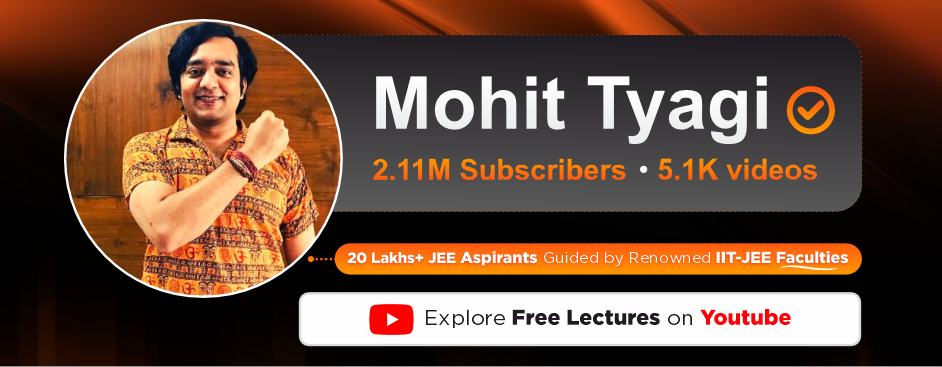
Our chapter-wise practice sessions on the Competishun YouTube channel include explicit timing guidance — teachers demonstrate the approach identification phase and the setup phase at exam speed, modelling the pattern recognition speed that students need to build. More than 2.1 million students follow the Competishun YouTube channel for free concept videos, PYQ solving sessions, and speed technique demonstrations.
Visit competishun.com to explore dropper courses and the test series for JEE 2027.
Dropper Courses at Competishun for JEE 2027
Praveen — Dropper Batch
Comprehensive JEE 2027 dropper course with timed chapter tests and AITS mock tests that support the speed training system in this blog.
Pragyaan — Dropper Batch
Advanced JEE 2027 dropper batch with intensive speed and strategy preparation alongside top-rank content preparation.
AITS — All India Test Series JEE 2027
Official full mock test series providing the realistic timed environment the three-pass system and speed tracking metrics require.
Competishun App
Chapter-wise timed PYQ practice — the daily Block 2 and Block 3 drill environment for the speed practice routine.
Download Free App
Download Competishun App
Free JEE Speed Techniques and Mock Test Strategy Every Week
Join millions of JEE aspirants across our channels for free speed technique demonstrations, timed problem-solving sessions, and daily preparation guidance for JEE 2027 droppers and Class 11–12 students.
Must-Read Related Blogs
Speed and accuracy are the two levers that together determine JEE score. Read this alongside the speed blog to address both simultaneously.
The full mock test analysis framework that the Full Section Sprint drill and three-pass system are practised within across the preparation year.
Score Improvement
JEE Mains Score and Percentile Improvement Plan for Droppers – Chapter Priority, Weak Area Strategy and Weekly Targets
The weekly improvement targets that speed metrics slot into — connecting daily drill progress to the overall score trajectory.
Frequently Asked Questions
1. I finish JEE papers with 20 minutes to spare but my score is still low. What is wrong?
Finishing with time to spare but a low score means speed is not the primary bottleneck — accuracy and knowledge gaps are. The twenty leftover minutes are time that could have been used to attempt additional questions or verify uncertain answers, but the score limitation is coming from wrong answers (negative marking) and low-confidence correct answers rather than from unattempted questions due to time. In this case, the accuracy improvement system from the error log blog is the higher-priority intervention. Once accuracy is addressed and negative marking is significantly reduced, the twenty spare minutes become valuable for picking up borderline questions in Pass 3. But building more speed when accuracy is already poor produces faster wrong answers — not a better score.
2. How long should I do the daily speed practice routine before expecting visible improvement in mock tests?
Expect to see visible improvement in the specific drill metrics — Block 2 completion rate and average time per question in PYQ sets — within three to four weeks of consistent daily practice. These metrics are more sensitive to improvement than full mock test scores because they are isolated to the specific question types being drilled. Full mock test speed improvement typically becomes visible in weeks five to eight because the pattern recognition and automaticity built in daily drills needs time to generalise across multiple chapters and to hold under the additional pressure of a three-hour paper. Do not abandon the routine because mock test times have not improved at week three — the building is happening in the daily metrics first and transfers to the mock test environment with a lag of two to four weeks.
3. Should I use a physical timer or a phone timer for the speed drills?
A physical countdown timer (a stopwatch or dedicated countdown device) is significantly better than a phone timer for speed drills. A phone timer requires your phone to be nearby, which is itself a distraction risk. More importantly, the JEE Main computer-based exam has a countdown timer visible on the screen at all times — and building the habit of glancing at a physical timer during drills more closely simulates the experience of periodically checking the exam timer than a phone timer does. If a physical timer is not available, use the phone timer but keep the phone face-down and check it only at the intervals specified in the drill rather than checking continuously.
4. My Mathematics speed is fine but Chemistry is very slow. Should I adjust the daily drill chapter rotation?
Yes — the chapter rotation in the daily speed routine should be weighted toward your slowest subject rather than evenly distributed. If Chemistry is significantly slower than Mathematics and Physics, dedicate three of the five weekday drill sessions to Chemistry chapters and one each to Physics and Mathematics. This rebalancing makes the time investment match the speed gap. Review the subject-specific speed bottlenecks in this blog to identify specifically which Chemistry branch is slowest — Physical Chemistry ICE table speed, Organic product prediction speed, or Inorganic fact retrieval speed — and use the corresponding drill as the Block 2 activity for those sessions. Targeted chapter rotation based on actual speed data produces faster overall improvement than equal rotation across subjects.
5. Is it better to focus on speed for a few chapters or build speed across all chapters simultaneously?
Build speed in high-priority chapters first — the same P1 chapters from the chapter priority list that deserve the most preparation time also deserve the most speed training time. A student who is extremely fast in four to five high-weightage chapters and moderate speed in all others will outperform a student who is uniformly moderately fast across all chapters, because the high-weightage chapters contribute the most questions per paper and the speed advantage compounds across more attempts. Once the P1 chapters reach target speed — four of five Block 2 drills correct within three minutes — move to P2 chapter speed building. The priority framework applies to speed building exactly as it applies to accuracy building.
6. Can the three-pass system be used in JEE Advanced as well?
Yes, but with adaptations. JEE Advanced has multiple question types — single correct, one or more correct, integer type, matching type — and the triage decision is more complex because the marking scheme varies across types. For Advanced, the Pass 1 scan focuses specifically on identifying the integer-type questions where there is no negative marking risk — these can be attempted somewhat more freely in Pass 1. For MCQ types with negative marking, the same confidence threshold as Main applies. The core principle of the three-pass system — collect easy marks first, spend focused time on medium questions in Pass 2, and make intelligent decisions about hard questions in Pass 3 — applies fully to Advanced. The specific pass boundaries need to be calibrated to Advanced’s longer total time and more varied question types through several Advanced mock tests before the actual exam.
7. I lose a lot of time on reading long questions. Is there a specific technique for reading faster?
Long JEE questions — especially in Chemistry and Mathematics — often have a short core problem surrounded by contextual information that is not necessary for the solution. The technique is to read the final sentence first — the quantity asked — and then read the problem statement specifically looking for the numbers, conditions, and given information that are relevant to finding that quantity. Context and background information in long questions can be skimmed rather than carefully read unless they contain numerical values or specific conditions. This selective reading approach reduces effective reading time for long questions from sixty to ninety seconds to thirty to forty-five seconds without missing any critical information. Practise this technique by taking ten long questions from Chemistry mock tests, reading final sentence first, then scanning for numerics and conditions, and verifying you collected all necessary information before solving.
Final Thoughts
Speed in JEE Mains is not a mystery skill that some students are born with. It is a measurable, trainable capability built through the right daily practice structured around the right drills over the right number of weeks. The students who appear fast in mock tests are not calculating faster — they are recognising question types faster, executing standard procedures without conscious deliberation, and making triage decisions without hesitation.
The thirty-minute daily speed practice routine, the four practical drills, and the three-pass attempting system together address all three speed sources. Six weeks of consistent implementation will produce a measurable reduction in average time per question and a measurable increase in questions attempted per section — without any reduction in accuracy.
Start with Drill 1 — the Shrinking Clock — on your highest-weightage chapter tomorrow morning. Run Block 1 and Block 2 of the daily routine immediately afterwards. Do the Full Section Sprint twice this week on a Mathematics section. These three activities, done this week, begin the speed compounding process. The paper you will sit for in February 2027 rewards students who have been training at exam pace for months — not students who first encounter that pace in the exam hall.
Good luck with your JEE 2027 preparation. Speed is built one timed drill at a time. Start today.
Tags
How to Increase Speed JEE Mains
JEE Mains Speed Practice
Question Attempting Order JEE
JEE 2027 Time Management
Speed Drills JEE Mains
JEE Mains 3 Pass System
How to Attempt JEE Mains Faster
JEE Speed Building Techniques
JEE Paper Attempting Strategy
Pattern Recognition JEE Mains
JEE Dropper Speed Improvement
Triage Strategy JEE Mains 2027
Daily Speed Practice JEE
Competishun JEE Speed Strategy
JEE Mains Finish on Time