
If you are serious about cracking JEE, one of the most important decisions you will make before opening a single JEE textbook is this: which schooling option do you pick for Class 11 and Class 12?
The reason this decision matters so much is that it directly controls how much time you have for JEE preparation every single day for the next two years. Not your coaching schedule, not your study plan, not which books you use. The school option you choose determines the raw hours available to you and that affects everything else.
We will walk through all three options in plain, honest language. We will cover what each one actually means in practice, the real advantages and the real disadvantages, who each option suits best, and what the board exam and admission implications are. By the end you will have a clear enough picture to make this decision confidently for your own situation.
Why Does the School Choice Matter So Much for JEE?
JEE Main and JEE Advanced are not exams you can crack by studying for a few months. Consistent, deep preparation over the full two years of Class 11 and Class 12 is what separates students who get their target rank from those who do not.
A student attending regular school with 6 to 7 hours of school time plus travel every day has a very different daily study reality compared to a student who has that same time available for JEE preparation. Over two full years, this difference compounds into a massive gap in preparation depth.
What It Actually Means
Regular school means attending a recognised CBSE, ICSE, or state board school as a full-time student, following the standard school timetable, attending classes daily, and appearing for the school's internal exams and final board exams through that school. No shortcuts, no skipped attendance, no alternative arrangements.
- Creates daily structure and routine automatically
- School teachers support board exam preparation directly
- Strong peer learning environment built in
- Board certificate is universally accepted everywhere
- Best option for keeping all future paths open
- Works well for schools that finish syllabus early
- School plus travel can take 7 to 9 hours daily
- Only 3 to 4 hours left for JEE on most weekdays
- Board-focused teaching often too shallow for JEE depth
- 75 percent attendance rule limits coaching flexibility
- Homework, assignments, and practicals take extra time
Students who benefit strongly from external structure and daily routine. Students keeping all college options fully open beyond just engineering. Students whose school finishes the syllabus early and gives reasonable free time in the final year. Students whose parents are not comfortable with alternative schooling arrangements. Also works well for students targeting JEE Main rather than JEE Advanced where preparation demands are slightly lower.
What It Actually Means
A dummy school is a private institution that enrolls students, gives them a school ID, registers them for board exams, and technically fulfils all the requirements for a Class 12 board certificate but does not require students to actually attend classes regularly. Students spend their full day at JEE coaching and appear for board exams directly through the dummy school.
The school is "dummy" in the sense that attendance is largely waived and the actual teaching happens at the coaching institute, not at the school. The student still receives a valid Class 12 certificate at the end.
- Almost the entire day is free for JEE preparation
- No school commute eating into study time
- No mandatory attendance or unrelated homework
- Full coaching schedule can be followed without conflict
- Valid board certificate recognised for JEE and most admissions
- Recommended by most intensive JEE coaching institutes
- Board exam preparation is entirely the student's own responsibility
- English and optional subjects need self-study from scratch
- Some dummy schools have poor admin and last-minute paperwork issues
- No peer network or social environment during these two years
- Some scholarships and government job forms scrutinise school recognition
- Can feel isolating during tough preparation stretches
Students who are fully committed to JEE as their primary goal for the next two years. Students enrolled in serious full-time coaching programs that run 6 to 8 hours daily. Students disciplined enough to prepare for board exams independently without school support. Students and parents who have done proper research on a well-organised, correctly registered dummy school in their area.
What It Actually Means
NIOS is a government-recognised open schooling board under the Ministry of Education that allows students to study independently and appear for board exams without attending a regular school. Students enroll with NIOS, receive study material, and appear for exams on a flexible schedule.
NIOS is completely legitimate. Its Class 12 certificate is recognised by all central universities, IITs, NITs, and IIITs for admission. It is not a shortcut or a workaround — it is a proper government board that has been used by millions of students across India.
- Maximum schedule flexibility of all three options
- On Demand Examination lets you schedule certain papers when ready
- Can appear in multiple sessions if one paper does not go well
- Subject combination flexibility not available in CBSE or state boards
- Low enrollment cost compared to private schools
- Fully valid for IIT, NIT, and central university admissions
- Zero external structure — completely self-directed
- No teachers, no peers, no accountability built in at all
- NIOS material not deep enough for JEE, needs heavy supplementing
- No natural overlap between board prep and JEE prep
- Some private colleges and non-engineering institutions may not accept it
- Easy to drift without noticing weeks passing unproductively
Students who are extremely self-disciplined and do not need external structure to stay consistent. Students who want maximum time flexibility for JEE preparation without any school schedule at all. Students who cannot access a good dummy school or prefer not to deal with dummy school organisational uncertainty. Students whose parents have fully researched NIOS recognition for all specific target institutions.
Side-by-Side Comparison: All Three Options
Here is an honest comparison across the factors that matter most for a JEE aspirant. Use this table as your reference when making the final decision.
| Factor | Regular School | Dummy School | NIOS |
|---|---|---|---|
| JEE prep time daily | 3 to 4 hours | Almost full day | Almost full day |
| External structure | High | Low | Very low |
| Board exam support | High | None | None |
| Board recognition | Universal | Check school registration | IIT, NIT, central univ. |
| Cost | School fees only | School fees plus coaching | Very low |
| Social environment | Strong peer network | Limited | None built in |
| Schedule flexibility | Low | Moderate | High |
| Risk of neglecting boards | Low | Moderate | Moderate to high |
The One Question That Should Guide Your Decision
If you have read through all three options and are still not sure which one is right for you, here is the single most useful question to sit with honestly before deciding.
Think back honestly. When left to your own schedule in the past, did you follow through consistently or did the hours tend to drift without you noticing?
If the honest answer is yes, you have shown you can do it on your own, then dummy school or NIOS are both viable and you can choose whichever offers better logistical convenience and cost in your area.
If the honest answer is no, then regular school may serve you better despite the time constraint because the structure it provides will keep you working consistently in a way that dummy school and NIOS simply cannot.
Board Marks and JEE Eligibility: What You Must Know
This is one of the most important practical questions to get clear on before making your school decision.
- For JEE Advanced eligibility and IIT admission, you need to either score at least 75 percent aggregate in Class 12 boards or be in the top 20 percentile of your respective board. This applies regardless of which board you are from, including NIOS.
- For JEE Main and NIT admissions, the 75 percent requirement also applies for the merit-based admission list. Always check the latest NTA guidelines each year because this requirement has been modified in some years.
- Students in dummy school and NIOS who assume they can completely neglect boards because they are focused on JEE often end up with marks that create eligibility problems and those problems can override even a good JEE score.
A Note for Parents Reading This
We understand that the dummy school and NIOS options can feel uncertain or uncomfortable if you are hearing about them for the first time. Both are genuinely used by serious JEE aspirants across the country every year and both are legitimate for engineering admissions including IITs and NITs.
The most important thing is not which option feels more conventional but which option gives your child the best combination of preparation time and the right level of structure for how they actually work.
Quick Decision Guide: Which Option Is Right for You?
Use these three cards as your final guide. Read through each one and see which one matches your actual situation most closely.
Choose Regular School if...
You benefit strongly from external structure and a daily routine that someone else creates for you. You want to keep all college and career options fully open beyond just engineering. Your school finishes the syllabus efficiently and leaves reasonable self-study time. Your parents are not comfortable with alternative schooling arrangements. You are targeting JEE Main and are comfortable with 3 to 4 daily JEE study hours.
Choose Dummy School if...
You are fully committed to JEE as your primary goal and are enrolled in a serious full-time coaching program. You are disciplined enough to prepare for board exams independently without school support. You have done proper research and found a well-organised, correctly registered dummy school in your area. You and your parents understand and are comfortable with the tradeoffs involved.
Choose NIOS if...
You are extremely self-directed and have a proven record of working consistently without external accountability. You want maximum flexibility in scheduling your board exams around your JEE preparation. You cannot access a good dummy school or prefer not to deal with dummy school administrative uncertainty. You have confirmed NIOS recognition for every specific institution you are targeting.
About Competishun: With You Across Every Schooling Path
At Competishun, we work with students from all three schooling backgrounds. Regular school students, dummy school students, and NIOS students all prepare for JEE through our platform and our courses are designed to work effectively regardless of how many hours you have available each day.
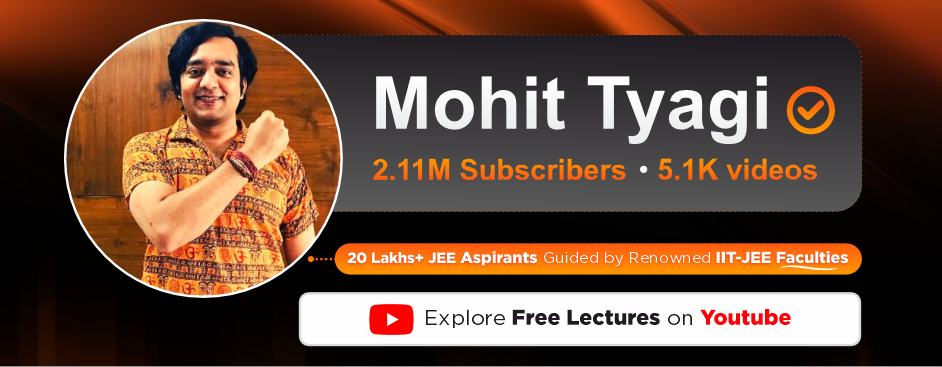
Our teachers have more than 20 years of JEE teaching experience and they understand the specific time constraints and challenges of each schooling path. More than 2.1 million students follow the Competishun YouTube channel for free concept videos, problem-solving sessions, and exam strategy content that makes every available study hour count.
If you want a structured JEE preparation program with organised classes, chapter-wise tests, and a clear weekly study plan for Class 11 and Class 12, the Competishun courses are built for exactly that. Visit competishun.com to explore the options and find the course that fits your preparation style and target.
Courses at Competishun
Test Series (Official)
AITS Prakhar, AITS Praveen, UTS, ATS for JEE Main and Advanced.
View Test SeriesMust-Read Related Blogs
Once you have made your school choice, these three blogs will help you plan your JEE preparation in detail from chapter priorities to daily routines to understanding what went wrong before.
The complete guide for students starting JEE preparation from scratch after only studying for boards.
A full 12-month phase-wise plan for students who attempted JEE 2026 and want a better rank next year.
Chapter-wise priority list for Physics, Chemistry, and Maths that every JEE aspirant should know.
Final Thoughts
The schooling choice is not a decision that gets a lot of attention compared to which coaching to join or which books to study. But in many ways it is more foundational than either of those things because it determines the time and structure available for everything that follows.
Whatever you decide, make it a deliberate and informed decision based on how you actually work and not on what everyone else around you is doing. The student who picks the right option for their specific working style will almost always prepare better than the student who picked the most popular option without thinking it through.