
Okay, so let us be real with each other for a second.
You spent the last one or two years focusing almost entirely on your Class 12 board exams. You studied hard, you gave your boards, and maybe you did well in them too. But somewhere along the way, JEE preparation either never really happened or it happened so little that it barely counts. And now you are sitting here, looking at JEE 2027 on the horizon, and wondering — is it even possible to start from scratch and crack this exam in one year?
So take a breath, keep reading, and let us figure this out together.
You Are Not as Far Behind as You Think
Here is something that most beginner droppers do not realise in the beginning. You have already studied Physics, Chemistry, and Mathematics in Class 11 and Class 12. Even if you studied them only for boards, you have some base in all three subjects. You understand the language of the subjects, you have seen the concepts before, and your brain has at least a loose familiarity with most of the topics.
JEE preparation from this point is not about starting from zero. It is about going deeper into what you already know, building stronger understanding, and learning to apply those concepts to solve challenging problems.
The Real Difference Between Board Preparation and JEE Preparation
This is something nobody explains clearly enough to students who come from a boards-only background. Understanding this difference is the single most important thing before you start planning your preparation.
| Aspect | Board Exam Preparation | JEE Preparation |
|---|---|---|
| What it tests | Ability to reproduce what you studied | Ability to apply and think with concepts |
| Type of questions | Mostly straightforward and predictable | Application-based, multi-concept, tricky |
| Role of NCERT | NCERT is often enough | NCERT is the starting point, not the finish line |
| Marks pattern | Long answers, partial marks awarded | Multiple choice, no partial marks in most sections |
| Speed required | Moderate | High — time pressure is a very real factor |
| Problem solving | Limited, theory-heavy | Daily practice is absolutely essential |
You do not need to throw away everything you learned for boards. You need to build on top of it by going deeper, solving more problems, and training your brain to think rather than just remember.
The Reality Check: What This Drop Year Actually Needs from You
Before we get into the detailed plan, here is an honest reality check that every beginner dropper needs to hear clearly.
The good news is that plenty of students before you have taken this exact path and come out the other side with results that surprised even themselves. What they all had in common was a clear plan, honest self-awareness, and the decision to start today instead of waiting for a better time.
That plan is exactly what the rest of this blog is going to give you.
Your Complete JEE 2027 Preparation Plan at a Glance
Here is your full 12-month roadmap broken into five clear phases. Keep this table in mind as you read the detailed breakdown below.
| Phase | Timeline | Main Focus |
|---|---|---|
| Phase 1 — Foundation Building | May to July | Rebuild concepts from scratch in all 3 subjects using NCERT |
| Phase 2 — Syllabus Coverage | August to October | Complete full Class 11 and 12 JEE syllabus with short notes |
| Phase 3 — Practice and PYQs | November to January | Previous year papers and chapter-wise tests every day |
| Phase 4 — Mock Test Mode | February to March | Full mock tests weekly with deep analysis after each one |
| Phase 5 — Final Revision | April | Only revision from notes, no new topics, exam readiness |
Detailed Phase-Wise Plan: What to Do Each Month
Build Your Foundation the Right Way
This is the most important phase of your entire drop year and the one that beginner droppers most often rush through because of the pressure of time. Please do not do that. A weak foundation will keep causing problems throughout the year no matter how hard you study later. In these first three months, your only goal is to build genuinely clear conceptual understanding in all three subjects starting from the most fundamental topics. For Physics, start with Kinematics and Laws of Motion. For Chemistry, start with Structure of Atom and Chemical Bonding. For Mathematics, start with Functions, Trigonometry, and then move to Algebra. Use NCERT as your primary resource, read slowly, make short handwritten notes, and at the end of each chapter solve 20 to 30 JEE previous year questions from that specific chapter to see where the gap is.
Cover the Full Syllabus Systematically
By August your foundation should be solid and now it is time to move through the entire remaining syllabus of both Class 11 and Class 12 in an organised and systematic way. Create a weekly chapter schedule covering all three subjects. A rough guide that works well for most students is spending two to three days per chapter depending on its size and difficulty. The goal in this phase is coverage and clarity, not perfection on every topic. Keep building your short notes throughout. Also pay special attention to chapters that you found difficult during boards because those are usually the ones where the gap between board-level and JEE-level understanding is the widest. For most students this means Organic Chemistry mechanisms, Rotational Motion, and Calculus.
Intensive Practice and Previous Year Papers
By November your full syllabus should be covered and this phase is entirely about shifting from study mode to problem-solving mode. Solve JEE Main previous year papers from the last 5 to 7 years systematically and chapter by chapter. These papers are absolutely the best resource for understanding exactly what kind of thinking JEE expects. Also start solving JEE Advanced previous year papers even if your primary target is JEE Main because Advanced problems build a deeper level of thinking and make JEE Main level questions feel significantly more manageable. Track your accuracy and speed in every practice session and if you keep getting a certain type of question wrong, stop and go back to the concept before continuing.
Full Mock Test Mode
Take at least one full-length mock test every week under strict exam conditions. No phone, proper timer, sitting at a desk the way you will on exam day. After every mock test, spend at least as much time analysing the paper as you spent taking it. Go through every wrong answer and identify the exact reason for the mistake. Was it a concept gap? A silly calculation error? A time management issue? Each of these has a different fix and finding it is what will actually move your score upward. Also use this phase to work on your exam strategy: the order in which you attempt subjects, how much time to give each section, and the habit of moving on from questions that are taking too long.
Final Revision and Exam Readiness
In the final month before JEE Main, do not study anything new at all. Go through your short notes from the entire year, solve a few questions from each high-weightage chapter to keep your mind sharp, and make sure there are no unresolved doubts anywhere. Sleep well, eat properly, and stay away from unnecessary stress and comparisons with other students. You have put in a full year of serious work and this final month is entirely about trusting that work and walking into the exam hall feeling calm and prepared.
Subject-Wise Starting Points for Students Coming from Boards Only
If you studied only for boards, here is a clear guide on exactly where to begin in each subject and what the most important shift is from board preparation to JEE preparation.
| Subject | Start Here First | Most Important Shift |
|---|---|---|
| Physics | Kinematics, Laws of Motion, Work Energy Power | Stop memorising formulas and start understanding where each formula comes from and why it works |
| Chemistry | Structure of Atom, Chemical Bonding, Organic Chemistry Basics | NCERT is essential but Organic needs mechanism understanding, not just memorisation of reactions |
| Mathematics | Functions, Trigonometry, Quadratic Equations, then Calculus | Move from formula application to problem-solving mindset. Solve problems daily without skipping even one day |
How Many Hours to Study and How to Structure Your Day
One of the most common questions beginner droppers ask is how many hours to study. The honest answer is that quality matters more than a fixed number. But here is a realistic daily schedule that works well for a student starting JEE preparation from a boards background.
| Time Slot | Activity |
|---|---|
| Morning (2 to 2.5 hours) | Study the subject you find hardest when your mind is freshest and most focused |
| Mid Morning (1.5 to 2 hours) | Practice problems from the chapter you just studied — do not skip this step |
| Afternoon (1 to 1.5 hours) | Second subject — theory reading followed by practice questions |
| Evening (1 hour) | Revise whatever you studied in the last 2 to 3 days from your short notes |
| Night (30 to 45 minutes) | Go through your short notes, update them, and plan tomorrow's study session |
Most Common Mistakes Beginner Droppers Make and How to Avoid Them
These are mistakes that come up again and again with students who start JEE preparation from a boards-only background. Read through each one carefully so you do not fall into the same traps.
Using Too Many Books at the Same Time
Using 3 or 4 reference books for the same subject creates confusion and slows everything down. Pick one solid reference book per subject and go through it completely before adding anything else. Finishing one book well is always better than starting five and finishing none of them.
Skipping Problem Practice Because Theory Feels Incomplete
Your theory understanding will never feel complete enough if you only read and never solve. Theory and practice need to go together from the very beginning. Even if you solve just 10 problems per chapter in Phase 1, keep that practice habit alive from day one.
Ignoring Weak Subjects and Staying Comfortable
JEE Main has equal weightage for all three subjects and a very weak performance in one subject can bring your overall percentile down significantly no matter how well you do in the other two. Give your weakest subject extra time every day without completely neglecting the others.
Comparing Your Pace With Other Students
Every dropper has a different background and a different starting point. Some students had two years of JEE coaching before you even started. Comparing your pace with theirs only creates unnecessary anxiety. Your job is to improve your own score from where you are today and that is the only comparison that matters.
Not Starting Mock Tests Early Enough
Many beginner droppers delay mock tests because they feel they are not ready yet. But the truth is that mock tests are not just assessment tools, they are preparation tools. Start chapter-wise tests from Phase 1 itself and full-length mocks from Phase 4. The earlier you get comfortable with exam conditions, the better your result will be.
About Competishun: Here to Help You Start Strong
At Competishun, we understand that starting JEE preparation from a boards background is very different from having prepared for JEE alongside Class 12. Our teachers have more than 20 years of experience teaching JEE aspirants at every level and they know exactly how to take a student from board-level understanding to JEE-level thinking in a structured and manageable way.
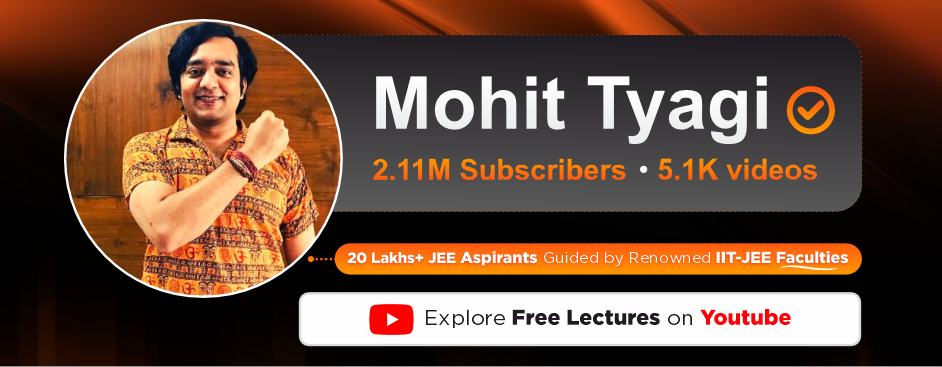
More than 2.1 million students follow the Competishun YouTube channel where you will find thousands of free concept videos covering every chapter you need for JEE 2027. If you are starting from scratch, these videos are one of the best free resources available to you right now and you can access them anytime, anywhere, completely free.
For students who want a more structured approach with organised classes, regular tests, practice sheets, and a clear weekly study plan that tells you exactly what to study next, the Competishun app is built exactly for that. You do not have to figure out the plan alone when there is already a well-designed one waiting for you.
Courses Designed for Dropper Students at Competishun
Pragyaan Batch
JEE Main Focused · Built specifically for Droppers and 12th Appearing Students
Enroll NowPraveen DLP
Dropper and Repeater · Full syllabus with detailed PYQ analysis included
Get Praveen DLPTest Series (Official)
AITS Prakhar, AITS Praveen, UTS, ATS — for JEE Mains and Advanced.
View Test SeriesJEE Main PYQ Combined
2021 to 2025 chapter-wise solved papers with complete trend analysis.
Get PYQ BookMust-Read Related Blogs
These blogs will help you build a more complete picture of your JEE 2027 journey. Each one covers a question that beginner droppers search for the most.
A great read to understand what a strong JEE foundation looks like and how to build it properly.
An honest and balanced guide to help you decide if a drop year is the right move for your situation.
Know the difference between both exams clearly so you can target the right one with the right preparation.
Final Thoughts
Starting JEE 2027 after only studying for boards in 2026 is not the easiest path. But it is absolutely a walkable one and thousands of students have taken this exact path before you and come out the other side with results that surprised even themselves.
What they all had in common was not some special talent or a magical shortcut. What they had was a clear plan, the honesty to know where they were starting from, and the decision to begin today instead of waiting for a better time that would never arrive on its own.
You have that plan now. You know what phase to be in and what to focus on each month. You know the mistakes to avoid and the habits that will carry you through the tough days when motivation disappears. All that is left is to begin and then to keep going, one chapter and one day at a time.
Frequently Asked Questions
Quick Reference: Your Full JEE 2027 Beginner Dropper Plan
Bookmark this table and come back to it whenever you need a quick reminder of what phase you are in and what to focus on right now.
| Phase | Timeline | What to Do |
|---|---|---|
| Foundation Building | May to July | NCERT concepts, chapter-wise PYQs, short notes from scratch |
| Syllabus Coverage | August to October | Full Class 11 and 12 JEE syllabus with chapter schedule and notes |
| Intensive Practice | November to January | JEE Main and Advanced PYQs daily, track accuracy and speed |
| Mock Test Mode | February to March | Weekly full mock tests with deep post-test analysis every time |
| Final Revision | April | Notes revision only, no new topics, rest well, stay calm |