
Let us talk about two things that most blogs about JEE drop years completely avoid.
The first is the conversation with your parents. Because for a lot of students, the hardest part of taking a drop year is not the preparation itself. It is sitting across from your parents and making them understand why you want to spend another year studying for the same exam instead of taking an admission somewhere and moving on. That conversation is stressful, emotionally loaded, and most students go into it completely unprepared and come out feeling like they lost an argument they should have won.
The second is the real preparation strategy. Not the generic "study hard and stay consistent" advice that every blog gives you, but a genuinely specific plan for how a drop year works, what you need to do differently from Class 12, and how to structure 12 months so that JEE 2027 goes differently from whatever happened before.
First, Understand Where They Are Coming From
Before you think about what to say to your parents, spend five honest minutes understanding what they are actually worried about. Because most parent resistance to a drop year is not about the drop year itself. It is about specific fears underneath it.
What if the rank does not improve even after another year? What will relatives and neighbours say? Is this genuine ambition or just avoiding the responsibility of college? What happens to the year if JEE 2027 also does not work out? Is there a backup plan at all?
These are legitimate concerns and they come from a place of love even when they feel like obstacles. If you walk into the conversation trying to win an argument, you are going to make your parents feel defensive and the conversation will not go well. If you walk in having already thought through answers to their concerns, the conversation becomes a discussion between two people who both want the same thing for you — just with different information about how to get there.
What to Actually Say — The Four Pillars of Your Case
The most effective approach is not to lead with what you want. Lead with what you understand. Start the conversation by telling your parents you understand why they are hesitant. Acknowledge the risks. Tell them you have been thinking about this carefully and you want to walk them through your thinking so they can make this decision together with you.
Then build your case around these four things:
Why You Specifically Want JEE — Not Just Any Engineering College
Be specific here. If you have a target branch or a target IIT, say it clearly. If you have thought about what career you want and why JEE is the clearest path to it, explain that. Vague answers like "I just want IIT" will not convince anyone. Specific and thought-through answers show maturity and seriousness that parents respond to very differently.
What Specifically Went Wrong in 2026 — and What You Will Do Differently
This is the most important part of the conversation and the part most students are least prepared for. If you cannot tell your parents clearly what went wrong and what the specific fix is, they have every reason to believe the same thing will happen again next year. If you can say "here is exactly what went wrong, here is the root cause, and here is specifically what I am going to change," that is a completely different conversation with a completely different outcome.
Your Practical Preparation Plan
Show your parents that you have thought about this beyond just "I will study harder." Do you have a coaching plan or a self-study approach? Do you know which resources you will use? Do you have a rough weekly schedule in mind? Do you know which dropper batches are available and what they cost? Parents respond very differently to a child who comes with a vague wish versus a child who comes with a thought-through plan.
Your Backup Plan — Yes, You Need to Bring This Up Yourself
Most students avoid talking about the backup plan because it feels like admitting defeat before starting. But your parents are already thinking about it and if you bring it up yourself, you show them you are being realistic and not just optimistic. Tell them which college or branch you would be willing to take if JEE 2027 also does not go as planned. Having a clear backup does not make you less committed — it makes your parents significantly less afraid of the year being completely wasted.
The Timing and Setting of the Conversation
Do not have this conversation during a tense moment, right after result day when emotions are still raw, or at the dinner table when everyone is tired. These are exactly the conditions that turn a discussion into an argument.
- Choose a calm weekend morning when everyone is rested and there is no pressure of time anywhere.
- Ask your parents to sit down for a conversation rather than springing it on them in passing. This signals you are taking it seriously and that you respect them enough to make it a proper discussion rather than a demand.
- Do not expect the answer to come in one conversation. Most parents need time to process. End the first conversation by asking for a few days to let everyone think before deciding. This is not weakness — it is good communication and it almost always works better than pressing for an immediate answer.
Why the Drop Year is Fundamentally Different From Class 12 Preparation
Many students make the mistake of approaching their drop year the same way they approached JEE preparation during Class 12. They get the same books, follow a similar schedule, and expect a different result. That approach rarely works because the situations are fundamentally different.
| Aspect | JEE Prep During Class 12 | Drop Year Preparation |
|---|---|---|
| Time available | Shared with boards and school attendance | Full year dedicated to one single goal |
| External structure | School schedule creates it automatically | You build and maintain it entirely yourself |
| Depth possible | Always compressed and interrupted | Room for genuine depth in every chapter |
| Accountability | Teachers and attendance track you | Self-management is everything |
| Pressure type | Divided between boards and JEE | Entirely focused — sharper but also heavier |
The drop year removes all the structure that school provided. No attendance, no fixed class schedule, no teacher checking up. All of that responsibility now sits entirely with you. The students who thrive are the ones who build their own structure deliberately and follow it consistently. The students who struggle are the ones who wait for motivation to do that work for them — and motivation alone is never enough for 12 months.
Your 12-Month Preparation Strategy: Phase by Phase
Here is a clear plan that tells you what to focus on in each part of the year so that all 12 months are genuinely productive from the very first week.
Foundation and Honest Self-Assessment
The very first thing to do in your drop year is not to open a textbook and start studying. The very first thing is to honestly assess where you actually stand right now. Sit with the JEE 2026 papers you attempted, go through your answers section by section, and identify specifically which chapters were genuinely weak, which were conceptually unclear even when you got the answer right, and which ones cost you time in the exam. This assessment is the foundation of your entire 12-month plan. Once done, build your chapter priority list and spend May and June on your three to four weakest chapters across all three subjects — NCERT as your base, proper short notes from scratch, and chapter-wise previous year questions to benchmark where you are.
Full Syllabus Coverage
By July you should be in full syllabus coverage mode, working systematically through every remaining chapter in the JEE syllabus with a clear weekly chapter schedule. This is the longest phase of your drop year and consistency in this phase is what determines whether you reach November with a solid and complete foundation or with gaps still remaining. A rough schedule that works well is covering two to three chapters per week across all three subjects, giving roughly 60 percent of your time to high-priority chapters. Build your short notes continuously throughout this phase because those notes become your most important revision resource in the final months.
Intensive Practice and Previous Year Papers
By November your full syllabus should be covered and this phase is entirely about shifting from learning mode to problem-solving mode. Solve JEE Main previous year papers from the last seven years in a chapter-wise and then full-paper format. Start solving JEE Advanced previous year papers too even if your primary target is JEE Main — Advanced-level practice builds a depth of thinking that makes JEE Main questions feel significantly more manageable. Track your accuracy and speed in every session and keep an error notebook where you record every wrong answer with the reason for the mistake and the correct approach.
Full Mock Test Mode
Take at least one full-length mock test every week under strict exam conditions. No phone, proper timer, full paper in one sitting exactly as you would on exam day. After every mock test, spend as much time on analysis as you spent on the test itself. Go through every wrong answer, categorise the mistake — concept gap, silly error, or time management issue — and go back to fix that specific gap before the next test. Use this phase to also finalise your exam strategy: the order in which you attempt subjects and the discipline of moving past questions that are taking too long.
Final Revision and Exam Readiness
No new topics in April under any circumstances. Only revision. Go through your short notes from the full year, solve a handful of questions from each high-weightage chapter every day to keep your thinking sharp, and make sure there are no unresolved doubts from any chapter anywhere. Prioritise sleep, eat properly, and trust the preparation you have built across the previous eleven months. The work is done — April is about walking in calm, ready, and confident.
The Three Habits That Make or Break a Drop Year
Beyond the phase-wise plan, three specific habits have the most impact on whether a drop year actually leads to a better rank. Build these from week one and protect them throughout the year.
Daily Note-Making
Every chapter you study should result in a clear, concise set of handwritten notes covering key formulas, important concepts, and the types of problems that come from that chapter. These notes are what you revise from throughout the year and they become more valuable the closer you get to the exam. Students who skip this step almost always find revision extremely difficult in the final phase when time is tight.
Weekly Self-Testing
Every week without exception, test yourself on the chapters you studied that week — chapter-wise previous year questions or a short timed test. The testing habit keeps your preparation honest because it is very easy to feel like you understood something while reading and then discover in a test that the understanding was not deep enough to actually solve problems under time pressure.
Honest Weekly Tracking
Keep a simple log every week of what you planned to study and what you actually studied. If there is a consistent gap between those two numbers, that gap is the real problem to fix — and fixing it early rather than late is what separates the students who hit their annual targets from the ones who are always catching up and always behind. A five-minute weekly review is all it takes to stay honest with yourself.
Coaching Versus Self-Study: Which is Right for Your Drop Year?
There is no universal answer to this — it depends on your specific situation. Here is how to think about it clearly.
Coaching
- Structured schedule — no guessing what to study next
- Regular chapter-wise and full tests built in
- Experienced teachers available for doubt clearing
- Peer environment keeps motivation alive
- Best for students who struggled with consistency in Class 12
Self-Study
- Complete flexibility to go deeper on your weak areas
- No time wasted on chapters you already know well
- Lower cost than offline coaching
- Works well when you are genuinely self-disciplined
- Best for students whose gap was resources, not consistency
If the answer is teaching and resources, coaching will help a lot. If the answer is consistency, coaching helps only if you actually engage with it seriously rather than just enrolling and attending passively. Many students find a combination works best — an online platform like the Competishun app for structured content and regular tests, combined with personal self-study time for specific weak chapters.
About Competishun: Supporting Dropper Students at Every Stage
At Competishun, we understand that the drop year is a significant decision that involves not just you but your entire family. Our teachers with more than 20 years of JEE teaching experience have guided thousands of students through exactly this journey and they know what it takes to make a second attempt genuinely better than the first.
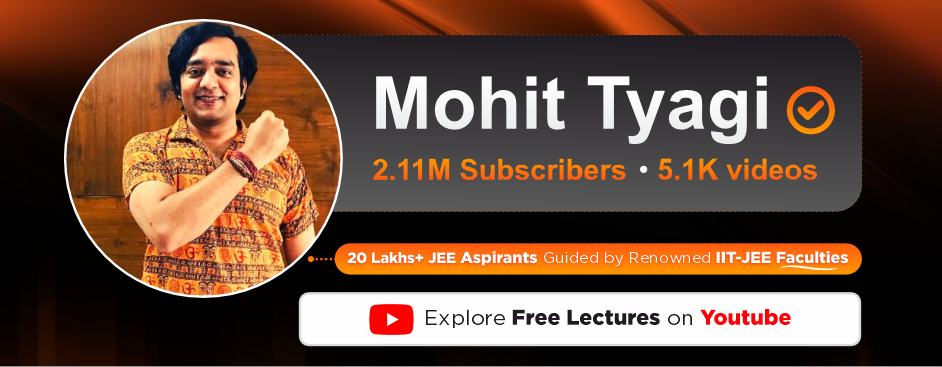
On the Competishun YouTube channel, followed by more than 2.1 million students, you will find free concept videos for every chapter, problem-solving sessions, and strategy content that is genuinely useful whether you are enrolled in a course or preparing entirely on your own.
For students who want full structured support through their drop year, the Competishun dropper batches — Praveen and Pragyaan — include organised classes, chapter-wise tests, full mock tests, and a weekly study plan that keeps your preparation on track through all five phases of the year. Visit competishun.com to explore the courses and find the one that fits your preparation style and target.
Dropper Courses at Competishun
Test Series (Official)
AITS Prakhar, AITS Praveen, UTS, ATS — for JEE Mains and Advanced.
View Test SeriesJEE Main PYQ Combined
2021 to 2025 chapter-wise solved papers with complete trend analysis.
Get PYQ BookMust-Read Related Blogs
These three blogs go directly with what you just read. Together they cover the complete JEE 2027 drop year journey from understanding mistakes, to building a daily routine, to mastering the right chapters.
The complete beginner guide for students starting JEE from scratch after only studying for boards.
A full 12-month phase-wise plan for students who attempted JEE 2026 and want a genuinely better rank.
Chapter-wise priority list for Physics, Chemistry, and Maths — essential for any JEE aspirant building their study plan.
Final Thoughts
The drop year is one of the most meaningful decisions you can make at this stage of your life. When it is backed by an honest assessment of the past, a clear plan for the year, and a support system at home, it has a genuinely strong track record of working out.
The students who make it count are the ones who took it seriously from day one — not the ones who were most naturally talented or most motivated at the start, but the ones who built real structure, stuck to it consistently through the boring middle months, and showed up for themselves even on the days when it was hard.
You are already doing that by preparing this carefully. Have the conversation with your parents with confidence, build your plan with honesty, and begin. The rest follows from those two things.