
Congratulations on finishing your Class 10 boards! That was not easy, and you did it. Now the real question is sitting in front of you and that question is this: how do you prepare for JEE 2028 over the next two years without burning out, without losing direction, and without wasting time?
That is exactly what this blog is going to answer for you. Read this once properly and you will know exactly what to do, when to do it, and how to approach each subject.
First, Understand What JEE Actually Tests
A lot of students start preparing for JEE without really understanding what the exam wants from them. JEE Main and JEE Advanced do not just test whether you have studied hard. They test whether you truly understand what you have studied.
Board exams are about remembering and writing. JEE is about thinking and applying. That one difference changes everything about how you should prepare. So the goal for the next two years is not to memorise more, it is to understand better. Keep this in mind from day one and it will save you a lot of confusion later.
Your 2-Year JEE Preparation Plan at a Glance
Here is a simple overview of how your two years should look. We will go into each phase in detail below, but first take a look at the big picture so you always know where you are in your journey.
| Time Period | Class | Main Focus |
|---|---|---|
| June to November | Class 11 | Build strong concept foundation in PCM |
| December to March | Class 11 | Chapter-wise tests and topic revision |
| April to May | Class 11 End | Full Class 11 revision before Class 12 starts |
| June to September | Class 12 | Complete Class 12 alongside Class 11 revision |
| October to December | Class 12 | Full mock tests and weak area improvement |
| January to February | Class 12 | JEE Advanced prep and targeted revision |
| March to April | Final Phase | Only revision, past papers, and exam readiness |
Keep this table in mind as you read the detailed plan below. It will help you see the bigger picture clearly at every stage of your preparation.
Year 1: Class 11 — This Year Makes or Breaks Your JEE
Let us be honest with you. Many students treat Class 11 casually and then suffer in Class 12 because their base is weak. Almost 45 to 50 percent of JEE questions come from Class 11 topics. So if you treat this year seriously, you are already ahead of a huge number of students.
What to Do Each Month in Class 11
Get Comfortable First
Class 11 feels harder than Class 10 in the beginning and that is completely normal. In these first three months, your only job is to understand the new concepts properly and build the habit of studying daily. Do not rush. Read NCERT carefully for all three subjects and make short notes in your own words as you go. Your brain needs time to adjust to the new level and that is okay.
Study With Discipline
Now it is time to build consistency. Here is a simple daily study plan that works well for most Class 11 JEE aspirants. Quality of study always matters more than number of hours.
| Time Slot | Activity |
|---|---|
| Morning (2 hours) | Study hardest subject first when mind is fresh |
| Afternoon (1.5 hours) | Practice problems from the chapter studied |
| Evening (1 hour) | Revise what you studied yesterday |
| Night (30 minutes) | Go through your short notes quickly |
Start Testing Yourself
Now that you have covered a good portion of the syllabus, start taking chapter-wise tests. These tests will clearly show you where your understanding still has gaps. Also start solving JEE previous year questions topic-wise during this period because this tells you exactly the kind of thinking JEE expects from you and helps you study with that mindset from early on.
Revise All of Class 11
Before Class 12 starts, revise every single topic you covered this year. Make a checklist, go through your notes, and solve a few questions from each chapter to make sure nothing has gone rusty. This one revision step before Class 12 can save you many weeks of panic later.
Year 2: Class 12 — Now It Is Time to Execute
If Class 11 was about building your foundation, Class 12 is about sharpening everything and getting exam-ready. This year you have two jobs running at the same time and that is completing Class 12 topics while keeping Class 11 concepts fresh in your mind.
Complete Class 12 Without Losing Class 11
The biggest challenge of Class 12 is completing a brand new syllabus while also keeping your Class 11 knowledge alive. Many students focus only on Class 12 topics and then scramble to revise Class 11 in the last few months. A smarter approach is to run both together from day one. For every week you study new Class 12 topics, give at least one or two sessions to rotating through Class 11 topics. This way, by the time you finish Class 12 syllabus, your Class 11 preparation is also fully up to date.
Mock Tests — The Most Underused JEE Tool
Start taking full-length mock tests every week from October. But here is the thing most students miss: taking the test is only half the work. The other half is sitting down after the test and going through every question you got wrong. Ask yourself three things for every wrong answer:
- Did I not know the concept at all?
- Did I know it but made a silly calculation mistake?
- Did I know it but ran out of time?
Each of these has a different fix and unless you identify which one it is, you will keep repeating the same mistake in the next test. Reviewing mistakes is where real learning happens.
JEE Advanced Preparation and Targeted Revision
If you are targeting JEE Advanced along with JEE Main, January is when you should give serious time to Advanced-level problems. Also go back to your short notes from throughout the year, revise high-weightage chapters multiple times, and make sure there are no topics where you still have significant doubts sitting unresolved.
Final Month: Only Revision, No New Topics
In the final month before JEE Main, do not try to learn anything new. This is purely a revision and confidence-building phase. Solve previous year papers, maintain your speed and accuracy, sleep properly, eat well, and trust the work you have put in over the past two years. Students who stay calm and consistent in this final month almost always perform better than students who panic and try to rush everything at the last minute.
Subject-Wise Strategy: What to Focus On
Here is a clear guide on how to approach each of the three subjects across both years so that you are always studying in the right direction.
| Subject | Key Topics for JEE | Best Approach |
|---|---|---|
| Physics | Mechanics, Electrostatics, Current Electricity, Modern Physics, Optics | Understand the concept behind every formula, do not just memorise it |
| Chemistry | Organic Chemistry, Chemical Bonding, Thermodynamics, Electrochemistry | NCERT is a must for Physical and Inorganic; focus on reaction mechanisms for Organic |
| Mathematics | Calculus, Algebra, Coordinate Geometry, Vectors, 3D Geometry | Practice daily and always understand where you went wrong after every mistake |
Common Questions Students Have About JEE 2028 Preparation
How many hours should I study daily in Class 11?
Four to six hours of genuinely focused, distraction-free study is the right target for Class 11. Do not compare your hours with your friends. Quality always beats quantity in JEE preparation. Four focused hours are far more valuable than eight distracted ones.
Is NCERT enough for JEE?
NCERT is essential but not sufficient on its own. For Chemistry especially, NCERT should be your first and strongest resource and you should read it multiple times. For Physics and Maths, you will need good reference books and previous year papers on top of NCERT to reach the required level.
When should I start solving JEE previous year papers?
Start solving previous year questions chapter-wise from Class 11 itself as soon as you finish each chapter. Start full-length previous year papers from the beginning of Class 12. This is one of the most effective habits you can build early in your preparation.
What if I fall behind my schedule?
It happens to almost every student at some point and it is completely normal. Do not try to cover everything you missed all at once because that only creates more stress and panic. Pick up from where you are, adjust your plan slightly, and keep moving forward consistently. Long-term consistency always beats short bursts of panic studying.
About Competishun: Built for JEE Aspirants Like You
If you are looking for a place that makes all of this easier and more structured, Competishun has been doing exactly that for students across India for years now.
At Competishun, the focus has always been on helping students understand concepts clearly instead of simply memorising formulas. The teachers have more than 20 years of experience specifically in teaching JEE aspirants, and they know exactly where students get stuck and how to explain things in a way that actually makes sense and sticks.
Today more than 2.1 million students follow the Competishun YouTube channel, where thousands of concept videos are available completely free of cost. You can search for any chapter, any topic, and find a clear and detailed explanation waiting for you.
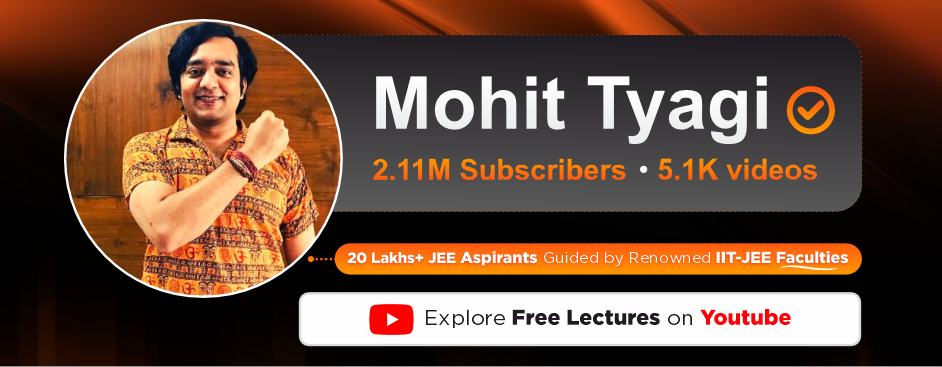
For students who want a more organised and systematic approach to their preparation, the Competishun app offers structured classes that follow a carefully designed progression through the JEE syllabus, practice sheets for every chapter, regular tests to keep you accountable, and a study plan that removes the confusion of figuring out what to study next. Everything is in one place so that you can spend your energy on learning instead of planning.
Must-Read Related Blogs
These blogs will help you understand the bigger picture of JEE preparation even better. Each one answers a question that most JEE students search for at some point.
What exactly to do in your very first six months of JEE preparation after Class 10.
An honest look at whether dropping a year is the right choice and what to think about before deciding.
Exam pattern, difficulty level, eligibility, and everything else explained clearly in one place.
Prepare With Confidence: Our Most Popular Courses
Recommended Preparation Resources
Test Series (Official)
AITS Prakhar, AITS Praveen, UTS, ATS — for JEE Mains and Advanced.
View Test SeriesFrequently Asked Questions
Final Thoughts
Starting your JEE 2028 journey right now, after your Class 10 boards, is one of the best decisions you can make for your future. You have time, you have a clear plan, and if you stay consistent and keep understanding over memorising as your main goal, two years from now you will look back at this moment and be glad you started when you did.
Remember that JEE preparation is not a race where everything happens overnight. It is a journey where consistent effort, clear concepts, and the right guidance slowly but surely lead you toward your goal. Every topper once stood exactly where you are standing right now. The difference is they started. So start today.