How to Choose the Right Stream After Class 10 in 2026: Complete Guide for Students and Parents
Complete Guide for Students and Parents — 2026
How to Choose the Right Stream After Class 10 in 2026
The weeks after Class 10 board results are one of the most pressure-filled decision points in a student's life. Everyone around you seems to have an opinion. Relatives ask which stream you are taking. Friends are already committed to one stream or another. And somewhere in the middle of all this noise, you are expected to make a decision that will significantly shape the next two to four years of your life.
This blog gives you a genuinely reliable framework. We will walk through what each stream actually means in practical terms, the factors that matter most, the common mistakes families make, and how to have the conversation at home so it leads to a good outcome for the student.
What the Stream Choice Actually Determines — and What It Does Not
Before comparing streams, it is important to be clear about what the Class 10 stream choice actually determines. Because a significant amount of anxiety around this decision comes from overestimating how final and permanent it is.
What It Does Determine
- The subjects you study in Class 11 and Class 12
- The board exams you appear for
- The entrance exams you are eligible for
- The undergraduate courses you can apply to directly after Class 12
What It Does NOT Determine
- Your long-term career trajectory
- Your earning potential in life
- Your intelligence or capability as a person
- Your happiness or sense of purpose
Understanding the Three Streams Clearly
Here is what each stream actually contains, where it leads, and who it is genuinely right for. All three are presented with equal depth and equal respect because all three lead to excellent outcomes when chosen for the right reasons.
Science Stream
Science typically includes Physics, Chemistry, Mathematics and/or Biology, English, and one optional subject. Students with Mathematics are eligible for JEE Main, JEE Advanced, and NDA. Students with Biology are eligible for NEET for MBBS, BDS, and related medical courses. Students who take both Mathematics and Biology keep both engineering and medical options open simultaneously.
Science is the stream with the most demanding curriculum in Class 11 and 12 in terms of the depth of understanding required and the intensity of preparation for the corresponding entrance exams. It also opens the largest number of undergraduate course options across engineering, medicine, architecture, pure sciences, pharmacy, and many more.
Commerce Stream
Commerce typically includes Accountancy, Business Studies, Economics, Mathematics or Applied Mathematics, English, and one optional subject. Students who choose Commerce are eligible for B.Com, BBA, BA Economics, CA Foundation, Company Secretary Foundation, and many management and finance-related programs. After Class 12 Commerce, students can also appear for CLAT if they choose Law, or apply for BBA programs at top management colleges.
Commerce is well-suited for students who are interested in economics, business, finance, accounting, or management. The curriculum is genuinely rigorous, especially when Economics and Accountancy are studied at depth, and it rewards analytical thinking and quantitative reasoning in ways that are different from Science but equally demanding at the top levels.
Humanities and Arts Stream
Humanities typically includes History, Political Science, Geography, Psychology, Sociology, Economics, English Literature, Fine Arts, Music, or Physical Education depending on the school. Students who choose Humanities are eligible for Law through CLAT, Liberal Arts programs, BA programs in History, Political Science, Psychology, Sociology, English, and Philosophy, Journalism and Mass Communication, Social Work and Development studies, and many others.
Humanities is the stream that most consistently gets underestimated and most consistently surprises students who enter it with genuine intellectual curiosity. Many of the most successful people in public life, policy, media, law, and the creative industries came through Humanities streams. The quality of thinking that strong Humanities education builds — the ability to analyse arguments, understand systems, write clearly, and engage with ideas — is increasingly valued in the modern economy.
The Five Factors That Actually Matter When Choosing a Stream
These factors are listed in order of importance. The first one is the most important and it is the one most consistently underweighted in stream selection conversations.
Genuine Interest and Curiosity
The most reliable predictor of doing well in Class 11 and Class 12 is whether the student is genuinely curious about the subjects they are studying. Ask honestly: which subjects in Class 9 and Class 10 did the student find genuinely interesting rather than merely manageable? Which topics made them want to read more, understand deeper, or look things up beyond what the textbook said? These signals are the most reliable indicators of where genuine aptitude and interest lie. Genuine interest sustains effort over two years of demanding study in a way that external pressure simply cannot.
Career Direction, If Any
Many students at the Class 10 stage do not have a clear career direction and that is completely normal. But if a student does have a strong inclination toward a specific career, that inclination should be a significant input in the stream choice. A student who knows they want to be an engineer needs Science with Mathematics. A student who knows they want to study medicine needs Science with Biology. A student who wants to be a CA benefits from Commerce. A student who wants to go into journalism or law is well served by Humanities. For students without a clear career direction, the stream choice should be guided primarily by interest and secondarily by which undergraduate options feel most appealing.
Aptitude in the Core Subjects
Aptitude and interest are related but not identical. For Science specifically, a certain level of aptitude in Mathematics and logical reasoning is genuinely important because the Class 11 and 12 Science curriculum builds on these foundations very rapidly. This does not mean that a student with a lower Maths score in Class 10 cannot do Science. Class 10 Maths performance is a reflection of Class 10 preparation, not a fixed measure of mathematical ability. But if a student finds mathematical reasoning genuinely difficult even when they try hard, that is a useful signal worth paying attention to when making the stream decision.
The Range of Undergraduate Options You Want Access To
Some students want to keep their options as wide as possible before committing to a specific field. Science preserves the widest range of options in technical fields. Commerce preserves a strong range in business, finance, economics, and management. Humanities preserves a strong range in law, social sciences, media, public policy, and the arts. No stream is universally broader than the others. Each is broad within its own domain. The question is which domain's breadth matters most for this particular student.
Your Specific School's Offering and Strength
Different schools have different strengths in different streams. A school with outstanding Commerce faculty and a mediocre Science faculty will produce significantly better Commerce outcomes regardless of the student's capability. Before finalising the stream choice, research specifically what the school you will attend in Class 11 offers in terms of faculty quality, extracurricular support, coaching partnerships, and historical outcomes in each stream. This practical information has a real impact on the quality of education the student receives and most families never gather it before making the decision.
Common Mistakes Families Make When Choosing a Stream
These mistakes come up consistently in stream selection conversations and they almost always lead to outcomes that are worse than they needed to be.
Taking Science as a Default Without Genuine Interest
This is by far the most common mistake. Science is widely perceived as the most prestigious stream and the one that "keeps maximum options open." Both perceptions are partial truths that get misapplied. The average outcome of a student who chose Science without genuine interest in the subjects is not excellent. It is a difficult two years followed by average board results. A student who genuinely loves Economics and chooses Commerce can easily outperform a student who half-heartedly chose Science and spends two years fighting their own disinterest.
Letting Relatives and Social Pressure Drive the Decision
The question "what will people say if we choose Commerce instead of Science?" is completely irrelevant to the question "which stream will help this student learn and grow most effectively over the next two years?" These two questions should never share the same conversation. The stream choice is an educational decision for this specific student and social perception has no valid role in it.
Choosing for Maximum Marks Rather Than Maximum Engagement
Some families choose the stream where the student is most likely to get the highest Class 12 percentage rather than where the student will be most genuinely engaged and challenged. A student who is engaged and challenged will grow more in two years and be more competitive for the best undergraduate programs than a student who optimised for a high percentage in a stream they found unchallenging and uninteresting.
Not Considering School Quality Alongside Stream Choice
The school matters as much as the stream in many cases. Choosing a school with strong faculty and preparation support in the target stream is a decision that sits alongside the stream choice and should not be separated from it. Most families choose the stream first and then look for schools rather than evaluating the school-stream combination together as a single decision.
Making the Decision Entirely for the Student Without Their Input
This is a conversation that should involve the student as an equal participant, not as someone whose preferences are noted and then overridden by parental judgment. A student who has genuinely chosen their stream with parental support is significantly more motivated and more resilient through the difficult patches of Class 11 and 12 than a student who feels the stream was chosen for them without their real agreement.
What If the Student Changes Their Mind After Starting?
This question comes up in almost every family and it is worth addressing directly.
- Changing between Class 10 and Class 11 is administratively straightforward because you have not yet committed to a board exam structure. This is the easiest time to reconsider.
- Changing after Class 11 has started is more complicated because it involves catching up on content you missed and potentially changing schools, but it is not impossible if done early in the first semester.
- Changing after Class 12 boards is largely a non-issue because at that point the undergraduate admission process opens multiple pathways regardless of stream. Many programs accept students from all streams at the foundation level and specialise later.
A Practical Three-Step Decision Framework
Here is a simple, three-step process that brings together everything covered in this blog. Any family can use this in a 30-minute honest conversation.
Start With the Student's Genuine Interests
Have an honest conversation about which subjects in Class 9 and 10 the student genuinely enjoyed studying beyond what was required for marks. Which topics did they find themselves thinking about outside of class? Which subjects made them curious rather than just compliant? Take these answers seriously. They narrow the stream options significantly and they are the most reliable signal available at this stage of the student's life.
Map Interests to Career Directions, Loosely
Do not try to plan a specific career at this stage. Instead, look at the broad categories that the student's interests point toward. Interest in how things work, in problem-solving, in Mathematics and Physics points toward Science. Interest in markets, money, organisations, and society points toward Commerce. Interest in history, people, ideas, language, and justice points toward Humanities. These are loose mappings but they are useful first guides for narrowing the decision.
Research the Specific School Options for the Target Stream
Once a likely stream has been identified, research which schools in your area offer the best quality of education in that stream, have the best coaching partnerships if relevant, and have the best historical outcomes at the Class 12 level. The school choice and the stream choice should be made together as a single decision rather than sequentially. The school-stream combination is the actual educational environment your child will spend two years in.
A Note for Parents Specifically
Your child's Class 10 stream choice is one of the most important moments in which the nature of your support can significantly affect the quality of the decision made. Here is what genuinely helpful support looks like at this stage.
Separate your own aspirations from your child's decision. The stream that would have been best for you, or that represents the career you wish you had, is not necessarily the stream that is best for your child. This is their educational journey and the most important thing is that they enter it with genuine ownership and genuine interest.
Be willing to research openly. If your child expresses interest in Commerce or Humanities and your instinct is to steer toward Science, spend a week genuinely researching the career and undergraduate options that Commerce and Humanities lead to. You may find that the landscape is significantly more varied and promising than you assumed from the outside.
Quick Summary: Which Stream Is Right for You?
Use this as your final reference. In all cases, let the student's genuine interest be the first and most important factor. Every stream leads to excellent outcomes when the student chose it for the right reasons and engaged with it fully.
Choose Science with Mathematics if...
- You are genuinely curious about Physics, Chemistry, and Mathematics
- You are considering engineering, architecture, or pure sciences
- You want to target JEE Main and JEE Advanced for IIT or NIT admission
Choose Science with Biology if...
- You are genuinely curious about living systems, Chemistry, and Biology
- You are considering medicine, dentistry, pharmacy, or biotechnology
- You want to target NEET for MBBS or BDS admission
Choose Commerce if...
- You are genuinely interested in economics, business, finance, or accounting
- You are considering CA, BBA, B.Com, or economics-related programs
- You connect with understanding markets, money, and organisations
Choose Humanities if...
- You are genuinely curious about society, history, ideas, law, or language
- You are considering journalism, law, policy, social sciences, or creative fields
- You connect more deeply with understanding people and ideas than with technical problem-solving
About Competishun: For Students Who Choose Science and Target JEE 2027 or 2028
For students who choose the Science stream in 2026 and are targeting JEE 2027 or 2028, Competishun is built to give you the best possible start to your JEE preparation journey. Our teachers have more than 20 years of experience preparing JEE aspirants from the very beginning of Class 11 through to the final JEE attempt, and we know exactly what the transition from Class 10 to JEE-level preparation requires.
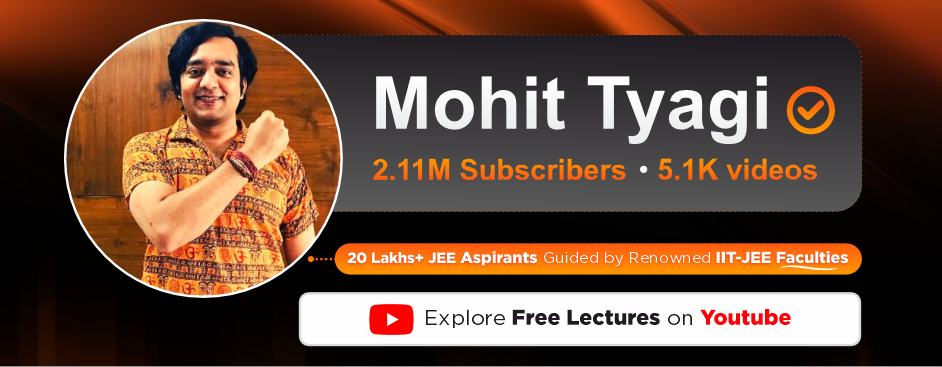
More than 2.1 million students follow the Competishun YouTube channel for free concept videos covering every Class 11 and Class 12 chapter in the JEE syllabus. If you are starting Class 11 in Science and targeting JEE, the Competishun YouTube channel is one of the best free resources available to you right now for building the conceptual foundation that JEE demands.
The Competishun Pratham course is designed specifically for students who have just completed Class 10 and are starting their JEE 2028 preparation journey in Class 11. It provides structured classes, regular chapter-wise tests, and a clear weekly study plan that removes the guesswork from your first year of JEE preparation. Visit competishun.com to explore courses for Class 11 students beginning their JEE 2027 or 2028 preparation.
Courses at Competishun for New Class 11 Students
Test Series (Official)
AITS Prakhar, UTS, ATS for JEE Main and Advanced preparation.
View Test SeriesMust-Read Related Blogs
If you have decided on Science and are planning your JEE 2027 or 2028 journey, these three blogs cover everything you need to start Class 11 preparation the right way.
The complete daily and weekly timetable for Class 11 students managing school, coaching, and JEE preparation together.
An honest comparison of all three school options so you can make the right school decision alongside your stream choice.
The complete evaluation checklist for choosing the right JEE coaching so you start Class 11 with the right preparation structure from day one.
Final Thoughts
The stream choice after Class 10 is one of the most significant decisions in a student's early academic life. It deserves careful thought, honest self-reflection, and a genuine conversation between the student and their parents rather than a rushed decision made under social pressure in the days after results are announced.
Use the framework in this blog. Start with interest. Map loosely to career direction. Research the school options. And make the decision together as a family with the student's genuine engagement at the centre of it.