NIOS vs Dummy School for JEE 2027: Which One is Better? A Complete Guide for JEE 2028
School Option Guide for JEE 2027 and 2028 Aspirants
NIOS vs Dummy School for JEE 2027: Which One is Better? A Complete Guide for JEE 2028
Once you have made the decision to skip regular school and focus entirely on JEE preparation, the very next question that comes up for almost every student and parent is this: should we go with NIOS or a dummy school?
Both options free up almost the entire day for JEE preparation. Both give you a valid Class 12 certificate at the end. Both are recognised for JEE Main and JEE Advanced eligibility. So on the surface, they look like they do the same job.
This blog removes all that confusion. We will cover exactly what each option means in practice, the real advantages and disadvantages of each, the key differences in eligibility, specific situations where one is better than the other, and a clear decision guide at the end.
First, What Do These Two Options Actually Mean?
NIOS is a completely legitimate government board. Students enroll, receive study material, and appear for board exams on a flexible schedule without attending any school physically. The Class 12 certificate from NIOS is fully recognised by all IITs, NITs, central universities, and most colleges across India.
NIOS is not a workaround or a loophole. It is a proper government educational board established specifically for students who cannot or do not want to attend regular school. Millions of students across India have used NIOS to complete their Class 12 and gone on to top universities and successful careers.
A dummy school is a private institution registered with a recognised board, usually CBSE, ICSE, or a state board, that enrolls students, provides a school ID and registration, and registers students for board exams, but does not require them to physically attend classes regularly. The student spends their day at JEE coaching while technically being enrolled in the school.
The quality of dummy schools varies enormously. Some are well-organised with smooth administrative processes for hall tickets, practicals, and mark sheets. Others are poorly run and can create serious last-minute problems during board exam season.
NIOS: The Real Advantages and Real Disadvantages
- Fully government-recognised, no legitimacy questions anywhere in India
- On Demand Examination lets you schedule papers at your convenience
- Multiple session attempts available if one paper does not go well
- Better subject combination flexibility than CBSE or state boards
- Very low enrollment cost compared to dummy schools
- No dependency on any private school's administration quality
- Fully recognised for IIT, NIT, and central university admissions
- Zero external structure, entirely self-directed
- No teachers, no peers, no built-in accountability system
- NIOS study material not deep enough for JEE, needs heavy supplementation
- Less natural overlap between board prep and JEE prep
- Some private colleges may not accept NIOS, each must be verified
- Practical exam scheduling can be complicated in some areas
- Students may feel isolated without any school community
Students who are extremely self-disciplined with a proven record of working independently. Students where reliable dummy schools are not available or not reliable locally. Students where cost is a genuine factor. And students who have confirmed NIOS recognition for every specific institution on their target list.
Dummy School: The Real Advantages and Real Disadvantages
- CBSE certificate universally accepted at every college without exception
- CBSE syllabus closely aligned with JEE, both built on NCERT
- Natural, efficient overlap between board prep and JEE prep
- Most JEE coaching institutes structured around CBSE board students
- Entire day free for JEE preparation with no school schedule conflict
- No restriction on any undergraduate program based on board recognition
- Quality varies enormously, wrong choice causes serious problems
- Board preparation is entirely self-managed with no teacher support
- Cost significantly higher than NIOS enrollment
- Poor admin processes cause delays with hall tickets and practicals
- No social environment or peer community of any kind
- Must thoroughly research and verify CBSE registration and track record
Students enrolled in intensive JEE coaching programs who want a CBSE certificate accepted everywhere. Students who have found a well-organised, correctly registered dummy school in their area with a good track record. And students who want the natural NCERT-JEE overlap to work in their favour without managing two separate preparation tracks.
The Key Difference That Matters Most for JEE Aspirants
Beyond the feature comparison, there is one specific difference between NIOS and dummy school that matters most for a student focused on JEE preparation.
CBSE Dummy School Has a Natural Advantage Here
JEE Main and JEE Advanced are built directly on the CBSE Class 11 and Class 12 curriculum. NCERT textbooks, which are the standard CBSE resource, are the foundation of the entire JEE syllabus. When a dummy school student prepares for their CBSE boards using NCERT books, they are reinforcing the same material that their JEE preparation is also built on. There is genuine, efficient overlap between both preparation tracks.
NIOS Requires More Deliberate Planning
NIOS has its own study material that is sufficient for the NIOS board exam but is not the JEE preparation resource. A NIOS student preparing for JEE uses NCERT and JEE resources while separately needing to understand the NIOS exam format and requirements. There is less natural overlap and the student has to manage two somewhat separate preparation tracks rather than one integrated one.
The Board Marks Question: Can You Afford to Ignore It?
This is the most practically important section in the entire blog and the one most students and parents underestimate before choosing either option.
Side-by-Side Comparison
Use this table as your reference when making the final decision. Map each factor honestly to your specific situation and the right choice will become clear.
| Factor | NIOS | Dummy School (CBSE) |
|---|---|---|
| Government recognition | Fully government board | Private school, CBSE affiliated |
| IIT and NIT eligibility | Fully eligible | Fully eligible |
| Private college acceptance | Verify each institution | Universally accepted |
| Exam schedule flexibility | Very high, On Demand option | Fixed CBSE board dates |
| Alignment with JEE syllabus | Lower, needs supplementation | High, CBSE and JEE closely aligned |
| Cost of enrollment | Very low | Higher, school fees apply |
| Admin reliability risk | Low, government board | Depends on school chosen |
| Board preparation support | None, fully self-managed | None, fully self-managed |
| Multiple attempt option | Yes, multiple sessions available | No, standard CBSE cycle only |
Situations Where NIOS Is the Better Choice
Despite dummy school having some structural advantages for JEE preparation, there are specific situations where NIOS is clearly the right option.
When you cannot find a reliable dummy school in your area. A poorly administered dummy school is significantly worse than NIOS. If local options have a reputation for delayed hall tickets or missing practical exam scheduling, NIOS is a much safer and more reliable choice.
When cost is a genuine constraint. NIOS enrollment costs a fraction of what most dummy schools charge. If the family budget is stretched by JEE coaching fees, NIOS removes one significant expense without compromising JEE eligibility in any way.
When you want maximum scheduling flexibility. NIOS's On Demand Examination option is a genuine practical advantage for students who want to schedule board papers at times that suit their JEE preparation rather than being tied to a fixed annual cycle.
When you need a second attempt option as a safety net. NIOS allows students to appear for papers across multiple sessions. If one paper does not go well, there is an opportunity to improve that specific score, which is not available in the fixed CBSE annual cycle.
When you are highly self-disciplined and do not need any institutional structure. NIOS rewards self-directed learners who can manage their own schedule and take full ownership of their board preparation without any external accountability.
Situations Where Dummy School Is the Better Choice
And here are the specific situations where a well-chosen dummy school is clearly the right option.
When you want completely universal undergraduate option access. CBSE certificates are accepted by every college in India without exception. If your target list includes private engineering colleges, medical colleges, or any other institution where NIOS recognition might be a question mark, a CBSE dummy school removes all ambiguity.
When you are enrolled in an intensive coaching program that recommends it. Most major JEE coaching institutes are set up around CBSE board preparation. Their material, test schedules, and guidance are designed for CBSE board students. A NIOS student in a CBSE-aligned coaching will need to do additional work to bridge the board preparation gap.
When you have found a reliable, well-organised dummy school with a good track record. A good dummy school with smooth administrative processes is genuinely convenient. It handles exam registration, hall tickets, practical scheduling, and mark sheet processes efficiently, removing significant logistical stress from a student already managing intensive JEE preparation.
When you want the NCERT-JEE overlap to work in your favour. For a CBSE dummy school student, preparing for Class 12 CBSE boards using NCERT books directly reinforces their JEE preparation. This integration is genuinely efficient and reduces the total preparation load compared to managing two distinct preparation tracks separately.
How to Research and Choose a Reliable Dummy School
If you decide on a dummy school, the research process is critical. A poorly chosen dummy school can create serious problems at the worst possible time. Here is exactly what to check before enrolling.
Verify the CBSE Affiliation Number Officially
Go directly to cbse.gov.in and use the school search feature to verify the affiliation number the school claims to have. If the school appears in the CBSE database with active affiliation status, it is legitimately registered. If it cannot provide an affiliation number or it does not appear in the database, do not enroll under any circumstances.
Talk to Students From the Last Two Years
Ask specifically about hall ticket delivery timing, practical exam scheduling, and mark sheet collection. These are the administrative processes most likely to cause problems and only past students can give you reliable information about how the school actually handles them on the ground.
Get the Complete Fee Structure in Writing
Ask for written confirmation of the complete fee structure including any additional charges for board exam registration, practicals, hall tickets, and mark sheet collection. Hidden fees are common in poorly run dummy schools and verbal assurances at the time of admission are not reliable.
Check the Distance From Your Coaching Institute
For practicals and any mandatory exam centre visits you will need to travel to the school. Factor this logistics cost and time into your decision, especially if the school is significantly far from your coaching location.
Quick Decision Guide: NIOS or Dummy School?
Use these two summary boxes to quickly identify which option makes more sense for your specific situation.
Choose NIOS if...
- You are extremely self-disciplined with a proven record of independent study
- Good quality dummy schools are not available or not reliable in your area
- Cost is a significant factor in your decision
- You want scheduling flexibility and the safety net of multiple attempt options
- You have confirmed NIOS recognition for every specific institution on your target list
Choose Dummy School (CBSE) if...
- You have found a reliable, well-organised CBSE dummy school with a good verified track record
- You want completely universal undergraduate option access with zero eligibility questions
- Your JEE coaching institute is structured around CBSE board students
- You want the natural NCERT-JEE preparation overlap to reduce your total preparation burden
About Competishun: Supporting JEE Aspirants Across Every School Path
At Competishun, we work with students from all schooling arrangements including regular school, dummy school, and NIOS. Our courses and YouTube channel are designed to give every JEE aspirant access to genuinely high-quality preparation regardless of which schooling path they have chosen.
Our teachers have more than 20 years of JEE teaching experience and they understand the specific challenges of preparing for both JEE and boards simultaneously without school-based teacher support. More than 2.1 million students follow the Competishun YouTube channel for free concept videos covering every chapter in the JEE syllabus.
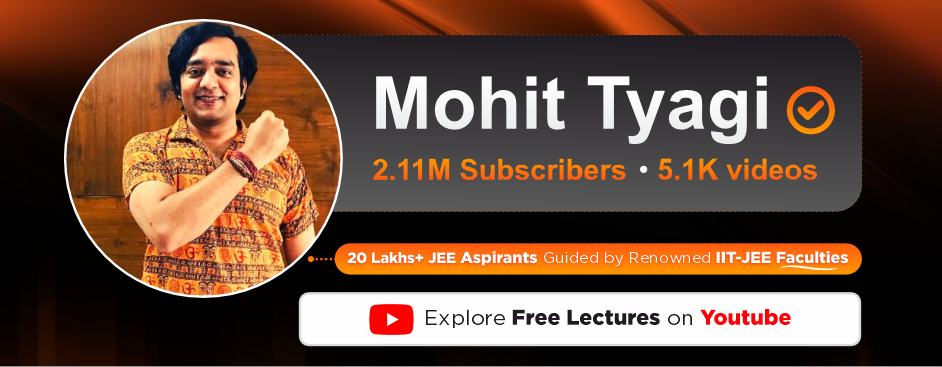
Whether you are a NIOS student or a dummy school student, the Competishun app provides structured classes, regular chapter-wise tests, and a complete study plan that tells you exactly what to study each week. Visit competishun.com to explore courses for Class 11 and Class 12 students targeting JEE 2027 and 2028.
Courses at Competishun for JEE 2027 and 2028
Test Series (Official)
AITS Prakhar, AITS Praveen, UTS, ATS for JEE Main and Advanced.
View Test SeriesMust-Read Related Blogs
These three blogs work directly alongside this one, covering the full school choice picture and what comes next after you make this decision.
The complete three-way comparison including regular school, giving you the full picture before committing to any schooling path.
The complete daily routine for students who have freed up their day for JEE preparation — applicable for both NIOS and dummy school students.
The complete notes and revision system for students who are managing both board and JEE preparation without teacher support.
Final Thoughts
NIOS and dummy school both serve the same core purpose for a JEE aspirant: freeing up the day for preparation while providing a valid Class 12 qualification. Both are legitimate. Both work for thousands of students every year who go on to crack JEE with excellent ranks.
The choice between them comes down to your specific situation: the reliability of dummy schools available in your area, your level of self-discipline, your undergraduate option requirements, your budget, and how much you want board preparation to integrate naturally with your JEE preparation.