How to Attempt JEE Main Paper 2027: One Trap Question Can Ruin Your Whole Paper
JEE Main PYQs · Competishun
How to Attempt JEE Main Paper 2027: One Trap Question Can Ruin Your Whole Paper
STRATEGY SESSION BY
Mohit Tyagi Sir (MT Sir)
Mathematics Faculty · B.Tech, IIT Delhi · 25 years of teaching experience
Attempt the JEE Main paper in three rounds: first the questions you are sure of, then the doable ones, and the trap questions only at the end if time remains. Give a question about two minutes on average, and skip it the moment you see no clear approach. One trap question can quietly eat 10 minutes, and that time can cost you three to four doable questions worth 12 to 16 marks.
Every year, students walk out of the JEE Main exam hall saying the same line: the paper was not that tough, but one question destroyed my paper. It is rarely the toughest question that does the damage. It is the one that looked easy, pulled you in, and refused to let go. Learning how to attempt JEE Main paper smartly is less about solving more questions and more about choosing the right questions at the right time.
In JEE Main 2026, two questions from Vectors looked routine on the surface. Many well-prepared students started them confidently, got stuck midway, and kept pushing because the question felt almost done. By the time they moved on, the clock had taken marks from questions they actually knew. The lesson is not about Vectors. It is about question selection, time discipline and the courage to skip.
This guide gives you a complete exam hall system: how a single trap question ruins a paper, the 3-round attempt strategy, clear signs that tell you when to skip, and a simple 180-minute plan you can practise in every mock test before JEE Main 2027.
In this guide
How One Trap Question Ruins Your JEE Main Paper
A trap question is not always a hard question. It is a question designed, or worded, in a way that makes a prepared student over-invest. You recognise the topic, the first step works, and then the question quietly changes direction: a condition you missed, a longer calculation than expected, or two options that look almost identical.
The real damage is not the one mark you may lose on that question. The damage spreads across the rest of your paper:
- Time theft: ten minutes on one question is the time budget of four to five normal questions.
- Marks swing: a wrong attempt costs you 1 mark in negative marking, and the doable questions you never reached cost 4 marks each.
- Confidence crash: a stuck question stays in your head. You keep thinking about it while solving the next questions, and silly mistakes follow.
- Rushed ending: the last 30 minutes become panic attempts instead of calm, accurate solving.
JEE Main 2027 Paper Pattern: The Numbers Behind the Strategy
Before the strategy, fix the rules of the game in your mind. JEE Main Paper 1 has no sectional time limit, so the order and pace of your attempt are fully in your control.
| Particulars | Details |
|---|---|
| Total questions | 75 (25 each in Physics, Chemistry and Mathematics) |
| Section A | 20 MCQs per subject |
| Section B | 5 numerical value questions per subject, all compulsory |
| Total marks | 300 |
| Marking scheme | +4 for a correct answer, -1 for a wrong answer, 0 for unattempted |
| Negative marking | Applies to both MCQs and numerical value questions |
| Duration | 3 hours (180 minutes), single timer, no sectional time limit |
| Pattern as per the latest NTA pattern. Always confirm the final details in the official JEE Main 2027 information bulletin on the NTA website. | |
Two numbers should drive your whole attempt plan: 180 minutes for 75 questions gives you an average of about 2.4 minutes per question, and every wrong answer costs you a mark. Speed matters, but protected accuracy matters more.
The 3-Round Strategy to Attempt the JEE Main Paper
Do not attempt the paper in the order it is printed. Attempt it in the order of your certainty. The three-round method makes sure your easy marks are banked before any single question is allowed to slow you down.
Attempt in rounds, not in order
Round 1: Sure-shot questions
Attempt only the questions you can solve confidently in one clean pass. Mark the doable but lengthy ones for Round 2, and leave anything doubtful completely untouched.
Bank your safest marks firstRound 2: Doable questions
Return to the marked questions and solve them with full focus. Keep the two-minute discipline here too: if a question stalls again, mark it and move on.
Convert preparation into marksRound 3: Traps and review
Use the remaining time for the questions you skipped, for educated attempts where you can eliminate options, and for a final review of marked answers.
Bonus marks, without panicYour strongest subject can lead Round 1. Many students start with Chemistry because it has more direct, NCERT-based questions, but the right order is the one your mock tests prove for you.
When to Skip a Question in JEE Main: 5 Clear Signs
Skipping is a skill, and like every skill it works best with fixed rules decided before the exam, not emotions inside the exam hall. Leave a question immediately when you see any of these signs:
- No approach in 30 to 45 seconds: if you cannot see the first step after reading the question properly, it belongs to a later round.
- The calculation keeps growing: JEE Main questions are designed to finish in a few steps. Endless algebra usually means a missed shortcut or a wrong path.
- Two options look almost the same: this is a classic trap design. Do not guess between them in Round 1.
- It is from a chapter you have not studied: one question is never worth learning a chapter inside the exam hall.
- You are reading it for the third time: repeated reading without progress means your mind needs a reset. Mark it and move on.
JEE Main Time Management: A Simple 180-Minute Plan
Treat this as a starting framework and tune it in your mock tests. The exact minutes will shift with your strengths, but the structure should not change on exam day.
| Phase | Time | What to do |
|---|---|---|
| Round 1 | 0 to 90 minutes | Solve all sure-shot questions across the three subjects. Mark doable and doubtful questions honestly. |
| Round 2 | 90 to 150 minutes | Attempt the marked doable questions. Keep the two-minute discipline on every question. |
| Round 3 | 150 to 170 minutes | Try skipped questions only if a clear idea appears. Make educated attempts only where options can be eliminated. |
| Review buffer | 170 to 180 minutes | Recheck marked answers, calculation-heavy questions and any question where you rushed. |
| Practise this exact split in full-length mocks until it becomes automatic. A plan you have never rehearsed will not survive exam pressure. | ||
If one subject is clearly your strength, it can take a slightly larger share, but never let a single subject, or a single question, swallow the buffer. The buffer is what protects your rank in the final minutes.
The Two JEE Main 2026 Vector Questions, Solved Step by Step
These are the exact two questions Mohit Tyagi Sir discusses. Both are from Vectors, both looked doable in the exam hall, and both were broken in opposite ways: one has data that contradicts itself, the other does not give enough data for a unique answer. Solve them slowly here, because the way they fail is the whole lesson.
Question 1: JEE Main 2026, 28 January Shift 1 (Numerical Type)
Let PQR be a triangle such that PQ = −2î − ĵ + 2k̂ and PR = aî + bĵ − 4k̂, where a, b are integers. Let S be the point on QR, which is equidistant from the lines PQ and PR. If |PR| = 9 and PS = î − 7ĵ + 2k̂, then the value of 3a − 4b is ______.
Solution: the 20-second check that exposes it
Step 1: From |PR| = 9, we get a2 + b2 + 16 = 81, so a2 + b2 = 65. Since a and b are integers, (a, b) can be (±1, ±8), (±8, ±1), (±4, ±7) or (±7, ±4): sixteen possible pairs. That is the first warning sign. The condition that should filter these pairs, S lying on QR with the equidistant property, is heavy, and most students settled in for a long fight.
Step 2: Place P at the origin. Then Q = (−2, −1, 2), R = (a, b, −4) and S = (1, −7, 2). Every point on the line QR has z-coordinate 2(1 − t) − 4t = 2 − 6t for some value of t. But S has z-coordinate 2, which forces t = 0, and that means S = Q. This contradicts PS = î − 7ĵ + 2k̂, which is not equal to PQ.
So no point S with the given properties exists at all. The data of the question contradicts itself before the equidistant condition is even used. The story ends the way Sir explains: this question was dropped by NTA in the final answer key (the dropped Mathematics question of the 28 January Shift 1 paper, ID 444792698), and every student in that shift received the bonus marks.
Question 2: JEE Main 2026, 24 January Shift 2 (MCQ)
Let a = 2î − ĵ − k̂, b = î + 3ĵ − k̂ and c = 2î + ĵ + 3k̂. Let v be a vector in the plane of a and b, such that the length of its projection on c is 1√14. Then |v| is equal to:
(1) √212
(2) 13
(3) √352
(4) 7
Solution: one equation, two unknowns
Step 1: Since v lies in the plane of a and b, write v = λa + μb. Everything now depends on the two unknowns λ and μ.
Step 2: Here |c| = √14, a · c = 0 and b · c = 2, so v · c = 2μ. The projection condition gives |2μ|√14 = 1√14, hence μ = ±12. Notice what is missing: λ never appears in this condition, so it is still completely free.
Step 3: Since a · b = 0, |a|2 = 6 and |b|2 = 11, we get |v|2 = 6λ2 + 114. With λ = 1, |v| = √352, which is option (3). With λ2 = 512, |v| = √212, which is option (1). Two different options satisfy the question, so |v| is not unique.
The question simply does not give enough information: one condition cannot fix two unknowns. It was among the disputed questions of its shift, and Sir uses it to make a point worth remembering: if your algebra leaves a free variable standing, the question is broken, not you.
What the JEE Main 2026 Vector Questions Teach You
The two Vector questions solved above are the perfect example of everything in this guide. Vectors is a chapter most students rate as comfortable: the formulas are few and the questions usually look direct. That comfort is exactly what made these questions dangerous. Students started fast, committed to a full solution, and discovered the problem only after investing serious minutes.
Three habits would have saved most of them:
- Read the full question before writing anything: many traps hide in the last line. What exactly is being asked is often different from what the first line suggests.
- Check the options early in lengthy questions: if the options are far apart, an approximation or a quick partial check may finish the question faster than a full solution.
- Set a hard exit line: decide in advance that no single question gets more than about four minutes in the first two rounds, whatever happens.
This is why PYQ practice must go beyond solving. When you practise previous year questions, also practise spotting which questions are traps, which ones repeat often, and which deserve your time. That judgement is itself a scoring skill.
Practise This Strategy Before Exam Day
A strategy you only read about will fail under pressure. It has to be rehearsed in full-length mocks and PYQ sessions until skipping, marking and switching rounds feel completely normal.
UPO: Unique PYQs Only
UPO analysed 12,018 JEE Main PYQs from 2019 to 2026 and grouped them into 4,348 unique questions, with repeat frequency, full question clusters and written plus video solutions. You practise the questions that actually come back, and you learn to spot the traps inside them.
JEE Mates Test Series
Rehearse the 3-round attempt strategy on the same CBT interface as the real exam, with full-length mock tests, video solutions and detailed analysis after every test.
CHAMP: JEE Main 2027 Revision Course
A focused revision course with selected practice, DPPs, regular testing, the JEE Mates test series and academic guidance for the final phase of your JEE Main 2027 preparation.
Start with organised PYQ practice on PYQ Express, solve the full JEE Main 2026 question papers shift by shift, and analyse every mock with one question in mind: which questions should I have left earlier?
Strategy Works Only When It Is Practised
Turn this plan into a habit with chapter-wise PYQs, full-length CBT mocks and video solutions, and walk into JEE Main 2027 with a calm, tested attempt strategy.
About Competishun
Competishun is an online JEE and NEET coaching platform with programs for Class 11, Class 12 and droppers, PYQ courses and books, study material and an All India Test Series, taught by experienced senior faculty. More than 2.2 million students follow the Competishun YouTube channel for free concept lectures and PYQ solutions.
Free JEE PYQ Solutions & Lectures
Follow Competishun for daily PYQ solutions, concept lectures and JEE Main 2027 updates.
Read These Next
Solve chapter-wise and topic-wise PYQs with express video solutions and detailed step-by-step solutions.
Practise the actual 2026 papers shift by shift, and spot the trap questions yourself.
12,018 PYQs grouped into 4,348 unique questions with repeat frequency and full solutions.
Frequently Asked Questions
Tags
About the Teacher
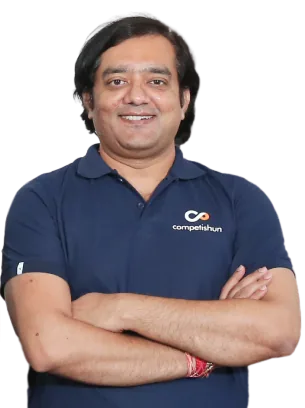
Mohit Tyagi Sir, popularly known as MT Sir, is a B.Tech from IIT Delhi with 25 years of teaching experience. His YouTube channel is followed by more than 2.2 million students and is known for deep concept clarity in Mathematics and direct, honest exam guidance. In this session, he takes up two real JEE Main 2026 Vector questions to show how toppers protect their paper from trap questions.
Watch: One Question Can Ruin Your JEE Main 2027 Paper
Watch Mohit Tyagi Sir break down the two JEE Main 2026 Vector questions, and the exact moment where students should have walked away from them.

Video: Mohit Tyagi Sir on YouTube