NCERT Class 10 Social Science Books PDF Download: History, Geography, Civics & Economics
NCERT Class 10 Social Science Books PDF Download: History, Geography, Civics & Economics
4 books, 22 chapters, free and chapter-wise, in English, Hindi and Urdu. Pick your book and medium below.
Get the PDFsNCERT Class 10 Social Science Books PDF: What You Get Here
The NCERT Class 10 Social Science book PDF set has four separate books, one each for History, Geography, Political Science and Economics. Each one is available in English, Hindi and Urdu medium.
Below you get every book with its language buttons, the full chapter list with what each chapter teaches, and how the board paper divides marks across the four books.
Quick answer: NCERT Class 10 SST has 4 books: India and the Contemporary World II, Contemporary India II, Democratic Politics II and Understanding Economic Development, 22 chapters in total, in English, Hindi and Urdu. Tap a language button below to open the chapter PDFs.
Book lists can change between sessions. Confirm the current book with your school or on the official NCERT website (ncert.nic.in).
Download NCERT Class 10 Social Science Books PDF (All 4 Books)
History
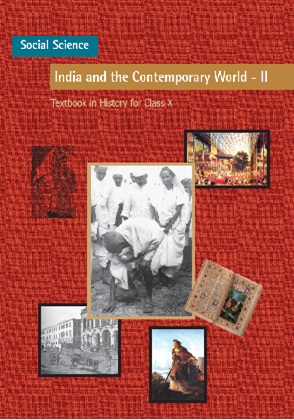
India and the Contemporary World II
Geography
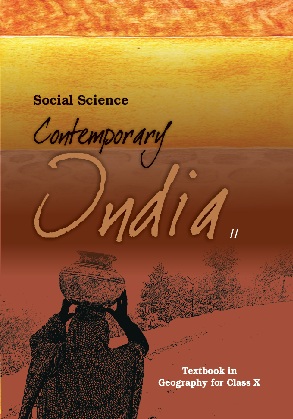
Contemporary India II
Political Science (Civics)
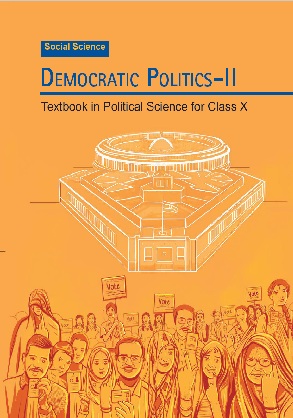
Democratic Politics II
Economics
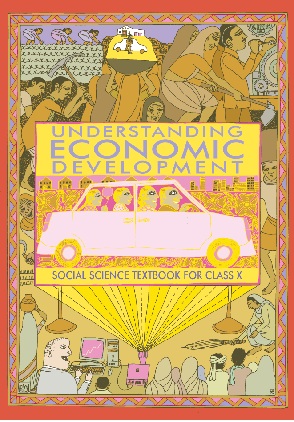
Understanding Economic Development
Which one should I pick? Use the medium your school teaches in. All four books follow the same chapters in every language, so you can mix, for example read in Hindi and check terms in English.
Class 10 SST Books at a Glance
| Part | English Book | Hindi Book | Chapters |
|---|---|---|---|
| History | India and the Contemporary World II | Bharat Aur Samkalin Vishwa II | 5 |
| Geography | Contemporary India II | Samkalin Bharat II | 7 |
| Political Science | Democratic Politics II | Loktantrik Rajniti II | 5 |
| Economics | Understanding Economic Development | Arthik Vikas Ki Samajh | 5 |
| Takeaway: 4 books, 22 chapters, each part worth 20 marks in the board paper. | |||
NCERT Class 10 SST Chapter List With What You Learn
India and the Contemporary World II (History)
| # | Chapter | What you learn |
|---|---|---|
| 1 | The Rise of Nationalism in Europe | How nation-states and nationalism grew in 19th century Europe. |
| 2 | Nationalism in India | Non-Cooperation, Civil Disobedience and the sense of collective belonging. |
| 3 | The Making of a Global World | Trade, migration and the world economy before and after the wars. |
| 4 | The Age of Industrialisation | Proto-industry, factories and industrial change in Britain and India. |
| 5 | Print Culture and the Modern World | How print spread and changed ideas in Europe and India. |
Contemporary India II (Geography)
| # | Chapter | What you learn |
|---|---|---|
| 1 | Resources and Development | Types of resources, land use and soils of India. |
| 2 | Forest and Wildlife Resources | Biodiversity, forest types and conservation efforts. |
| 3 | Water Resources | Dams, multipurpose projects and rainwater harvesting. |
| 4 | Agriculture | Cropping seasons, major crops and farming types. |
| 5 | Minerals and Energy Resources | Where minerals are found and conventional vs non-conventional energy. |
| 6 | Manufacturing Industries | Types of industries, their location and pollution control. |
| 7 | Lifelines of National Economy | Roads, railways, ports, airways and trade. |
Democratic Politics II (Political Science (Civics))
| # | Chapter | What you learn |
|---|---|---|
| 1 | Power-sharing | Why and how power is shared in a democracy. |
| 2 | Federalism | Levels of government and decentralisation in India. |
| 3 | Gender, Religion and Caste | How social differences shape politics. |
| 4 | Political Parties | Role, types and challenges of political parties. |
| 5 | Outcomes of Democracy | How to judge the performance of democracies. |
Understanding Economic Development (Economics)
| # | Chapter | What you learn |
|---|---|---|
| 1 | Development | Income, other goals and how we measure development. |
| 2 | Sectors of the Indian Economy | Primary, secondary and tertiary sectors; organised vs unorganised. |
| 3 | Money and Credit | Money as a medium of exchange, loans and self-help groups. |
| 4 | Globalisation and the Indian Economy | Multinational companies, foreign trade and fair globalisation. |
| 5 | Consumer Rights | Consumer rights, duties and consumer courts. |
How to Download a Chapter in Under a Minute
Scroll up to the book cards and tap your book or language button.
The book page lists every chapter with its own PDF link.
Tap a chapter to read it in your browser, or use the download icon to save it on your phone.
Bookmark the book page so you can come back to the next chapter quickly.
How the Board Paper Uses These Books
The CBSE Class 10 Social Science paper has four sections of exactly 20 marks: History, Geography, Political Science and Economics. That means no book can be skipped. Map work adds 5 marks (2 in History, 3 in Geography), and case-based questions test how well you read a passage from the textbook.
Answers have word limits: about 40 words for 2 marks, 60 for 3 marks and 120 for 5 marks. Writing crisp answers in NCERT language is the fastest way to score.
Board exam practice: once a chapter is done, test yourself with the official paper. See our CBSE Sample Paper Class 10 analysis for the Social Science paper pattern, section-wise marks and PDF.
How to Study Class 10 SST From NCERT
- Make one-page notes per chapter. Dates and events for History, terms and examples for Civics and Economics.
- Practise maps every week. Mark the listed places for History and Geography until you can do them from memory.
- Answer within word limits. Long answers do not earn extra marks, and they cost you time.
- Use tables and flowcharts. Geography and Economics chapters are easier to revise as tables.
- Read the source boxes. Case-based questions often use passages similar to those in the books.
Competishun App
Stuck on a chapter? Learn it again from senior faculty with 18 to 25 years' experience.
- Concept videos you can replay anytime
- Practice questions after every topic
- Works on any Android phone
Other NCERT Class 10 Books
 Mathematics
 Science
 First Flight
 Kshitij 2
 Shemushi
 Nawa-e-Urdu
 Health and Physical Education
FAQs on NCERT Class 10 Social Science Books PDF
Which NCERT books are there in Class 10 Social Science?
There are four books: India and the Contemporary World II (History), Contemporary India II (Geography), Democratic Politics II (Political Science) and Understanding Economic Development (Economics).
Where can I download the NCERT Class 10 SST books PDF?
Right here. Each book card has English, Hindi and Urdu buttons. Each button opens a page with every chapter as a free PDF, no login needed.
What are the Hindi medium Class 10 SST books called?
Bharat Aur Samkalin Vishwa II (History), Samkalin Bharat II (Geography), Loktantrik Rajniti II (Political Science) and Arthik Vikas Ki Samajh (Economics).
How many chapters are there in Class 10 Social Science?
The four books have 22 chapters in total: History 5, Geography 7, Political Science 5 and Economics 5.
How are marks divided in the Class 10 SST board paper?
The paper has four sections of 20 marks each: History, Geography, Political Science and Economics, with 5 marks of map work in History and Geography.
Is NCERT enough for Class 10 Social Science?
Yes, the board paper is set from these four NCERT books. Read each chapter carefully, practise map work and stay within the word limits.
Keep Learning With Competishun
All Courses
Plan ahead. See the full range of Competishun courses taught by senior faculty.
Explore Courses