JEE Main 2027 PYQ Strategy: Stop Solving All PYQs, Solve the Unique Ones First
JEE Main PYQs · Competishun
JEE Main 2027 PYQ Strategy: Stop Solving All PYQs, Solve the Unique Ones First
STRATEGY SESSION BY
Mohit Tyagi Sir (MT Sir)
Mathematics Faculty · B.Tech, IIT Delhi · 25 years of teaching experience
The smartest JEE Main 2027 PYQ strategy is simple: do not solve all 12,018 PYQs from 2019 to 2026 one by one. Solve the 4,348 unique patterns first, ranked by Repeat Frequency, and use the repeats inside their clusters for speed practice. Your exact plan then depends on your situation: if your syllabus is complete, move chapter by chapter through the unique bank and test yourself; if it is partial, practise PYQs only for chapters you have already learnt; and if time is short, start with the highest Repeat Frequency patterns and revise through your error log. This guide builds that plan step by step.
Every JEE Main aspirant reaches the same point: a pile of previous year questions and the sinking feeling that it never shrinks. The instinct is to start at the first paper and keep going until the pile is done. That instinct is the trap this guide is about, because the pile is not what it looks like.
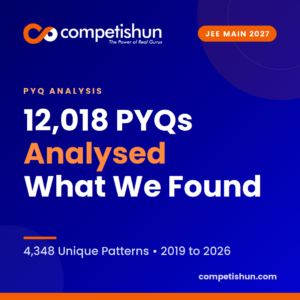
The reason is not laziness or weak preparation. It is the structure of the question pool itself. Between 2019 and 2026, JEE Main Paper 1 asked 12,018 questions, but only 4,348 of them are unique patterns. The rest are repeats: the same concept, the same model, often the same solution path with new numbers or a new story. Solving the pool in paper order means meeting the same pattern again and again before you ever meet a new one.
This guide gives you a different way to work, built on that one fact. You will learn why solving everything fails, how the unique-first method works, and how to shape it around your own situation: a complete syllabus, a partial syllabus, or very little time left. You need no new books and no new timetable. You need a better order of work: unique patterns first, repeats second, and revision through clusters and your error log.
In this guide
Why Solving All JEE Main PYQs Fails
The number 12,018 feels like a target. Finish it, and you must be ready. But about two of every three questions in that pool repeat an existing pattern, so finishing the pool mostly means re-solving what you already know. A student who proudly finishes a thousand questions may have met only a few hundred new patterns, and the weak chapters are still waiting untouched.
The damage shows up in three ways. First, time disappears into re-solving known patterns while new patterns and weak chapters get nothing. Second, confidence turns false: a high solved count feels like preparation, but the exam tests patterns, not counts, and an unseen pattern still surprises you. Third, there is no revision system at the end of a paper pile. Finished papers are forgotten, and in the final phase there is nothing to return to except the whole pile again.
Watch for these signs that you are stuck in the all-PYQs trap:
- Solving year-wise from the start: papers mix chapters you know with chapters you do not, so every set feels hard for the wrong reason.
- Counting questions instead of patterns: your daily target is a number of questions, not a list of patterns mastered.
- Re-solving familiar questions: comfortable chapters get solved again because they feel good, while weak chapters stay weak.
- No list of mistakes: you cannot name the patterns you missed last week, so revision has nowhere to start.
The Repeat Problem in Numbers: 12,018 PYQs, Only 4,348 Unique
Swipe to see all four numbers
Between 2019 and 2026, JEE Main Paper 1 was held across many shifts, and the total question pool grew to 12,018. When every question is compared with every other, a clear structure appears: 4,348 questions are genuinely distinct patterns, and 7,670 are repeats, the same concept, the same model, often the same solution path with new numbers, a new diagram or a new story.
| Subject | Total PYQs (2019 to 2026) | Unique | Repeats | Unique Share |
|---|---|---|---|---|
| Physics | 4,369 | 1,527 | 2,842 | 35% |
| Chemistry | 3,781 | 1,242 | 2,539 | 33% |
| Mathematics | 3,868 | 1,579 | 2,289 | 41% |
| Total (PCM) | 12,018 | 4,348 | 7,670 | 36% |
| Counts from the full classification of JEE Main Paper 1 questions, 2019 to 2026, all shifts. | ||||
Swipe the table sideways to see all columns
The subjects repeat differently, and that changes how you practise each one. Chemistry repeats the most at only 33 percent unique, so a Chemistry chapter converges fast: after its unique bank, new questions should mostly feel familiar. Mathematics varies the most at 41 percent unique, so you need a wide model library there, not a narrow set of memorised questions. Physics sits in between at 35 percent unique, with heavy chapters that repay model-wise organisation.
One chapter proves the whole thesis. Electrostatics contains about 223 raw PYQs in the 2019 to 2026 pool. Classified properly, they compress to roughly 80 unique patterns. A student who masters those 80 patterns and recognises them on sight has effectively prepared for 223 questions. Any plan you follow should be able to show you that kind of compression, chapter by chapter, or it is selling you the raw pool at full length and calling it completeness.
The Unique-First Method: Clusters and Repeat Frequency
UPO, which stands for Unique PYQs Only, groups similar questions into clusters. One representative question stands for each cluster, and every repeated version stays available inside it, labelled CL1, CL2 and so on. Nothing is deleted. What changes is the order in which you meet the questions: the unique representative first, and its repeats afterwards, deliberately, instead of by accident.
The ordering inside the bank comes from Repeat Frequency, or RF. RF means how many times a similar question pattern has appeared in JEE Main, and questions are listed from highest RF to lowest. That ordering is a study plan in itself: the most examined patterns get mastered first, and the rarest patterns wait until the end, where they belong.
The unique-first study session
Choose the chapter
Pick one chapter you have already learnt, and open its unique bank.
Solve the unique questions
Work through the representative questions in RF order, highest first.
The core stepPractise the repeats
Open the clusters of patterns you missed or found slow, for speed practice.
Where speed is builtLog every miss
Write down each missed pattern with its reason, so revision has an address.
Where marks are madeThis order beats paper order for a simple reason: you meet every pattern once before repeating any of them. Weak patterns show up early, while there is still time to fix them, and revision later has an address, the cluster, instead of a vague instruction to redo everything. A student who finishes the unique bank of a chapter has genuinely covered that chapter. A student who finishes a paper has only covered whatever that paper happened to contain.
Your PYQ Plan by Syllabus Situation
One plan does not fit everyone, because students do not start from the same place. Your syllabus position decides your PYQ order. Find your row in the table, and follow it honestly, even when another row looks faster.
| Your situation | Your PYQ order | What to avoid |
|---|---|---|
| Syllabus complete | Chapter by chapter through the unique bank, then mixed timed sets | Re-solving easy chapters while weak ones wait |
| Syllabus half complete | PYQs only for chapters already learnt, in RF order | Year-wise papers that mix learnt and unlearnt chapters |
| Syllabus just started | Learn the chapter first, then its unique PYQs the same week | Collecting papers before the concepts exist |
| The rule behind all three rows: a PYQ is useful only when the chapter behind it has been learnt. | ||
Swipe the table sideways to see all columns
If your syllabus is complete
Your job is coverage plus repair. Work through the unique bank chapter by chapter, in RF order, and keep a running list of weak chapters from your misses. When the bank is done, switch to mixed timed sets, and after every set, return to the clusters of the patterns you missed. Do not restart the bank. The bank is done; the misses are the work now.
If your syllabus is half complete
Your job is to keep PYQ practice honest. Each week, learn a chapter, then solve its unique PYQs the same week, in RF order, and practise the cluster repeats of anything you missed. Chapters you have not learnt yet get no PYQs at all, because a question from an unlearnt chapter measures ignorance, not skill, and it teaches nothing except discouragement. Your PYQ bank grows exactly as fast as your syllabus does, and that is the correct speed.
If your syllabus has just started
Your job is to build the habit, not the pile. PYQs are not the starting point; theory and basic practice come first. For every chapter you finish, add its unique PYQs immediately, while the concepts are fresh, and log your misses from day one. A small daily dose of unique PYQs, tied to what you just learnt, beats a drawer full of papers you will never open.
Your PYQ Plan by Time Left
Time left changes the pace of the plan, not its logic. The unique-first order stays the same. What changes is how much of the bank you attempt, and what you drop first when time gets tight.
If you have enough time
Work the full unique bank, chapter by chapter, in RF order, with cluster practice for misses and an error log from the start. Add mixed timed sets once a chapter block is done, and full papers only in the final phase. Enough time is not a reason to go back to paper order. It is the chance to finish the unique bank properly, without rushing.
If you have very little time
Cut from the bottom, never from the top. Start with the highest RF unique patterns across chapters, because those are the patterns the exam asks most often. Then revise only through your error log and the clusters of your misses. Skip low-RF rarities, skip re-solving mastered clusters, and skip any new book entirely. Timed mixed sets matter more than fresh paper piles now, because they train delivery under pressure, which is what short time really threatens.
What to drop first, in order: low-RF patterns, repeat practice on mastered clusters, and new material of any kind. What never to drop: error log revision and timed practice. A short plan that keeps those two is stronger than a long plan that drops them for volume.
Chapter-Wise First, Year-Wise Later
Chapter-wise practice and year-wise papers are different tools, and confusing them is one of the most common PYQ mistakes. Chapter-wise practice is a learning tool: it lets you practise a chapter the week you learn it, find its weak patterns, and fix them while the concepts are fresh. Year-wise papers are a testing tool: they check whether you can switch between chapters, manage time, and hold up under exam conditions.
Starting year-wise is backwards. A paper mixes chapters you know with chapters you do not, so every set feels hard for the wrong reason, and your weak areas stay hidden inside an average score. You finish papers feeling busy, but you cannot say which chapter needs work, because the paper never isolated it.
The right combination is simple. During syllabus coverage, work chapter-wise through the unique bank. After coverage, move to mixed sets and then full papers for stamina and time management. After every paper, return to the clusters of the patterns you missed, so testing feeds learning instead of replacing it. Your weekly rhythm, once the habit forms, looks like this:
- Learn the chapter: theory, formulas and basic practice until the concepts are solid.
- Solve its unique PYQs: representative questions in RF order, the same week you learnt the chapter.
- Practise the cluster repeats: speed practice on the patterns you missed or found slow.
- Take a short timed set: a mixed set at exam pace, then every miss into the error log.
Follow that rhythm and the year-wise papers at the end stop being frightening. They become what they should be: a rehearsal of patterns you already own, chapter by chapter.
Solutions and Analysis: Where the Learning Actually Happens
A solution should show the full method, not just the final answer, because in Physics and Mathematics the method is the mark. A book or bank whose solutions skip the method teaches recognition instead of skill: you remember that you have seen a question, but you cannot rebuild it under pressure.
UPO puts written, Express Video and Detailed Video solutions on the same screen as the question. Use them in that order. Read the written method first and try to rebuild it yourself. Watch the Express Video when you want the fast method. Watch the Detailed Video when you are genuinely stuck, because that is where the concept behind the shortcut gets explained. Skipping straight to video for every question feels faster, but it quietly removes the struggle that makes a method stick.
After every set, do the analysis before you move on. Ask three questions: which patterns did I miss, which patterns was I slow on, and which chapters are leaking? The answers go into your error log, and the error log becomes your revision bank. A set without analysis is only a score. A set with analysis is a lesson.
UPO for JEE Main 2027
All 12,018 JEE Main PYQs analysed and clustered: solve the 4,348 unique questions first, ranked by Repeat Frequency, with every repeat one tap away in its cluster and written, express and detailed solutions for each question.
PYQ Express
JEE Main PYQs sorted chapter-wise and topic-wise, with express video solutions for fast methods, detailed video solutions and step-by-step text solutions.
Mistakes That Waste Your PYQ Practice
- Counting questions instead of patterns: a bigger solved count usually means more repeats, not more learning. The pool compresses to 4,348 unique patterns, so size is the weakest signal of quality.
- Going year-wise only: papers are for testing, not learning. A year-wise-only routine leaves you with no chapter-wise path while the syllabus is still being covered.
- Ignoring the solutions before moving on: reading one full solution properly teaches more than solving three questions carelessly. If a solution skips the method, find one that does not.
- Skipping revision and the error log: a set without an error log is forgotten within days. Without a log, revision means starting over, which nobody has time for.
- Collecting several books: two half-finished books are worse than one finished system. Pick one organised source, finish its unique bank, and use the rest of your time for timed papers and revision.
- Treating the bank as the plan: a question bank is not a study plan. Pair it with chapter learning, timed tests and an error log, or even the best bank will underperform.
If you have already made several of these mistakes, do not throw your material away and do not panic. Switch to unique-first within each chapter from today, mark repeats yourself as you meet them, and start an error log with your very next set. The method works on any material, including the books you already own, because it is about order, not about buying something new.
Mocks and PYQs Together: The Right Balance
PYQs and mocks do different jobs, and neither replaces the other. PYQs build pattern recognition: the ability to see a new question and know which model it belongs to. Mocks build delivery: stamina, time management, question selection and calm under pressure. A student with only PYQs knows the patterns but has never delivered them against a clock. A student with only mocks has stamina but keeps meeting patterns for the first time in the test itself.
The balance shifts with your phase. During learning, PYQs dominate: unique patterns chapter by chapter, with cluster practice for misses. After coverage, mixed PYQ sets and mocks share the time. In the final phase, mocks dominate, but every mock must feed back into PYQs: list the missed patterns, find their clusters, re-solve them, and add them to the error log. A mock without this review is only a score, not a lesson.
Review every mock with the same three questions you use for PYQ sets: which patterns did I miss, which was I slow on, and which chapters are leaking? If a chapter keeps leaking across mocks, go back to its unique bank before taking another mock. More mocks will not fix a chapter gap. Only the chapter will.
Revision Through Clusters and Your Error Log
Revision is not re-solving everything. It is revisiting exactly what you missed, and that is why the unique-first method ends with a better revision system than paper order ever could. When every pattern lives in a cluster, and every miss lives in your error log, revision has two clear addresses, and neither one requires starting over.
Your error log needs only four columns: the question pattern, the chapter, the reason for the miss, and a revisit date. Reasons matter more than counts. A concept gap needs re-learning. A calculation slip needs careful practice. A misread question needs slower reading habits. Time pressure needs timed sets. The same miss with a different reason needs a different fix, and the log is what tells you which one.
In the final phase, your routine is short and strict. First, the error log, oldest misses first. Then, the high-RF clusters and the clusters of your recent misses. Then, one timed mixed set to check whether the fixes held. Repeat that loop. Do not restart the whole bank, do not open a new book, and do not measure revision by hours spent. Measure it by misses converted into patterns you now own.
Start With the Unique PYQs First
Solve the 4,348 unique JEE Main PYQs first, ranked by Repeat Frequency, with every repeat inside its cluster and written, express and detailed solutions on the same screen.
About Competishun
Competishun is an online JEE and NEET coaching platform with programs for Class 11, Class 12 and droppers, PYQ courses and books, study material and an All India Test Series, taught by experienced senior faculty. More than 2.2 million students follow the Competishun YouTube channel for free concept lectures and PYQ solutions.
Free JEE PYQ Solutions and Lectures
Follow Competishun for daily PYQ solutions, concept lectures and JEE Main 2027 updates.
Read These Next
12,018 PYQs grouped into 4,348 unique questions with repeat frequency and full solutions.
The year-count question, answered with the same data.
The full chapter-wise strategy for Physics, Chemistry and Maths.
Frequently Asked Questions
Tags
About the Teacher
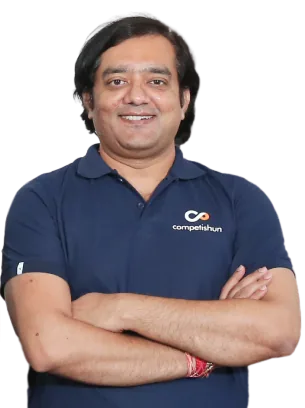
Mohit Tyagi Sir, popularly known as MT Sir, is a B.Tech from IIT Delhi with 25 years of teaching experience. He is known for deep concept clarity in Mathematics and direct, honest exam guidance, and his YouTube channel is followed by more than 2.2 million students.
Watch: JEE Main 2027 PYQ Strategy by Mohit Tyagi Sir
Watch Mohit Tyagi Sir explain the unique-first PYQ strategy and how to use UPO effectively for JEE Main 2027.

Video: Mohit Tyagi Sir on YouTube