Ask any JEE Main aspirant what they bought first, and the answer is usually a PYQ book. Ask the same student six months later whether the book helped, and the answer is often a shrug. The book sits half-finished, the year-wise papers felt endless, and the same question kept appearing in slightly different clothes. The problem is rarely the student. It is the format of the book.
A PYQ book is only as good as the decisions its makers took about organisation. Did they sort questions by chapter and topic, or just bind papers together? Did they do anything about repeats, or did they print every repeat in full and call the thickness a feature? Do the solutions teach, or do they merely state the answer? This guide gives you seven checks that answer those questions for any book you are considering, so you can judge a book in ten minutes instead of discovering its flaws in ten weeks.
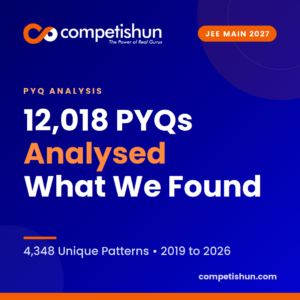
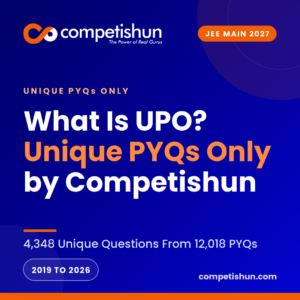
The checks are built on one verified fact that changes everything: between 2019 and 2026, JEE Main Paper 1 asked 12,018 questions, but only 4,348 of them are unique patterns. Once you know that, you will never judge a PYQ book by its size again.
Why Most JEE Main PYQ Books Disappoint Students
Most old-format PYQ books fail in the same four ways, and recognising them early saves you months. First, they are organised by year, not by chapter. Year-wise papers feel like the real exam, but they are a testing tool, not a learning tool. When you are studying Electrostatics, you need every Electrostatics question in one place, not scattered across eight years of papers. A year-wise book forces you to hunt, and hunting is not studying.
Second, they print repeats in full. Roughly two of every three questions in the 2019 to 2026 pool repeat an existing pattern, so a book that prints all 12,018 questions in order asks you to solve the same pattern many times before you ever meet a new one. That is how a student "finishes" a thousand questions and still feels unprepared: most of those questions were the same ten patterns wearing different numbers.
Third, their solutions are thin. A final answer, or a two-line working, tells you what the answer was, not how a solver would have found it under time pressure. In Physics and Mathematics especially, the method is the mark: the setup, the formula choice, the shortcut that saves ninety seconds. A book whose solutions skip the method is a book that teaches recognition instead of skill.
Fourth, they offer no revision system. A book is finished and forgotten. There is no error log, no marked set of weak questions, no way to revisit exactly what you got wrong. Revision then means re-solving everything, which nobody has time for in the final months. If a book gives you no way back to your own mistakes, it is giving you half a product.
The test that matters: open any PYQ book to a chapter you have already studied, and ask four questions. Are its questions grouped by chapter and topic? Are repeats marked, grouped or handled somehow? Do the solutions show the full method? Can you find your weak questions again next month? If the answer is no three times out of four, put the book down, however popular it looks.
The Repeat Problem: 12,018 JEE Main PYQs, Only 4,348 Unique
12,018
JEE Main PYQs, 2019 to 2026
Every Paper 1 question from 8 years of shifts, counted and classified.
4,348
Are actually unique
Only about 36 percent. The rest repeat an existing question pattern.
7,670
Are repeats
Same concepts, same models, often the same numbers with new clothes.
3
Subjects, one test
Apply the same seven checks to Physics, Chemistry and Maths material alike.
Swipe to see all four numbers
Between 2019 and 2026, JEE Main Paper 1 was held across many shifts, and the total question pool grew to 12,018. When every question is compared with every other, a clear structure appears: 4,348 questions are genuinely distinct patterns, and 7,670 are repeats: the same concept, the same model, often the same solution path with new numbers, a new diagram or a new story.
| Subject | Total PYQs (2019 to 2026) | Unique | Repeats | Unique Share |
|---|
| Physics | 4,369 | 1,527 | 2,842 | 35% |
| Chemistry | 3,781 | 1,242 | 2,539 | 33% |
| Mathematics | 3,868 | 1,579 | 2,289 | 41% |
| Total (PCM) | 12,018 | 4,348 | 7,670 | 36% |
| Counts from the full classification of JEE Main Paper 1 questions, 2019 to 2026, all shifts. |
Swipe the table sideways to see all columns
Physics: unique share of 4,369 PYQs35% unique Chemistry: unique share of 3,781 PYQs33% unique Mathematics: unique share of 3,868 PYQs41% unique Unique share by subject, from the full 2019 to 2026 classification. Chemistry repeats the most; Mathematics varies the most.
This is why the checklist in the next section starts with repeat handling. A book that ignores repeats is not neutral about them; it silently converts them into workload. Chemistry is the most repetitive subject at only 33 percent unique, so a Chemistry section that prints everything in full is the worst offender. Mathematics, at 41 percent unique, punishes the opposite mistake: a book that covers too few models leaves real gaps, because Maths repeats its setups rather than its exact questions.
One chapter proves the whole thesis. Electrostatics contains about 223 raw PYQs in the 2019 to 2026 pool. Classified properly, they compress to roughly 80 unique patterns. A student who masters those 80 patterns and recognises them on sight has effectively prepared for 223 questions. Any book you buy should be able to show you that kind of compression, chapter by chapter, or it is selling you the raw pool at full length and calling it completeness.
The 7-Point Checklist for Any JEE Main PYQ Book
Use these seven checks on any book, in a shop or on a product page, before you commit. A book does not need a perfect score on all seven, but it should pass at least five, and it must pass the first three.
- Chapter-wise and topic-wise organisation: questions grouped by chapter, then by topic inside the chapter, so you can practise a chapter the week you learn it. Year-wise-only books fail this check outright.
- Repeat handling: some visible system for repeats: grouped, marked, or clustered, so you are not solving the same pattern five times unknowingly. Ask how the book deals with repeats; silence is an answer.
- Coverage of 2019 to 2026: the full recent pool, not a selection of convenient years. Gaps in coverage become gaps in your preparation, and you will not notice them until the exam.
- Solution quality: step-by-step working that shows the method, not just the answer. For digital material, written plus video solutions on the same screen is the standard to expect.
- Practice and test modes: untimed practice for learning plus timed sets for exam pace. A book with only one mode trains only half the skill.
- Revision support: a way back to your weak questions: an error log, a marked set, or clusters you can revisit. Without it, revision means starting over.
- Honest scope: the book says what it covers and what it does not, instead of implying that finishing it guarantees a result. No book can promise that, and one that does is telling you something about itself.
Run the checklist on UPO, the system this guide compares against, and it passes on structure: chapter-wise and topic-wise organisation, repeats grouped into clusters behind one representative question, the full 2019 to 2026 pool, written plus Express Video plus Detailed Video solutions on the same screen, and Practice and Test modes. That is the point of the checklist. It does not care about brands. It cares about structure, and structure is checkable in minutes.
How to use the checklist in a shop: open the book at any chapter, count how many questions are visibly grouped or marked as repeats, read one solution end to end, and check whether the contents page lists topics inside chapters. Those three moves tell you more than any cover claim.
Old-Format PYQ Books vs UPO: What Changes
The fairest way to judge a PYQ book is to put it next to the modern alternative and compare structure, not slogans. The table below does that for the old format most books still use, against UPO, which stands for Unique PYQs Only.
| Old-format PYQ books | UPO (Unique PYQs Only) |
|---|
| Organisation | Mostly year-wise papers, or chapters in name only | Chapter-wise and topic-wise from the start |
| Repeats | Printed in full, again and again | Grouped into clusters behind one representative question |
| What you solve first | Whatever came first in the paper | Unique questions first, ranked by Repeat Frequency |
| Solutions | Short answers, sometimes only the final step | Written, Express Video and Detailed Video solutions on the same screen |
| Revision support | Re-solve the whole book | High-RF clusters plus your error log |
| Generic comparison of formats. Old-format means the common year-wise or unclassified chapter-wise book; UPO facts are from the live UPO page. |
Swipe the table sideways to see all columns
The single most important row is repeats. In an old-format book, repeats are invisible workload: you meet the same pattern repeatedly without knowing it, and you cannot tell whether you are learning or merely recognising. In UPO, similar questions are grouped into clusters, one representative question stands for the cluster, and every repeated version stays available inside it, labelled CL1, CL2 and so on. Nothing is deleted. What changes is that you solve the unique question first and open its repeats deliberately, for speed practice, instead of tripping over them by accident.
The second row that matters is ranking. UPO lists questions by Repeat Frequency, or RF, which means how many times a similar question pattern has appeared in JEE Main, from highest to lowest. That ordering is a study plan in itself: the most examined patterns get mastered first. An old-format book has no equivalent ordering, so students default to page order, which is the least informative order available.
UPO · UNIQUE PYQs ONLY
UPO for JEE Main 2027
2019–2026 · Physics, Chemistry & Maths
All 12,018 JEE Main PYQs analysed and clustered: solve the 4,348 unique questions first, ranked by Repeat Frequency, with every repeat one tap away in its cluster and written, express and detailed solutions for each question.
Chapter-wise and topic-wise, in Practice and Test mode
Explore UPO
What to Check Subject by Subject: Physics, Chemistry, Maths
The seven checks apply everywhere, but what you look for inside each subject differs, because the three subjects repeat differently. Use this table when you inspect a book subject by subject.
| Subject | The verified picture | What to check in the book |
|---|
| Physics | 4,369 total, 1,527 unique (35%) | Check that heavy chapters are organised by model, not dumped by year. Electrostatics alone compresses from about 223 raw PYQs to roughly 80 unique patterns, so a book that prints all 223 in order wastes your weeks. |
| Chemistry | 3,781 total, 1,242 unique (33%) | Check NCERT-line coverage. Chemistry repeats the most, so a good book converges fast: after the unique bank of a chapter, new questions should mostly feel familiar. |
| Mathematics | 3,868 total, 1,579 unique (41%) | Check that models are named and grouped. Maths is the least repetitive subject, so you need a wide model library, not a narrow set of memorised questions. |
| Question counts are from the full 2019 to 2026 classification. The checks are editorial guidance, not official data. |
Swipe the table sideways to see all columns
In Physics, beware of books that treat every chapter as equal. Chapter banks differ enormously, and a book that gives every chapter the same space is hiding the fact that some chapters carry far more questions than others. In Chemistry, beware of books that drift away from NCERT lines, because that is where the questions come from, and the most repetitive subject is also the most NCERT-bound. In Mathematics, beware of books that print many questions but name no models, because Maths preparation is model preparation: if you cannot name the model a question belongs to, you have not learnt it yet.
UPO · UNIQUE PYQs ONLY
UPO for JEE Main 2027
2019–2026 · Physics, Chemistry & Maths
All 12,018 JEE Main PYQs analysed and clustered: solve the 4,348 unique questions first, ranked by Repeat Frequency, with every repeat one tap away in its cluster and written, express and detailed solutions for each question.
Chapter-wise and topic-wise, in Practice and Test mode
Explore UPO
JEE MAIN PYQs
PYQ Express
Video + Text Solutions · Chapter & Topic-wise
JEE Main PYQs sorted chapter-wise and topic-wise, with express video solutions for fast methods, detailed video solutions and step-by-step text solutions.
Every PYQ, 2019 to 2026, organised by chapter
Enroll Now
Mistakes Students Make When Choosing a PYQ Book
- Judging by thickness or question count: a bigger number usually means more repeats, not more learning. The 12,018 pool compresses to 4,348 unique patterns, so size is the weakest signal of quality.
- Buying year-wise only: papers are for testing, not learning. A year-wise-only book leaves you with no chapter-wise path while the syllabus is still being covered.
- Ignoring the solutions before buying: read one full solution before you pay. If it skips the method, the whole book will.
- Not checking the year coverage: a book that stops early, or skips shifts, leaves silent gaps. Confirm 2019 to 2026 coverage explicitly.
- Collecting several books: two half-finished books are worse than one finished system. Pick one organised source, finish its unique bank, and use the rest of your time for timed papers and revision.
- Treating the book as the plan: a book is a question bank, not a study plan. Pair it with chapter learning, timed tests and an error log, or even the best book will underperform.
If you have already bought a book that fails several checks, do not throw it away and do not panic. Use it chapter-wise anyway, mark repeats yourself as you meet them, and solve the unique patterns first within each chapter. The checklist is a buying tool, but its method works on any material, including the book you already own.
How to Use a PYQ Book the Right Way for JEE Main 2027
The four-step chapter routine
1
Learn the chapter
Theory, formulas and textbook examples until the basics are solid. PYQs before this step measure ignorance, not skill.
2
Solve the unique questions
The chapter’s distinct patterns first, starting with the most repeated ones. In UPO these are the cluster representatives, ranked by Repeat Frequency.
The core step3
Cluster the misses
Every question you missed or found slow: solve its repeats the same day. This is where a pattern becomes permanent.
Where marks are made4
Timed test and error log
A mixed chapter set at exam pace, then every miss into the error log with a revisit date. The log is your final revision bank.
Follow that routine chapter by chapter and the book stops being a mountain. It becomes a system: learn, solve unique, cluster the misses, test, log, revisit. Students who follow it report the same experience in different words: the paper starts looking familiar, not because they memorised questions, but because they recognise models. That recognition is the entire point of PYQ practice, and it is what a well-chosen book, or UPO, is actually for.
Start this week, with the chapter you are studying right now, not with 2019 Paper 1. Explore the system on the UPO page, and pair this guide with the year-count question and the chapter-wise method linked below.
Explore UPO for JEE Main 2027
Solve the 4,348 unique JEE Main PYQs first, ranked by Repeat Frequency, with every repeat inside its cluster and written, express and detailed solutions on the same screen.
About Competishun
Competishun is an online JEE and NEET coaching platform with programs for Class 11, Class 12 and droppers, PYQ courses and books, study material and an All India Test Series, taught by experienced senior faculty. More than 2.2 million students follow the Competishun YouTube channel for free concept lectures and PYQ solutions.
Best PYQ Books for JEE Main 2027
Follow Competishun for daily PYQ solutions, concept lectures and JEE Main 2027 updates.
Frequently Asked Questions
What is the best PYQ book for JEE Main 2027?
There is no single book that suits everyone, so judge by structure, not by popularity. A good jee main pyq book organises questions chapter-wise and topic-wise, handles repeats instead of printing all 12,018 questions in full, gives step-by-step solutions, covers 2019 to 2026, and supports revision. UPO meets those checks by clustering repeats behind one representative question per cluster.
Should a JEE Main PYQ book be chapter-wise or year-wise?
Chapter-wise for learning, year-wise for testing. Practise a chapter’s questions the week you learn it, and use full papers in the final phase for stamina and time management. A year-wise-only book leaves you with no chapter-wise path while the syllabus is still being covered.
How many JEE Main PYQs are there from 2019 to 2026?
JEE Main Paper 1 from 2019 to 2026 contains 12,018 questions across all shifts: 4,369 in Physics, 3,781 in Chemistry and 3,868 in Mathematics. Of these, only 4,348 are unique patterns; the remaining 7,670 are repeats.
Do PYQ books repeat the same questions?
Yes, heavily. About two of every three questions in the 2019 to 2026 pool repeat an existing pattern with changed numbers, values or framing. A good system groups those repeats into clusters instead of printing them in full, so you solve the unique pattern first and use repeats for speed practice.
What does Repeat Frequency mean?
Repeat Frequency, or RF, means how many times a similar question pattern has appeared in JEE Main. In UPO, questions are listed from highest RF to lowest, so the most repeated patterns come first.
Are solutions important in a PYQ book?
Yes, more than the questions themselves. A solution should show the full method, not just the final answer, because in Physics and Mathematics the method is the mark. In UPO, written, Express Video and Detailed Video solutions sit on the same screen as the question.
Is solving all 12,018 PYQs necessary?
No. Solve the 4,348 unique patterns first, chapter by chapter, and use the repeats inside their clusters for timed practice and revision. Full papers still matter in the final phase, but they test the skill that chapter-wise unique practice builds.
Tags
JEE Main 2027JEE Main PYQ BookBest PYQ BookJEE Main Previous Year QuestionsPYQ PracticeUPO Unique PYQsJEE Main Physics PYQJEE Main Chemistry PYQJEE Main Maths PYQPYQ Book Guide

 JEE Preparation
 JEE Preparation
 JEE Preparation
 Study Material
 Study Material
 JEE Preparation
 Study Material
 JEE Preparation
 JEE Preparation
 Exam Analysis
 Exam Analysis
 Exam Analysis