Last 5 Years vs Last 8 Years PYQs for JEE Main 2027: Which Is Better?
JEE Main PYQs · Competishun
Last 5 Years vs Last 8 Years PYQs for JEE Main 2027: Which Is Better?
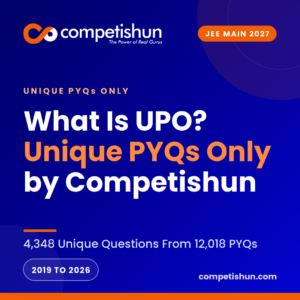
Neither window wins for every student, so here is the honest verdict: if you have months left, the 8-year unique bank wins; if you have only weeks left, the last 5 years first wins. The reason is the repeat structure of the pool. JEE Main Paper 1 from 2019 to 2026 contains 12,018 questions, but only 4,348 are unique patterns; the other 7,670 are repeats. The last 5 years are a subset of the last 8 years, so the real choice is not 5 versus 8 years of questions, it is recent patterns versus complete pattern coverage. This guide compares both windows head to head, gives the verdict for your situation, and shows how unique-first practice settles the debate.
Ask ten toppers how many years of PYQs to solve and you will get ten different answers, mostly because they are answering different questions. Some solved five years, some solved eight, and both groups did well, because both groups were really doing the same thing without realising it: they were covering question patterns, and the years were only the container those patterns came in.
This guide settles the 5 versus 8 debate properly. First, what the two windows actually contain. Second, the numbers behind them, from the full classification of the 2019 to 2026 pool. Third, the honest case for each window, including the risks nobody mentions. Fourth, a head-to-head comparison and a verdict by your situation. And finally, the method that makes the whole debate smaller than it looks.
One promise before we start: no invented year-wise counts in this guide. Nobody can honestly tell you how many unique questions sit in one particular year without the full year-wise classification, so this guide argues only from the verified totals and the repeat structure. That is enough to decide, as you will see.
In this guide
What Last 5 Years and Last 8 Years PYQs Actually Mean
For JEE Main 2027, the two windows are simple to define. The last 5 years means the papers from 2022 to 2026, the most recent five years of the exam. The last 8 years means the papers from 2019 to 2026, the full computer-based era covered by Competishun’s classification. The 8-year window contains the 5-year window completely: every recent paper is inside both, and the difference between them is exactly the three older years, 2019, 2020 and 2021.
That subset fact reframes the whole debate. You are not choosing between two different question banks. You are choosing whether to add three older years to the five recent ones. And the value of those three years depends entirely on one thing: whether they carry question patterns that never appear again in the recent five years. By the logic of the classification, they do, because the unique set of the full 8-year pool is larger than the unique set of any 5-year part of it. Some patterns live only in the older years. The question is whether those patterns matter enough for you, given your time.
The Numbers Behind the Comparison: 12,018 PYQs, 4,348 Unique Patterns
Swipe to see all four numbers
Between 2019 and 2026, JEE Main Paper 1 was held across many shifts, and the total question pool grew to 12,018. When every question is compared with every other, a clear structure appears: 4,348 questions are genuinely distinct patterns, and 7,670 are repeats: the same concept, the same model, often the same solution path with new numbers, a new diagram or a new story.
| Subject | Total PYQs (2019 to 2026) | Unique | Repeats | Unique Share |
|---|---|---|---|---|
| Physics | 4,369 | 1,527 | 2,842 | 35% |
| Chemistry | 3,781 | 1,242 | 2,539 | 33% |
| Mathematics | 3,868 | 1,579 | 2,289 | 41% |
| Total (PCM) | 12,018 | 4,348 | 7,670 | 36% |
| Counts from the full classification of JEE Main Paper 1 questions, 2019 to 2026, all shifts. | ||||
Swipe the table sideways to see all columns
Unique share by subject, from the full 2019 to 2026 classification. Chemistry repeats the most; Mathematics varies the most.
Read the subject split carefully, because it changes the 5 versus 8 decision per subject. Chemistry is the most repetitive subject: only a third of its questions are unique, which means the recent five years already carry most of the Chemistry patterns, and the older years add relatively little that is new. Mathematics is the least repetitive: 41 percent unique means Maths patterns are spread wider across the years, so older years contribute more that is genuinely new. Physics sits between the two.
One chapter proves how repetition works. Electrostatics contains about 223 raw PYQs in the 2019 to 2026 pool. Classified properly, they compress to roughly 80 unique patterns. That compression ratio, about 2.8 to 1, is typical of the heavy Physics chapters, and it is the reason year-counting misleads: solving 223 questions in year order feels like enormous coverage, while mastering 80 patterns is the same coverage in about a third of the time.
The Case for Last 5 Years PYQs: Recent Patterns, Current Exam
The last 5 years have three genuine strengths. First, recency: the most recent papers reflect the current syllabus, the current question style and the current difficulty balance more closely than older papers do. Patterns that examiners favour right now show up most densely in recent shifts. Second, efficiency: five years of papers is a smaller mountain, so a student who starts late can actually finish it, and a finished bank beats an abandoned one every time. Third, revision value: recent papers double as realistic mocks in the final month, because they look and feel like the paper you are about to sit.
But the case has two honest weaknesses, and the second one is the one students ignore. The first weakness is coverage: the recent five years, by definition, cannot contain patterns that only older years carry, so a 5-year-only student walks into the exam with known gaps, even if those gaps are small. The second weakness is subtler: even within five years, roughly two of every three questions repeat a pattern, so a student who solves five years in year order still spends most of the time re-solving. The window is smaller, but the repeat problem inside it is exactly the same.
- Choose 5 years first if: you started late, you are in the final months, or your syllabus is still incomplete and PYQ time competes with theory time.
- Do not choose 5 years only if: you have months left and you want complete pattern coverage, because the older years still hold patterns you will miss.
- The 5-year trap: is believing that finishing five years means finishing PYQs. It means finishing recent PYQs. Those are different statements, and the exam does not care which one you believed.
The Case for Last 8 Years PYQs: Complete Coverage, Higher Cost
The last 8 years have one decisive strength: completeness. The full 2019 to 2026 pool is the entire classified universe of the modern exam, and its unique set of 4,348 patterns is, by definition, everything the exam has asked in this era. A student who has genuinely covered that set has no pattern left unseen. For a dropper, a repeater, or any student who started early, that completeness is the strongest position available, and no shorter window can match it.
The cost is equally real. Eight years of papers, solved in year order, means solving 12,018 questions, of which 7,670 are repeats. That is months of work for most students, and the work is front-loaded with repetition: the same capacitor model, the same Bohr transition, the same Bayes setup, again and again, with new numbers. Students who choose 8 years and then run out of time in the middle have the worst of both worlds: they paid the cost of the long window without collecting its completeness. An unfinished 8-year plan is worse than a finished 5-year plan.
- Choose 8 years if: you have months left, your syllabus is largely complete, and you can protect steady PYQ hours every week until the exam.
- Do not choose 8 years in year order if: your time is short, because year order spends your scarcest resource, time, on repeats before you reach the new patterns.
- The 8-year trap: is starting the long window and abandoning it halfway. If you cannot finish it, the unique-first version of it, covered later in this guide, is strictly better than the year-order version.
Head to Head: Last 5 Years vs Last 8 Years PYQs, Then the Verdict
Here is the comparison without any decoration. Read the risk row twice, because the risks, not the benefits, are what decide this for most students.
| Last 5 Years (2022 to 2026) | Last 8 Years (2019 to 2026) | 8-Year Unique Bank (UPO) | |
|---|---|---|---|
| Years covered | 2022 to 2026 (the most recent 5 years) | 2019 to 2026 (the full 8 years) | All 8 years, classified |
| What you solve | Recent papers, year by year | All papers, year by year | The 4,348 unique patterns first |
| Pattern coverage | Recent patterns only; older patterns missed | Complete pattern coverage of the pool | Complete pattern coverage, in less time |
| Repeat load | High: two of three questions repeat a pattern | Highest: the full repeat load of 8 years | Lowest: repeats stay in clusters, on demand |
| Best for | Late starters and final-month revision | Full-preparation students with months left | Any student who wants full coverage fast |
| Biggest risk | Missing patterns that only older years carry | Running out of weeks before finishing | Skipping cluster practice and losing speed |
| Qualitative comparison. Question counts are from the 2019 to 2026 classification; window contents follow from the definitions of the windows. | |||
Swipe the table sideways to see all columns
And here is the verdict, by situation. Find your row, and you have your answer. Notice that no row says "solve everything in year order", because year order is never the best version of either window.
| Your situation | Recommended window | Why this one |
|---|---|---|
| Starting now, months left | 8-year unique bank | Complete coverage with time to spare; recent years get extra weight in revision |
| Started late, weeks left | Last 5 years first | Recent patterns and current exam style first; extend to older unique patterns if time opens up |
| Already finished the last 5 years | Older years, unique patterns only | Do not re-solve recent years; add the patterns that only older years carry |
| Dropper or repeater | 8-year unique bank | You already know many patterns; unique-first stops you re-solving them |
| Final month, syllabus done | Recent full papers as mocks | Papers train stamina; high-RF clusters fill the gaps between mocks |
| Verdict by situation, not by habit. If your situation changes, your window should change with it. | ||
Swipe the table sideways to see all columns
How to choose your window in four steps
Count your weeks
Be honest about the PYQ hours you actually have, not the hours you wish you had.
Check your syllabus
If theory is incomplete, take the 5-year window first and let theory catch up.
The deciding stepPick unique-first either way
Whichever window you pick, solve unique patterns first and use repeats as timed practice.
Where marks are madeRevisit the choice monthly
As weeks shrink, shrink the window: 8-year plans become 5-year plans, then recent mocks.
How Unique-First Practice Settles the 5 vs 8 Debate
Here is the part that makes the debate smaller than it looks. UPO, short for Unique PYQs Only, classifies the entire 2019 to 2026 pool into 4,348 unique questions, each with its repeat questions grouped behind it in a cluster. You solve the unique question first. The repeats stay available inside the cluster, labelled CL1, CL2 and so on, so nothing is deleted, but your time goes to new patterns first. Ranked by Repeat Frequency, the most repeated patterns come first, so the highest-yield work happens earliest.
With that structure, the 5 versus 8 question changes shape. A student with months left works the full 8-year unique bank: 4,348 patterns, complete coverage, without the 7,670 repeats slowing the journey. A student with weeks left works the recent years’ unique patterns first, then extends into older unique patterns only if time opens up, never by re-solving recent papers. And a student who already finished the last 5 years does not start again from 2019: they add only the older years’ unique patterns, because the recent patterns are already theirs. The window stops being a pile of papers and becomes a checklist of patterns.
Solutions matter here too, because unique-first only works if a stuck question does not eat your evening. Every UPO question carries written, Express Video and Detailed Video solutions on the same screen as the question, so a missed pattern gets understood immediately and its cluster gets practised the same day. That is the loop that turns the 8-year pool from a threat into a resource.
UPO for JEE Main 2027
2019–2026 · Physics, Chemistry & Maths
All 12,018 JEE Main PYQs analysed and clustered: solve the 4,348 unique questions first, ranked by Repeat Frequency, with every repeat one tap away in its cluster and written, express and detailed solutions for each question.
UPO for JEE Main 2027
2019–2026 · Physics, Chemistry & Maths
All 12,018 JEE Main PYQs analysed and clustered: solve the 4,348 unique questions first, ranked by Repeat Frequency, with every repeat one tap away in its cluster and written, express and detailed solutions for each question.
PYQ Express
Video + Text Solutions · Chapter & Topic-wise
JEE Main PYQs sorted chapter-wise and topic-wise, with express video solutions for fast methods, detailed video solutions and step-by-step text solutions.
Mistakes Students Make When Choosing 5 Years or 8 Years
- Treating 5 years as complete coverage: finishing recent papers is not the same as covering all patterns. Older years still carry patterns recent years do not.
- Starting 8 years in year order and stopping halfway: an unfinished long window is worse than a finished short one. Unique-first would have covered more patterns in the same weeks.
- Skipping older years entirely when time exists: if months are available, the older years’ unique patterns are free marks left on the table.
- Confusing questions solved with patterns mastered: 12,018 solved questions with no pattern log is weaker than 4,348 patterns with an error log. Count patterns, not questions.
- Freezing the choice: your window should shrink as the exam approaches. Review it monthly and adjust without guilt.
If you remember one line from this guide, make it this one: the exam does not ask how many years you solved. It asks whether you recognise the pattern in front of you. Choose the window that maximises recognised patterns in the weeks you actually have, practise it unique-first, and let the repeats become your speed training. That is the whole debate, settled. Explore the unique bank on the UPO page, and pair this verdict with the year-count guide and the chapter-wise method linked below.
Solve the Unique Bank for JEE Main 2027
Skip the 5 vs 8 debate: practise the 4,348 unique JEE Main PYQs first, ranked by Repeat Frequency, with every repeat inside its cluster and written, express and detailed solutions on the same screen.
About Competishun
Competishun is an online JEE and NEET coaching platform with programs for Class 11, Class 12 and droppers, PYQ courses and books, study material and an All India Test Series, taught by experienced senior faculty. More than 2.2 million students follow the Competishun YouTube channel for free concept lectures and PYQ solutions.
Last 5 Years vs Last 8 Years PYQs for JEE Main 2027
Follow Competishun for daily PYQ solutions, concept lectures and JEE Main 2027 updates.
Read These Next
The year-count question, answered with the same data.
Why chapter-wise order beats year-wise solving.
The full chapter-wise strategy for Physics, Chemistry and Maths.
Frequently Asked Questions
Tags