JEE Mains 2027: Complete Exam Guide – Dates, Pattern, Syllabus, Eligibility and Application Form
NTA JEE 2027 — Competishun
JEE Mains 2027: Complete Exam Guide – Dates, Pattern, Syllabus, Eligibility and Application Form
JEE Main 2027 is the national-level entrance examination conducted by the National Testing Agency (NTA) for admission to undergraduate engineering programs at NITs, IIITs, and other centrally funded technical institutions. It also serves as the qualifying exam for JEE Advanced 2027, which is the gateway to all 23 IITs. The official NTA notification for JEE Main 2027 has not been released yet. Based on the consistent pattern from JEE Main 2025 and 2026, here is everything you need to know to plan your preparation and application.
JEE Main 2027 Tentative Exam Dates and Schedule
NTA has historically released the JEE Main information bulletin in October or early November of the preceding year. Based on this pattern, here is the expected JEE Main 2027 schedule for both sessions.
Session 1 — January 2027
| Event | Tentative Date | Status |
|---|---|---|
| NTA Information Bulletin / Official Notification | October–November 2026 | Not Released |
| JEE Main 2027 Session 1 Registration Opens | October–November 2026 | Not Released |
| Session 1 Application Fee Payment Last Date | November 2026 (11:50 PM) | Not Released |
| Session 1 Form Correction Window | November 2026 | Not Released |
| Session 1 City Intimation Slip | First week of January 2027 | Not Released |
| Session 1 Admit Card Release | 3–4 days before exam | Not Released |
| JEE Main 2027 Session 1 Exam | Last week of January 2027 (multiple days) | Not Released |
| Session 1 Answer Key | February 2027 | Not Released |
| Session 1 Result | February 2027 | Not Released |
Session 2 — April 2027
| Event | Tentative Date | Status |
|---|---|---|
| Session 2 Registration Opens | Last week of January 2027 | Not Released |
| Session 2 Application Fee Last Date | February 2027 | Not Released |
| Session 2 City Intimation Slip | Second week of March 2027 | Not Released |
| Session 2 Admit Card | 3–4 days before exam | Not Released |
| JEE Main 2027 Session 2 Exam | April 2027 (multiple days) | Not Released |
| Session 2 Result and Final Merit List | April–May 2027 | Not Released |
| JEE Advanced 2027 | Late May 2027 | Not Released |
| JoSAA 2027 Counselling | June–July 2027 | Not Released |
| All dates tentative based on NTA 2026 pattern. Official schedule: jeemain.nta.nic.in | ||
JEE Main 2027 Exam Pattern — Paper Structure and Marking Scheme
The JEE Main 2027 exam pattern is expected to remain unchanged from 2026. Since 2025, NTA reverted to the pre-pandemic format with all questions compulsory and no optional questions. Here is the complete structure.
Paper 1 — B.Tech / B.E (Most Common)
| Subject | Section A (MCQ) | Section B (NVQ) | Total Questions | Total Marks |
|---|---|---|---|---|
| Physics | 20 (all compulsory) | 5 (all compulsory) | 25 | 100 |
| Chemistry | 20 (all compulsory) | 5 (all compulsory) | 25 | 100 |
| Mathematics | 20 (all compulsory) | 5 (all compulsory) | 25 | 100 |
| Total | 60 MCQs | 15 NVQs | 75 Questions | 300 Marks |
JEE Main 2027 Marking Scheme
| Question Type | Correct Answer | Wrong Answer | Unattempted | Note |
|---|---|---|---|---|
| Section A — MCQ (Single Correct) | +4 | -1 | 0 | Only one correct option |
| Section B — Numerical Value Questions | +4 | -1 | 0 | Answer is an integer or decimal |
| Paper 2A Drawing Test | 100 marks total (2 questions) | N/A | N/A | Pen-and-paper mode only |
| All 75 questions in Paper 1 are compulsory. No optional questions since JEE Main 2025. | ||||
Paper 2A (B.Arch) and Paper 2B (B.Planning)
| Paper | Subjects | Total Questions | Total Marks | Mode |
|---|---|---|---|---|
| Paper 2A (B.Arch) | Mathematics (25) + Aptitude (50) + Drawing (2) | 77 | 400 | CBT + Pen-and-paper (Drawing) |
| Paper 2B (B.Planning) | Mathematics (25) + Aptitude (50) + Planning (25) | 100 | 400 | CBT only |
JEE Main 2027 Eligibility Criteria
| Criterion | Requirement | Note |
|---|---|---|
| Age Limit | No upper age limit for JEE Main | Individual institutes (NITs, IIITs) may have their own age criteria |
| Class 12 Qualification | Passed or appearing in Class 12 (or equivalent) in 2025, 2026, or 2027 | Must have PCM as core subjects |
| Required Subjects | Physics, Chemistry and Mathematics mandatory | Additional subject (like Biology or PE) does not disqualify |
| Number of Attempts | Maximum 3 consecutive years | JEE Main is held twice a year — up to 6 attempts total |
| Board | Any recognized board — CBSE, ICSE, state boards, NIOS, open board | Must have passed Class 12 in one of the eligible years |
| Class 12 Percentage for NIT/IIT Admission | 75% aggregate (65% for SC/ST/PH) | Required for JoSAA counselling — not for appearing in JEE Main |
| JEE Advanced Qualification | Top 2.5 lakh rank in JEE Main CRL | Separate eligibility for JEE Advanced — max 2 attempts in 2 consecutive years |
| You can appear in JEE Main regardless of Class 12 percentage. The 75% requirement kicks in only at JoSAA counselling for IIT/NIT admission. | ||
Reservation Criteria — JEE Main 2027
| Category | Seat Reservation | Class 12 % for Admission |
|---|---|---|
| General (UR) | No reservation | 75% |
| General — EWS | 10% | 75% |
| OBC — NCL | 27% | 75% |
| SC | 15% | 65% |
| ST | 7.5% | 65% |
| PwD | 5% (horizontal reservation) | 65% |
| OBC-NCL and EWS certificates must be valid for the year of counselling (issued after April 1 of that financial year). Older certificates are not accepted. | ||
JEE Mains 2027 Application Form — How to Apply and Fee Structure
JEE Main 2027 Session 1 registration is expected to open in October-November 2026 at jeemain.nta.nic.in. The form is entirely online. There is no offline application route. Here is the step-by-step process based on the 2026 application cycle.
Visit Official Portal
Go to jeemain.nta.nic.in. Do not use any third-party websites. Look for the "Registration for JEE Main 2027" link on the homepage.
New Registration
Click New Registration. Fill your name exactly as on Class 10 marksheet. Set a strong password. Note down the generated Application Number — you will need it for every future login.
Fill Application Form
Enter personal details, exam city preferences (up to 4 cities in order of preference), educational qualification, category, and choose your paper (Paper 1 / Paper 2A / Paper 2B or combination).
Live Photo Capture
NTA captures your photo via webcam during the form filling process. Keep good lighting and remove glasses. This photo appears on your admit card.
Upload Documents
Upload scanned signature (4KB to 30KB), Class 10 certificate details, Class 12 details, and category certificate if applicable. Ensure all files are clear and within specified size limits.
Pay Application Fee
Pay online via UPI, Net Banking, Debit Card, or Credit Card. Fee is non-refundable. Save the payment confirmation page. Applications without fee payment are treated as incomplete.
Print Confirmation
Download and print the completed application confirmation page. Save the PDF on at least two devices. This serves as proof of registration.
Form Correction Window
NTA opens a correction window after registration closes. Use this to fix errors in name, category, city preferences, or other details. You cannot change paper type or exam session after this window.
JEE Main 2027 Application Fee (Based on 2026 Structure — Expected Unchanged)
| Category | Single Paper (India) | Two Papers (India) | Single Paper (Outside India) |
|---|---|---|---|
| General Male | Rs 1,000 | Rs 2,000 | Rs 5,000 |
| EWS / OBC-NCL Male | Rs 900 | Rs 2,000 | Rs 5,000 |
| All Female Candidates | Rs 800 | Rs 1,600 | Rs 4,000 |
| SC / ST / PwD / Transgender | Rs 500 | Rs 1,000 | Rs 2,500 |
| Fee is strictly non-refundable. Payment modes: UPI (Google Pay, PhonePe, Paytm), Net Banking, Debit Card, Credit Card. No offline payment accepted. | |||
Documents Required for JEE Main 2027 Application
- Aadhaar Card — mandatory for Indian nationals for auto-fill and identity verification
- Class 10 Certificate / Marksheet — for date of birth and name verification
- Class 12 Certificate or Appearing Proof — school letter/marksheet confirming 2027 appearance
- Scanned Signature — black ink on white paper, 4KB to 30KB, JPG format
- Category Certificate — OBC-NCL / EWS / SC / ST / PwD certificates (must be current year issue for OBC-NCL and EWS)
- Valid Mobile Number — receives OTP for registration — must remain active throughout the process
- Valid Email ID — all official communications (admit card link, result) are sent here
- Passbook / Payment Details — for application fee payment via net banking or card
Official JEE Main 2027 Resources and Links
All JEE Main 2027 notifications, application forms, admit cards, answer keys, and results will be released only on official NTA portals. Do not rely on third-party sites for form links or documents.
NTA Official Portals
- jeemain.nta.nic.in — Main JEE portal (form, admit card, results)
- nta.ac.in — NTA headquarters (notifications)
- ntaresults.nic.in — Results portal
- josaa.nic.in — JoSAA counselling (NITs/IITs/IIITs)
Practice and Preparation
- NTA Free Mock Tests — Official mock test portal (opens with registration)
- ncert.nic.in — Official NCERT textbooks free download
- Competishun ATS/UTS — JEE Advanced and Main test series
- Competishun PYQs — JEE Advanced 2024 2025 2026 papers
Counselling and Admission
- josaa.nic.in — JoSAA: IITs, NITs, IIITs, GFTIs
- csab.nic.in — CSAB: Special admissions round
- jeeadv.ac.in — JEE Advanced registration and results
Category Certificate Resources
- OBC-NCL certificate must be issued after April 1 of the application year
- EWS certificate: Same — current financial year only
- SC/ST: Central government format only
- PwD: From government-recognized medical authority
JEE Main 2027 Syllabus — Subject-Wise Chapter List
The JEE Main syllabus covers Class 11 and Class 12 NCERT topics. The official syllabus PDF will be released by NTA with the 2027 information bulletin. The syllabus has not changed significantly since 2024. Here is the complete chapter breakdown.
Physics — High Frequency Chapters
| Class 11 Chapters | Class 12 Chapters |
|---|---|
| Units and Measurements | Electric Charges and Fields |
| Motion in a Straight Line | Electrostatic Potential and Capacitance |
| Laws of Motion | Current Electricity |
| Work, Energy and Power | Moving Charges and Magnetism |
| System of Particles and Rotational Motion | Electromagnetic Induction |
| Gravitation | Alternating Current |
| Mechanical Properties of Solids and Fluids | Ray Optics and Wave Optics |
| Thermal Properties of Matter and Thermodynamics | Dual Nature of Radiation and Matter |
| Kinetic Theory and Oscillations | Atoms, Nuclei, and Semiconductor Devices |
| Rotational Motion, Electrostatics, Current Electricity, and Optics consistently carry highest question count in JEE Main. | |
Chemistry — High Frequency Chapters
| Physical Chemistry | Organic Chemistry | Inorganic Chemistry |
|---|---|---|
| Mole Concept and Stoichiometry | General Organic Chemistry | s-Block and p-Block Elements |
| Atomic Structure | Hydrocarbons | d and f Block Elements |
| Chemical Bonding | Haloalkanes and Haloarenes | Coordination Compounds |
| Thermodynamics and Equilibrium | Alcohols, Phenols, Ethers | Hydrogen and its Compounds |
| Solutions | Carbonyl Compounds (Aldehydes, Ketones) | Environmental Chemistry |
| Electrochemistry | Amines | Metallurgy |
| Chemical Kinetics | Biomolecules and Polymers | Qualitative Analysis |
| Inorganic Chemistry (NCERT-based) and Organic Reaction Mechanisms are the most scoring areas in JEE Main. | ||
Mathematics — High Frequency Chapters
| Class 11 Chapters | Class 12 Chapters |
|---|---|
| Sets, Relations and Functions | Relations and Functions (advanced) |
| Trigonometric Functions | Inverse Trigonometric Functions |
| Complex Numbers and Quadratic Equations | Matrices and Determinants |
| Permutations and Combinations | Continuity and Differentiability |
| Binomial Theorem | Application of Derivatives |
| Sequences and Series | Integrals (Definite and Indefinite) |
| Straight Lines and Conic Sections | Application of Integrals |
| 3D Geometry Introduction | Differential Equations |
| Statistics and Probability (basic) | Vectors, 3D Geometry, Probability (advanced) |
| Calculus (Differential + Integral) is the single highest-weightage area in JEE Main Mathematics. Algebra and Coordinate Geometry follow closely. | |
JEE Main 2027 Expected Percentile vs Rank vs Score Reference
JEE Main uses a percentile-based normalisation process since the exam is held over multiple shifts with different papers. Your actual score is converted to a percentile (NTA score). Here is a reference chart based on recent years.
| JEE Main Score (out of 300) | Expected Percentile | Expected Rank (CRL) | Likely Admission Level |
|---|---|---|---|
| 250+ | 99.5+ | Top 5,000 | Top IITs via JEE Advanced |
| 220-249 | 99 to 99.4 | 5,000 to 12,000 | Good IITs via JEE Advanced |
| 190-219 | 97 to 98.9 | 12,000 to 30,000 | Qualify JEE Advanced, top NITs |
| 160-189 | 93 to 96.9 | 30,000 to 70,000 | Good NITs and IIITs |
| 130-159 | 85 to 92.9 | 70,000 to 1,50,000 | NITs (average branches) and state colleges |
| 100-129 | 70 to 84.9 | 1,50,000 to 3,00,000 | GFTIs and state engineering colleges |
| Below 100 | Below 70 | 3,00,000+ | Private colleges (state board quota) |
| These are estimates based on JEE Main 2025 and 2026 data. Actual percentile depends on the difficulty of the paper and the number of students that year. | |||
JEE Main 2027 Preparation Timeline — Month-Wise Plan
| Period | Focus Area | Target |
|---|---|---|
| June–August 2026 (Class 11 students) | Complete Class 11 Physics, Chemistry, Mathematics from NCERT and standard books | Build conceptual base. No mock tests yet. Focus on understanding, not speed. |
| September–October 2026 | Start Class 12 chapters alongside Class 11 revision. Begin chapter-wise practice. | All Class 11 topics revised once. Class 12 Foundation (Electrostatics, Calculus) started. |
| October–November 2026 | NTA notification expected. Fill application form immediately when released. | Syllabus 60-70% complete. Begin chapter-wise tests. |
| November–December 2026 | Complete syllabus. Start full mock tests 2x per week. | Entire syllabus done once. Full-length papers with time management practice. |
| January 2027 (Session 1) | JEE Main Session 1 exam. Continue preparation — treat Session 1 as a genuine attempt. | Secure best possible score in Session 1. Identify weak chapters from Session 1 result. |
| February–March 2027 | Fix Session 1 weak areas. Maintain full paper practice 3x per week. | Improve score for Session 2 using Session 1 analysis. |
| April 2027 (Session 2) | JEE Main Session 2 exam. Best of both sessions counts for rank. | Peak performance. Best score goes on record. |
| April–May 2027 | JEE Advanced preparation — advanced problem sets, PYQs from 2020-2026. | JEE Advanced qualification requires deeper conceptual work beyond JEE Main level. |
| Syllabus completion by November 2026 is the most critical deadline for JEE 2027 aspirants. Start before June if possible. | ||
About Competishun — JEE Preparation Built for Serious Students
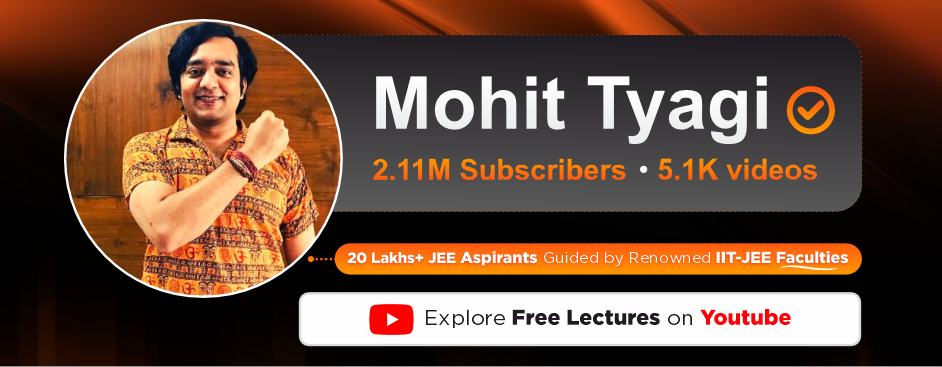
Competishun teachers with more than 20 years of JEE teaching experience have guided lakhs of students through both JEE Main and JEE Advanced. More than 2.1 million students follow the Competishun YouTube channel for free concept sessions, exam updates, result analysis, and strategy guidance.
Get JEE Main 2027 Notification Updates Immediately
Follow Competishun for instant updates when NTA releases the JEE Main 2027 information bulletin, application form, admit card and results.
Read These Next
All NCERT changes affecting the JEE 2027 syllabus — what chapters changed and what stayed.
Exactly what percentile and rank you get for each score range — and which colleges it opens up.
The weekly review system that helps JEE 2027 students course-correct before it is too late.
Frequently Asked Questions — JEE Mains 2027
Tags